
Rating: PG-13 | Runtime: 161 minutes
Release Date: November 11th, 2022 (USA)
Studio: Marvel Studios / Walt Disney Studios Motion Pictures
Director(s): Ryan Coogler
Writer(s): Ryan Coogler & Joe Robert Cole / Ryan Coogler (story) / Stan Lee and Jack Kirby (comics)
Have I not given everything?
It’s still crazy to think that Ryan Coogler and company were ready to go with Black Panther: Wakanda Forever when Chadwick Boseman passed away. To have to rework it to both facilitate a changing of the guard in-film and honor the memory of their star outside of it could not have been easy. I’m sure it was cathartic, though. To have the work to help lead them through the emotions they were feeling. So, it’s nothing short of extraordinary that they actually succeeded. And in a way that proves an organic extension of what the first film presented by way of the MCU’s best villain—a man justified in his rage, if not his actions.
Coogler and co-writer Joe Robert Cole stick to the post-colonial nature of Wakanda as a place and Wakandans as a people. Where its predecessor introduced the notion that this safe haven hidden from the world could become the staging ground for its destruction via Killmonger’s (Michael B. Jordan) desire to free Black men and women from oppression wherever they may be, Wakanda Forever gives it physical form. Because that’s what Talokan is: a secret kingdom of native Aztec people who transformed themselves with a flower (similar to that which bestows the power of the Black Panther) in order to survive. While T’Challa’s ancestors threaten force for peace, Namor (Tenoch Huerta) wields it for self-preservation.
The stage is therefore set for a reckoning. With the void left by T’Challa’s death (and the path to another Black Panther destroyed via Killmonger), there comes a need to choose how to move forward. Do you let the outside world (led by the US, of course) bully you or do you fight back? It’s a question Wakanda doesn’t yet have to answer thanks to their mettle being strong enough to bat away acts of aggression. The reason it is asked, though, is because they allowed themselves to be seen. Talokan hadn’t. So, when Wakanda refuses to trade Vibranium once again, the US seeks an alternative supply. And when they come knocking unannounced on Namor’s door, political diffusion isn’t on his mind. Annihilation is. Kill all witnesses to protect their existence.
As such, Coogler isn’t supplying us another good vs. evil plot like so many other MCU chapters. Even when another director gives us a good villain, they’re still too often underwritten and underutilized to be more than a one-dimensional foil (see Thor: Love and Thunder’s Gorr). Like with Black Panther, the antagonist here has purpose. Namor seeks to protect his kingdom. If he were the star, it’d be black and white. Because he isn’t, the gray area of his desire to maintain a status quo by any means necessary pushes the real hero into a corner. Does Shuri (Letitia Wright) choose her brother’s nobility to protect her oppressors as human beings? Does she fall prey to vengeance like her cousin en route to burning it all down? Or can she reconcile both impulses to mold her own identity?
It’s a pretty compelling narrative with the perfect amount of fuel on both sides to really make us question how far off T’Challa’s path grief has taken Shuri. With new characters to help (Dominique Thorne’s Riri Williams) and old friends to lean on (Lupita Nyong’o, Danai Gurira, and Winston Duke all return), she must find the middle ground between spirituality and science, God and logic. And with Angela Bassett’s Ramonda stealing every scene to become her daughter’s rallying point, for better or worse, it all adds up to a stirring climactic battle that entertains with physically punishing action and suspense. Yes, it’s ultimately a narrative bridge for the MCU’s future, but it always strives to deliver upon its own drama first.


Winner:
Costume Design
Nominee:
Supporting Actress, Visual Effects, Song, Makeup and Hairstyling
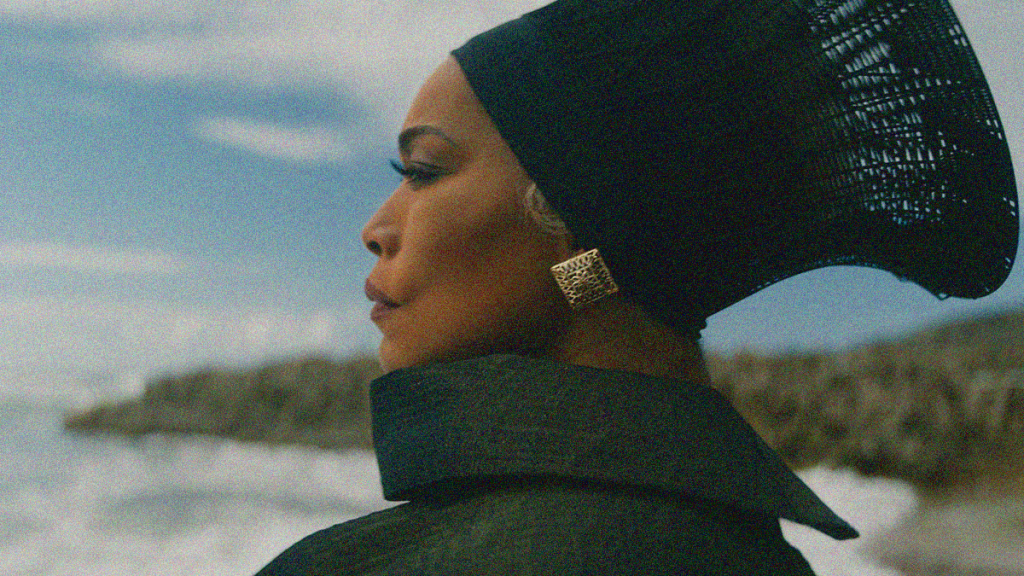
Angela Bassett as Ramonda in Marvel Studios’ BLACK PANTHER: WAKANDA FOREVER. Photo courtesy of Marvel Studios. © 2022 MARVEL.



 jaredmobarak.com
Leave a comment