

Originally posted at The Film Stage
Ala Kachuu [Take and Run] [2021]
Rating: NR | Runtime: 38 minutes
Release Date: 2021 (Switzerland)
Director(s): Maria Brendle
Writer(s): Maria Brendle
We all came in tears.
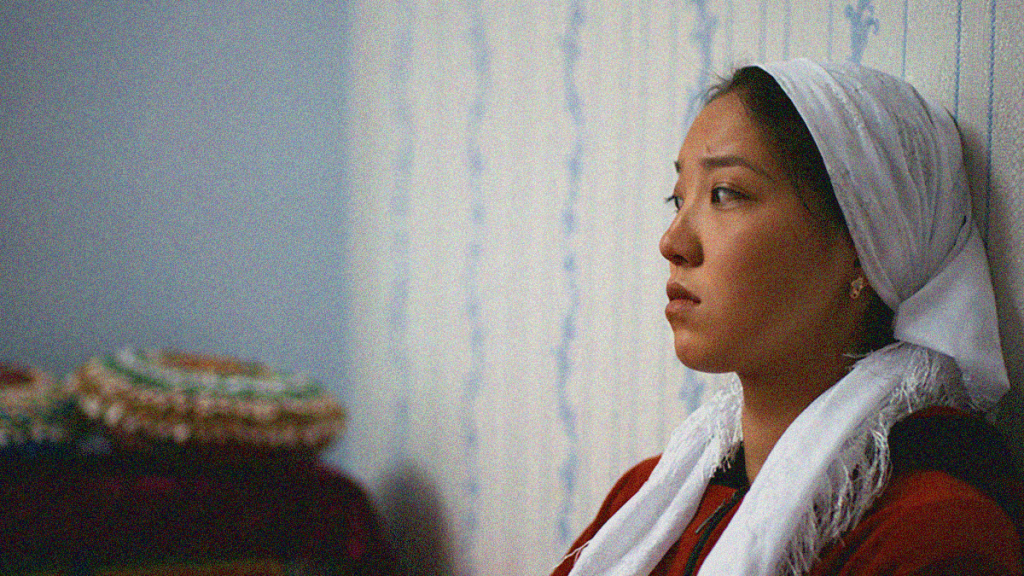
It’s always tough to process a film so steeped in conservative traditions completely unlike my own because it’s often difficult to fully comprehend the complexity. Maria Brendle’s short Take and Run is no exception considering how futile its depiction of life for women in Kyrgyzstan proves. A faulty feedback loop is created wherein one tragic hardship is transformed into a “lesser evil” when compared to another, unintentionally projecting a message in stark contrast to the work’s goals. The idea here is to show university-hopeful Sezim’s (Alina Turdumamatova) strength and desire to fight back against the patriarchal norms of her culture. So, when she’s ultimately punished for daring to try, we’re forced to wonder if we’re being told that acquiescence to oppression is somehow the better choice.
I know that’s not the case, but it lingers there anyway because the rural-based characters on-screen are so entrenched in believing it. If Americans find it impossible to grasp why their parents’ generation is so adamantly against easing burdens they faced when they were younger (see arguments against dissolving student loans because our greedy society can’t process the reality that some people deserve restitution others no longer need), they’ll never wrap their heads around a mother-in-law and grandmother-in-law telling Sezim everything will be okay because they too were kidnapped and forced into marriage thanks to the indoctrinated cultural blackmail of sacrificing one’s own wellbeing and happiness for that of familial “honor.” Having your hopes and dreams taken away as a rule should never be the cost of living.
There cannot be a happy ending for Sezim as a result. Not unless she escapes Kyrgyzstan altogether. If Brendle’s film tells us anything, it’s that no woman is safe. It doesn’t matter if you’re in the country amongst relatives demanding you marry after high school or in the city under a presumed veil of liberal safety. You can be snatched and forced into a scenario against your will in both places and the fear of consequences that would pale in comparison to an American onlooker (being called a whore, being ostracized, disgracing your family name) is sadly enough for those who should be on your side to instead turn and walk away. Thankfully, Sezim never stops fighting. She might end up dead, but she will not give up.
That’s where this story’s power lies. That’s why the notion that we’re being told Sezim should have stayed home and suffered a similar fate with eyes open is false. Brendle could have gone that direction. This could have been a propaganda piece scaring young girls into listening to their parents because nightmarish horrors await if you don’t. By imbuing Sezim with the autonomy and unflappable perseverance to stare it all down and refuse to waver from a stance of death being the better alternative to staying in a union built upon rape, the film instead reveals itself to be a damning treatise on a people in desperate need of change. It provides viewers a hero unwilling to give up on herself even if her country already has.

Nominee:
Live Action Short
Sukienka [The Dress] [2020]
Rating: NR | Runtime: 30 minutes
Release Date: 2020 (Poland) / November 9th, 2020 (USA)
Director(s): Tadeusz Lysiak
Writer(s): Tadeusz Lysiak
Good different or bad different?
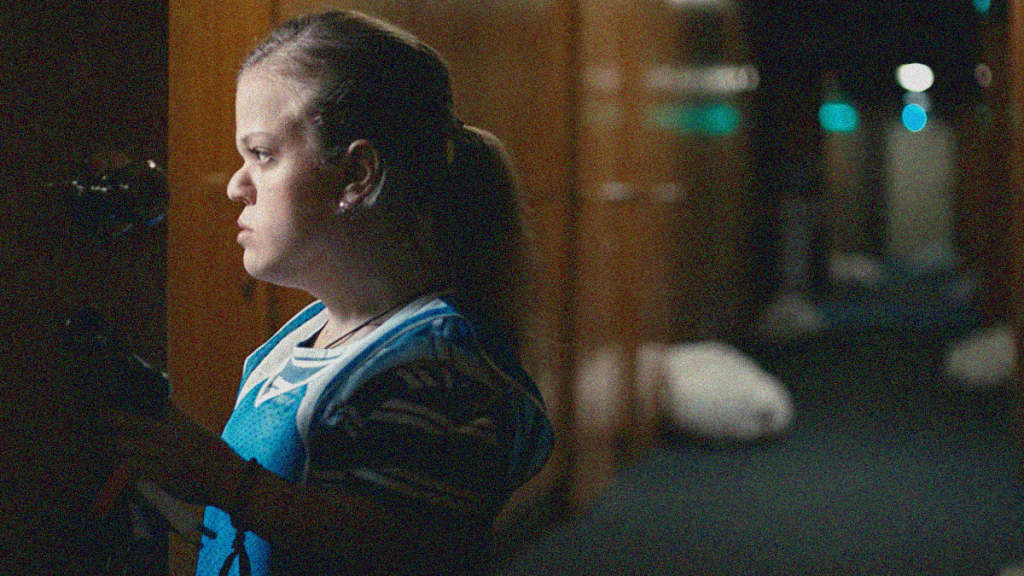
Sitting alone at a slot machine, Julka (Anna Dzieduszycka) feels the brunt of sometimes drunken and always insensitive remarks thrown her way by locals and out-of-towners alike. She’s a person of short stature due to dwarfism who has never left her hometown in Poland. At one point Julka speaks about staying not only because it’s where she grew up and where she’s worked as a motel maid for eight years, but also because she wants to make sure her fellow residents see her and learn the lesson that they will not defeat her no matter how hard they try. It’s a choice she obviously stands by, but that doesn’t make it any less lonely. Because staying ultimately stifles her opportunity for more. Maybe that’s all about to change.
Just as Julka confronts her reality as a virgin after watching yet another traditionally beautiful woman walking away with a crass man cracking jokes at her expense, writer/director Tadeusz Lysiak introduces Bogdan (Szymon Piotr Warszawski): a truck driver passing through who stares at her from across the room with a smile. She’s skeptical, of course. The assumption is that his attention is malicious like usual, but they meet the next day and share a cigarette over conversation that proves otherwise. He even tells her that he’ll be back in four days, setting a date for drinks that cannot help but get Julka excited for whatever may result. Friendship? Intimacy? Love? Her mind wanders through all the different glorious possibilities, her previous fears turning into anxiety-fueled hope.
At the center of that emotional whirlwind is her desire for a new outfit, hence The Dress. This article of clothing reveals itself to be more than just that, though. It’s also protection—a means to allow herself a pathway towards “normalcy” insofar as the depictions of romance surrounding her on the beach, balcony, and casino floor. It exposes the resonant sense of inadequacy that she holds when comparing herself to those same people she strives to teach her lesson. But it’s also a façade. Her friend/co-worker Renata (Dorota Pomykala) may be married and a mother, but she’s also a victim of spousal abuse. Those attractive women laughing at dinner are often found crying in the night after what we assume is the same. Julka idolizes them anyway.
And so, we fear the worst while wishing for the best once the days disappear and the date looms upon the horizon. Will Bogdan be everything Julka needs him to be? Or will he prove yet another horrible creature simply interested in using and abusing the women he so dutifully ensnares? Lysiak does a good job holding the potential of these questions at bay for as long as he can before providing his answer, letting Dzieduszycka carry the action with a complex and conflicted performance desperate to not succumb to optimism despite wanting to believe in it so ardently. The result is a well-shot and well-acted drama flirting with miserabilism as it provides its unfortunate truth: our admiration for “beauty” too often only guarantees us pain.
Nominee:
Live Action Short
The Long Goodbye [2020]
Rating: NR | Runtime: 13 minutes
Release Date: March 6th, 2020 (UK)
Director(s): Aneil Karia
Writer(s): Aneil Karia & Riz Ahmed
I spit my truth and it’s brown.
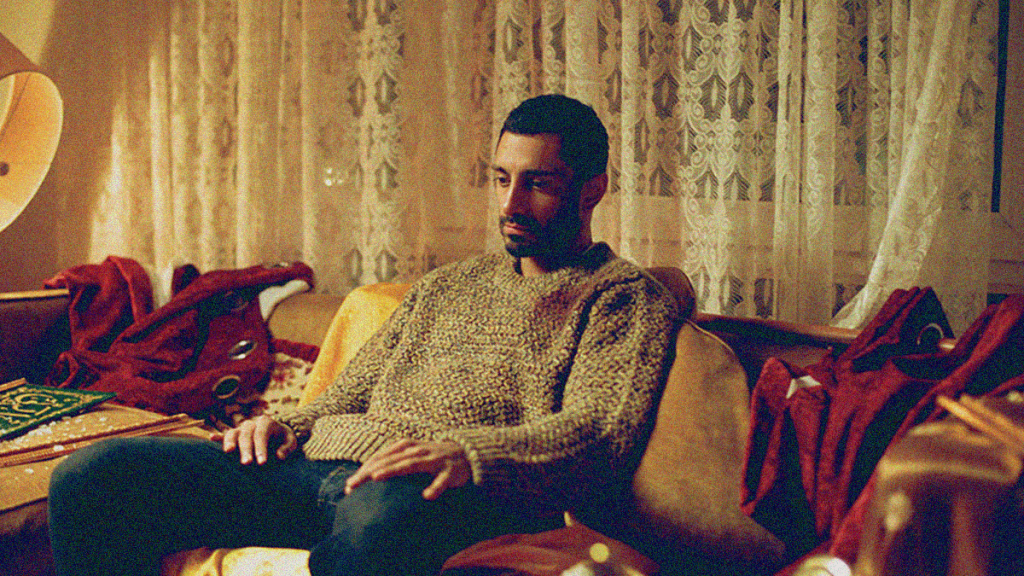
Even before Riz Ahmed (who co-wrote with director Aneil Karia) rises from the pavement to rap his song “Where You From” (also heard in the feature-length film Mogul Mowgli), their short The Long Goodbye feels like a music video. Yes, we hear Ahmed singing other songs in the background as his character’s family prepares for his sister’s wedding, but I mean that more for the energy of the whole than any literal sense of the medium. We can feel that we’re biding time even if we don’t yet know why. Maybe it’s about the far-right march on the television that Ahmed’s father wants to watch. Maybe it’s about the male friend his sister invited to her own wedding. We merely know that a storm is coming.
That dread and anticipation plays like a crescendo. And the climax proves as confrontational and, perhaps, exploitative as you can imagine. This is the point. This is what music videos have been doing for decades—pushing the envelope visually and thematically to provide their message with the blunt force trauma of their lyrical emotion. The first thing that came to mind as the credits rolled was Romain Gavras’ video for M.I.A.’s “Born Free” and its stark, brutal aesthetic where it comes to genocide and terrorism. Karia and Ahmed pull no punches in their depiction of a very real future ahead if white supremacy isn’t curbed soon. This family isn’t surprised when the twenty-first century Nazis arrive. They expected it. It’s not, “Something is happening.” It’s simply, “They’re here.”
Is the result effective? Sure. You cannot watch the happy-go-lucky sensibility of people readying for a celebration evaporating into fearful screams without feeling something—whether a kinship to their dread from anticipating the same happening to you or the shame of knowing you’d be one of the one’s who let it happen. That’s the powerful imagery. The white neighbors gazing through their windows as people they’ve surely invited over to their homes are rounded up like criminals in the street. That’s what lingers as Ahmed spits his truth as a Muslim Brit of Pakistani descent who can’t help but feel like stranger in his own country as pro-white European sentiment grows. He’s throwing nuance out the window to make sure audiences understand what’s happening. He can’t afford confusion.
Winner:
Live Action Short
On My Mind [2021]
Rating: NR | Runtime: 18 minutes
Release Date: 2021 (Denmark)
Studio: The New Yorker
Director(s): Martin Strange-Hansen
Writer(s): Martin Strange-Hansen
It makes the soul fly.
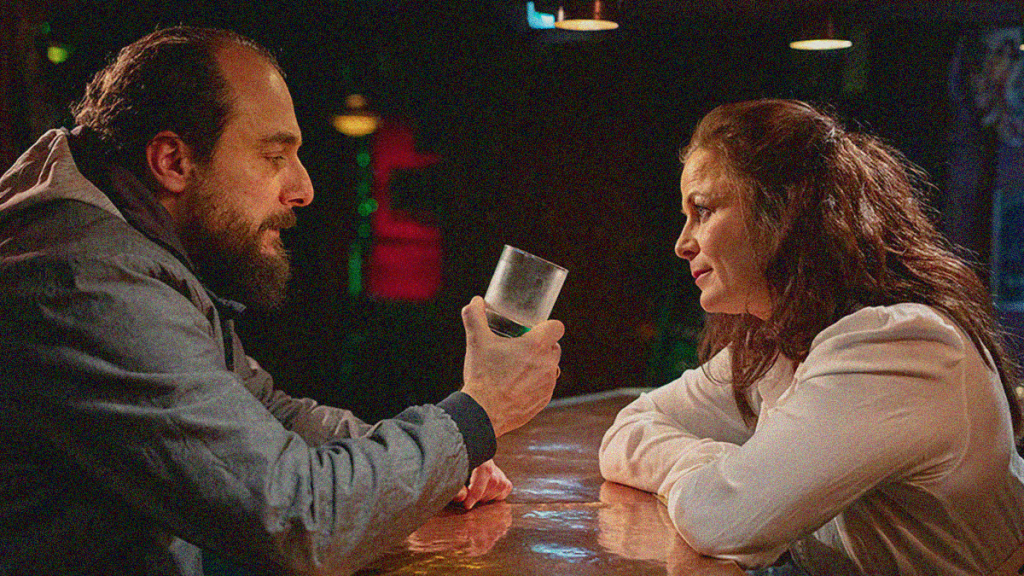
There may not be any surprises where it comes to the plot of Martin Strange-Hansen’s short On My Mind, but there’s a ton of heart. And that’s often all you can ask for when it comes to art. Does the piece touch you on a level deeper than whether you can guess the ending? Do you leave the theater with a smile on your face thanks to the melancholic beauty of a character’s actions? Have the events unfolding on-screen brought forward your own memory of loss and love through the poignancy of its journey? These are Strange-Hansen’s accomplishments upon sending Henrik (Rasmus Hammerich) to a barely opened dive bar this fateful weekday morning. This man seeks to drown his sorrow. He discovers a way to embrace it instead.
What’s great about how it unfolds is its lack of airs as far as trying to pull one over on the audience. Strange-Hansen isn’t hiding a twist. He’s merely allowing this moment to breath insofar as what its content can mean for onlookers. Because, even if it isn’t explicitly spoken aloud, we know bar owner Preben (Ole Boisen) and bartender Louise (Camilla Bendix) are together. The way she endears herself to Henrik to get a rise out of him is more important than the reasons why their customer must sing “Always on My Mind” this instant before it’s too late. This is a moment for Preben to prove that he may have a romantic bone in his body after all—even if he must be guilted into showing it.
Henrik’s act to sing is one of pure love and sound mind. He knows there’s no escaping what’s about to happen and yet he sees a chance to do something that will ease the pain anyway. That Strange-Hansen adds a bit of coincidence (Preben knows the exact number of that song amongst two thousand on a karaoke machine he abhors?) and the supernatural (gusts of wind and handprints on glass giving form to the afterlife) only enhances the experience and ensures we absorb it as the parable for never taking your happiness for granted that it is. Because if Henrik can still find hope and grace in death, we should all be able to see them and embrace them in life. Even a surly old curmudgeon like Preben.
Nominee:
Live Action Short
Please Hold [2021]
Rating: NR | Runtime: 19 minutes
Release Date: 2021 (USA)
Director(s): K.D. Davila
Writer(s): K.D. Davila & Omer Levin Menekse
Always read the fine print.
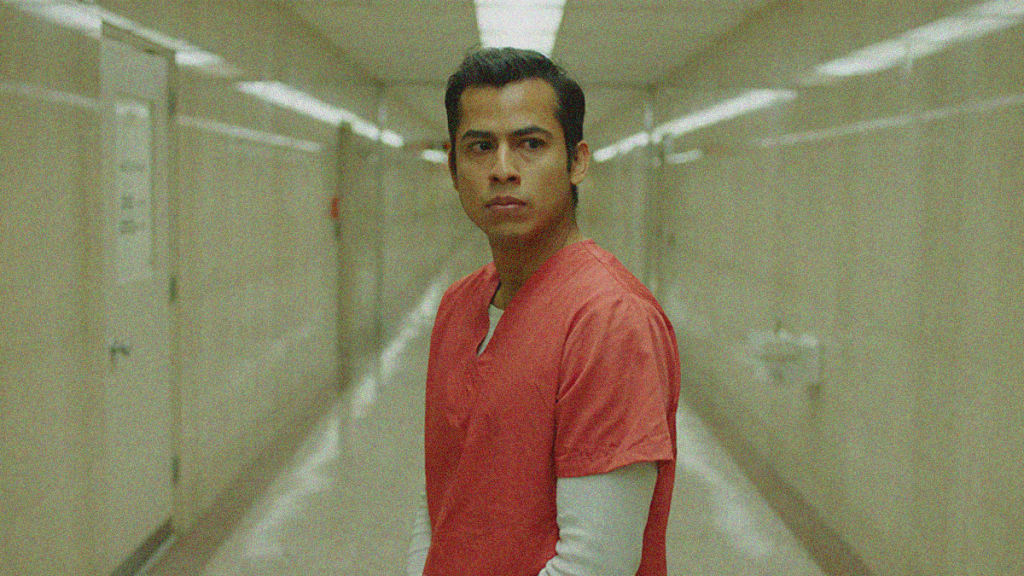
After the debacle that was Don’t Look Up, it’s nice to know satire is alive and well courtesy of KD Davila’s short film Please Hold. Where the former refuses to acknowledge its thinly veiled metaphor for what just happened in America during the COVID-19 crisis (choosing to willfully pretend as though it’s hypothesizing a future, unrelated tragedy instead), the latter knows exactly what it’s doing. Because while the idea of an automated justice system stripping human beings of their right to know what they’re being accused of doing is something to fear, the reality is that the experience Mateo (Erick Lopez) endures is already something poor Americans know all too well. Thanks to for-profit prisons taking over the incarceration industry coast-to-coast, these paywalls have been active for years.
Davila and co-writer Omer Levin Menekse wouldn’t have achieved the same impact had they just created a film about a wrongfully accused man being forced to choose between the risk of losing decades of his life by going to trial and agreeing to plead guilty (despite his innocence) so he can mitigate the damage this mistake has caused. Why? Because the public is apathetic. Half the population believes that someone can only be arrested in error because they’ve allowed themselves to be put in a situation where that error can be made. They don’t consider profiling. Identical names. Religious persecution. Or the big one: a corrupt law enforcement system. To truly reach audiences that have already made up their minds, one must deflect with a comedic delivery device.
And the one they create is brilliant. Rather than a disinterested cop ignoring Mateo’s declaration of innocence, he’s confronted by an airborne drone holding a gun and taser. Put the cuffs on and follow it to the precinct or be incapacitated. The result might be the same, but at least he’s conscious for one with the opportunity of finding a human offering clarity. Except there aren’t any humans. One drone passes Mateo to the next. Instead of answering his legitimate questions (What am I accused of doing?), they say “Comply or be hurt.” So, he compiles. He discovers the only way to acquire information is to pay exorbitant amounts of money on a lawyer and that if he misspeaks, the cartoon public defender may enter the wrong plea.
It’s a dystopian nightmare of epic proportions because it doesn’t take long before that intentionally dangled, rotting carrot of a choice between a lesser sentence and risking life in prison becomes everything to Mateo’s future. The sweatshop-by-way-of-meal-kit-economy parody is a nice touch, but the infinity loop of selective dialogue is the real horror. Because that’s our current world. That’s every citizen video of a police officer saying he/she doesn’t have to give a reason for his/her actions. Davila’s vision is of a present too many of us are too privileged to acknowledge exists. Switch prison and lawyer fees with cancer and medical costs and you get the same result. Automation isn’t the villain. Our indifference to the plight of the disadvantaged has already turned us into the robots.
Nominee:
Live Action Short
Images courtesy of ShortsTV.




Leave a Reply