

Originally posted at The Film Stage
Audible [2021]
Rating: PG-13 | Runtime: 39 minutes
Release Date: July 1st, 2021 (USA)
Studio: Netflix
Director(s): Matthew Ogens
This loss will not define us as a team.
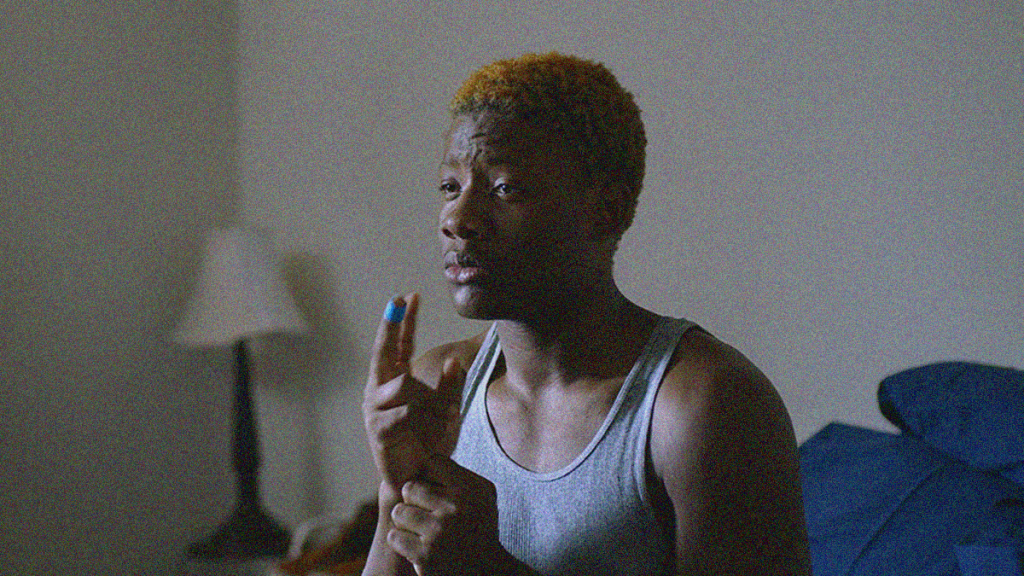
A forty-two-game winning streak is tough to fathom, but that’s what the Maryland School for the Deaf varsity football team was riding as they entered the game that begins Matthew Ogens’ documentary short Audible. It wasn’t just against other deaf schools either. The program had grown into a football powerhouse with a championship pedigree that allowed its athletes a chance to grow together as a community on and off the field. And these kids need that considering everything they face on top of the usual teenage drama of high school. Add the death of a friend to the uncertainty of graduation and no one is feeling that struggle more than senior star Amaree McKenstry-Hall and his friends. This season means more than just what shows on the scoreboard.
It took Ogens over a decade to get this production together—he jokes in interviews that the varsity coach was still a player when he first broached the topic. That it finally solidified in time to document Amaree’s complicated path forward in the face of tragedy probably says more about the hearing world than these kids or the film crew. It makes it seem like it’s not enough to provide a feel-good portrait of perseverance against all odds that normalizes the deaf community as more than victims of a disability. You need extra suffering. Extra adversity. Extra emotions. Does it make the story more compelling as a result? Sure. I do wonder what might have been without that additional weight, but life is never so simple.
The focus therefore turns away from the school and the sport onto Amaree himself. This is a young man who was born hearing before Meningitis took that sense away—and, with it, a scared and troubled father. Amaree subsequently had to grow up amongst an otherwise fully hearing family, the loneliness it provided only being alleviated by the help of his classmates and friends like Teddy. That the latter would end up taking his own life as a result of bullying upon transferring to a hearing school only amplifies just how alone these kids feel when not surrounded by each other and how much further we must go as a nation to dismantle our ablest sensibilities. We have a long way to go for equality on multiple fronts.
Through that tragedy, however, Amaree takes us into the psychological hardships faced as well as the love and support that arrives in its wake. Shot with attractive cinematography juxtaposed against a resonant score, it’s no wonder that Friday Night Lights director Peter Berg is listed as a producer. Above that also lies the open-captioning and immersive sound design that was brought to the mainstream courtesy of Sound of Metal with Ogens putting us into the locker room to experience this loud game in a different way. In the end it all adds up to the word that the art world and Hollywood need to embrace more: representation. Take us into these spaces and show that they’re not defined by what’s lacking. They’re defined by the strength to overcome.


Nominee:
Documentary Short
Lead Me Home [2021]

Rating: PG-13 | Runtime: 39 minutes
Release Date: November 30th, 2021 (USA)
Studio: Netflix
Director(s): Pedro Kos & Jon Shenk
You gradually get into an extreme situation. It doesn’t seem extreme.
With a statistic like the one that ends Pedro Kos and Jon Shenk’s documentary short Lead Me Home stating how over half a million Americans experience homelessness on any given night, the need to narrow focus and ensure audiences aren’t lost in the futility of numbers rears its head. Because that’s a major issue when it comes to topics such as this. Those who can help simply by lending their compassion to a governmental vote balk at that expansive scope and tell themselves that one person can’t affect change. It’s the same with climate change. We continuously pass the buck onto those with seemingly more resources than us rather than finding the courage to finally take a stand and act. The first step is to humanize the statistic.
That’s exactly what the filmmakers do here by scouring through three years of footage in three different cities (Los Angeles, San Francisco, and Seattle) to highlight a handful of characters that viewers can relate to most. There’s a genial man led by pragmatism. A pregnant mother of two let down by the system that’s supposed to help after leaving an abusive husband. A young couple with a baby on the way trying to keep smiles on their faces. A working woman without any of the reductive earmarks of homelessness who literally leaves her janitorial job to lay on her shelter bunkbed right next door. And the ex-con, the dancer, and a few others who understand a reality that those who don’t too quickly ignore: everything starts with shelter.
Digging into that subject is where the film excels by shining light on the different scenarios proving it true. Like a mother who needs food-stamps to survive so she can afford an apartment losing those stamps once her salary is just enough to pay the rent. You don’t have to look too hard to see the disconnect and realize the complexities of assistance programs beyond hardline rules and regulations. Because as soon as the means for food is removed, the apartment becomes expendable. She can be homeless, but she cannot live without food. To therefore juxtapose her account with town halls railing against new shelters because they will “attract” homelessness is intentionally rage-inducing. Providing beds is how these men and women can deal with the rest.
I would have liked a lot more of that. Instead, we get a couple highly produced montages with melancholic needle drops that really lean into the whole being more advertisement for the film’s website than a substantive entity in its own right. That’s all well and good since having a central hub to educate and offer resources to get involved is great, but the film inherently flirts with exploitative tendencies and manipulations to do so. More than filmmakers desperate to get these stories out into the world, it feels like a polished prospective to wow angel investors more than anything else. That it succeeds despite that is a victory worth noting, but it leaves me wanting more nonetheless because its subjects deserve better than becoming political pawns.
Nominee:
Documentary Short
The Queen of Basketball [2021]
Rating: NR | Runtime: 22 minutes
Release Date: 2021 (USA)
Studio: The New York Times
Director(s): Ben Proudfoot
Long and tall and that’s not all.
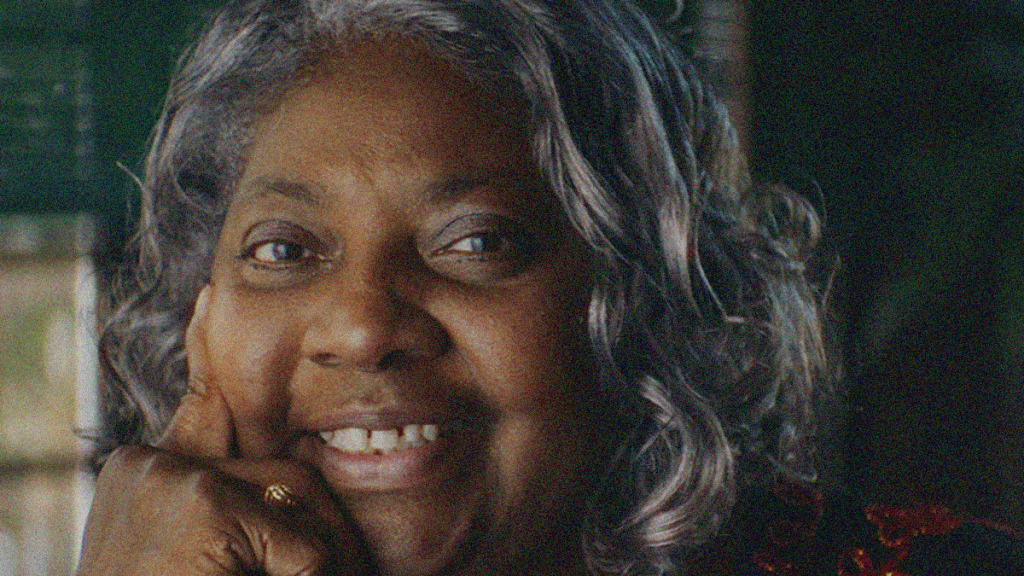
What better way to hear about Lusia Harris than from the woman herself? Ben Proudfoot’s documentary short The Queen of Basketball sees the charismatic former three-time national champion and Olympic silver medal-winning player going through her scrapbook of memories following a rise from daughter of Mississippi sharecroppers to the first woman drafted by the NBA. Did she pursue what was most likely a publicity stunt? No. She also doesn’t regret the decision when looking back and seeing who her children have become through choosing family instead. You can’t help wondering what might have been, though, if opportunities like the WNBA existed back then. With nowhere to go in the sport but coaching after college, those multi-million-dollar endorsement contracts never came her way. Gender equality only went so far.
That’s the gradual nature of paradigm shifts. Just because Title IX was signed to give teenage girls the opportunity to play high school and college ball didn’t mean society or sponsorships were ready to provide them a viable professional platform to continue their journeys. It didn’t matter that her school of Delta State was selling out women’s games while the men’s weren’t. It didn’t matter that she and the team were written up in newspapers all over the country or that the influx of money pouring into the university was allowing them to fly to games. There was still that barrier preventing them from that next step and it took a toll on Harris. To watch her smile drop when talk about her late-presenting bipolarism post-career is heartbreaking.
Her sacrifices and roadblocks helped pave the way for today’s women stars, though. She was a pioneer that gave young girls a role model who looked like them. Where Lusia would stay up late under a blanket to watch Oscar Robinson play on TV, they had “Queen Lucy” to think about instead and all the accomplishments she achieved. Late-70s college basketball is about Bird, Magic, and Lucy now. And with a fast-paced full-court press of its own, Proudfoot’s film expertly splices archival footage with her animated anecdotes and infectious laugh to ensure no one will ever forget that truth. It’s an inspirational and candid conversation with a basketball legend that both reminds us how far we’ve come as well as how much further we must go.
Winner:
Documentary Short
دری سندری د بینظیر لپاره [Three Songs for Benazir] [2021]
Rating: NR | Runtime: 22 minutes
Release Date: 2021 (Afghanistan) / January 24th, 2022 (USA)
Studio: Netflix
Director(s): Elizabeth Mirzaei & Gulistan Mirzaei
We will either be bombed by the foreigners or killed by the Taliban.
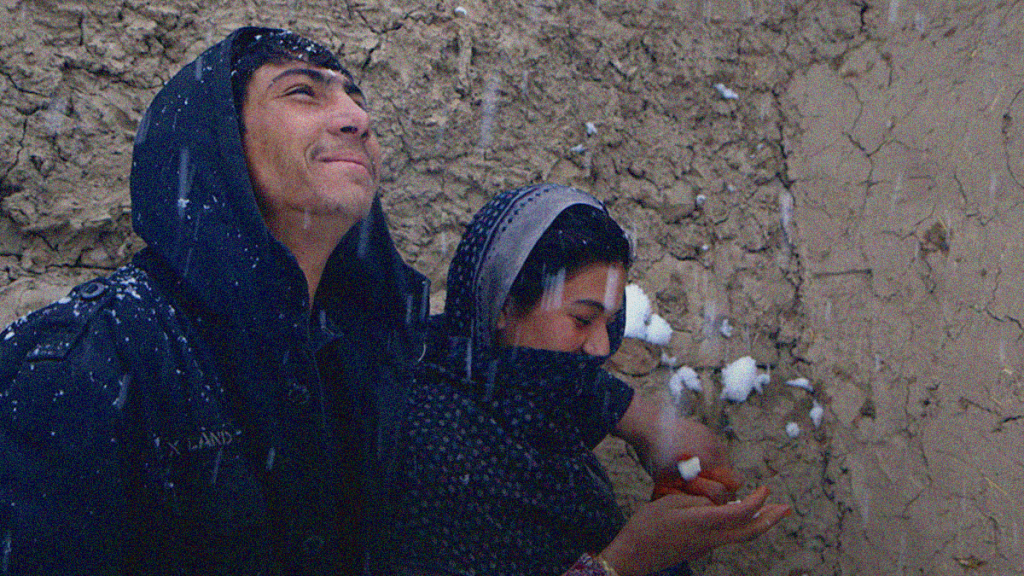
Shaista wants to make his family-in-the-making proud, but options are limited considering he’s uneducated and locked in a war-time displacement camp in Afghanistan. Forming bricks to sell to his neighbors isn’t enough and working in the opium fields leaves too much to chance. So, his desire is to join the National Army and prove himself worthy of a well-paying job despite his hardships. While we never hear what his pregnant wife Benazir thinks on the subject—she’s relegated to an audience member, laughing at his silly songs—Shaista’s brothers and elders are very clear on the fact that they won’t help in his pursuit. And you can’t blame them considering enlistment demands guarantors to take responsibility for any wrongdoing that may occur. It’s too big of a risk.
Elizabeth Mirzaei and Gulistan Mirzaei’s documentary short Three Songs for Benazir follows this young man’s attempt to prove to his family that he can be trusted to serve his people well in their name. Yet, as we soon discover, it’s not about trusting each other. It’s about survival from the elements and poverty. It’s about contending with the drone in the sky allowing westerners to spy on them. It’s about the looming threat of Taliban violence. To vouch for him with the military not only puts them on the hook for his potential transgressions, but it also demands they look after his wife and child while he’s gone. Shaista has personal responsibilities that must take precedent above his own pride right now. Unfortunately, those aren’t easily met either.
This is a very brief window into the struggles faced by Afghans who have been forced to flee their homes from the Taliban that includes a lot of information to process. From the emotions that come with feeling betrayed by relatives to the promise of new life to the constant sense of being watched, it’s a futile situation with few answers. The Mirzaeis aren’t trying to provide any, though. They merely want to document these desperate circumstances through the story of one young man fated to suffer the exact plight his family warned him about despite following their wishes instead of his desires. That’s the sad truth of such humanity crises—there are no “good” choices. Sometimes the safest bets lead you to despair quicker than the gambles.
Nominee:
Documentary Short
When We Were Bullies [2022]
Rating: NR | Runtime: 36 minutes
Release Date: March 30th, 2022 (USA)
Studio: HBO Documentary Films
Director(s): Jay Rosenblatt
Writer(s): Jay Rosenblatt
And I participated.
It couldn’t have played out better that the person to give writer/director Jay Rosenblatt the crucial perspective that he remembers the bullying incident at the center of his short documentary When We Were Bullies because of his complicity rather than the incident’s severity was his now ninety-two-year-old fifth grade teacher. How perfect is that? While you could place partial blame on her shoulders for punishing the whole class because of one student’s actions and naming him as the reason, her labeling them “animals” during their next class undoubtably proves a key component to why that complicity hurts so much. Maybe Jay didn’t remember the exact word she used until fellow classmate Richard J. Silberg shared his version of events, but its impact certainly stuck with him.
Just because it remanifests itself through a series of coincidences doesn’t mean the event wasn’t profoundly influential towards who he’s become in the decades since either. A simple three-frame scene in an old educational film cannot catalyze this reaction if it hadn’t. One light punch from a bystander while two boys start fighting is enough to get those feelings of guilt and disgust flooding back into his consciousness? Yes. Because it delivers the toxic masculinity of boys raised to be “men,” the survival instinct to push someone else through the gauntlet of adolescent abuse to save yourself, and the false sense of pride and loyalty that comes with mob behavior. These scars put Jay on a path of reckoning and he stepped forward with open heart and mind.
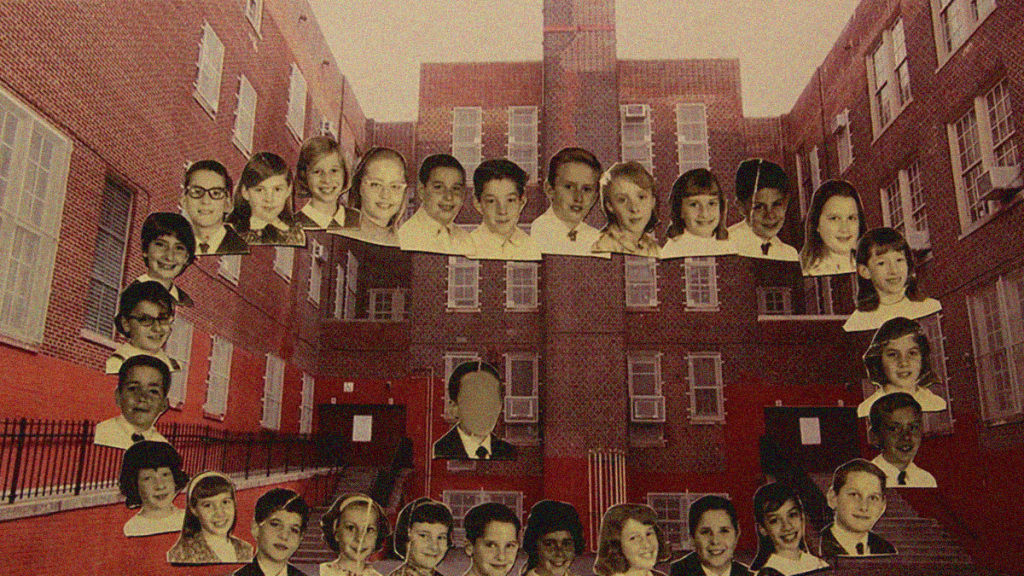
Part essay film autobiography and part entertaining anecdote, Rosenblatt allows the words and reminiscences speak for themselves against contextually relevant stock footage and Jeremy Rourke’s inventive animations using cutout portraits of the fifth-grade students in question. Those faces circle around their blurred-out victim (making this about “Dick” would be a disservice to them recognizing their actions are what mattered) while the school-yard background separates into multiple pieces or crumples up to lead us to the latest visual segue. Rosenblatt plays with time to keep us engaged (his old teacher isn’t wrong when saying this film could be tedious if presented wrong), letting revelations serve as cliffhangers with the propulsive force necessary to learn more. Some pay-off narratively. Some pay-off thematically. Some are just plain weird (Elementary school reunions?).
It’s a journey of the soul with regrets laid bare that never comes off as fake via over-zealous sentimentality. Jay reconnects with old classmates to talk about the incident and a few of them describe other transgressions at “Dick’s” expense—the sort that can make remorse difficult to fully buy into. Alongside those moments is also plenty of evidence of real contrition with some realizing in hindsight just how damaging their actions could have been. Does knowing “Dick” is now a successful television producer help it all go down easier? Definitely. Yet that knowledge may also allow Jay to dig further and demand honesty rather than try glossing over intent. This is an important topic deserving that truth. Hopefully the humor helps us absorb it to spark change.

Nominee:
Documentary Short
Images courtesy of ShortsTV.




Leave a Reply