
Originally posted at The Film Stage
Affairs of the Art [2021]
Rating: NR | Runtime: 16 minutes
Release Date: 2021 (UK) / December 9th, 2021 (USA)
Studio: National Film Board of Canada / The New Yorker
Director(s): Joanna Quinn
Writer(s): Les Mills
Another obsessive in the family.
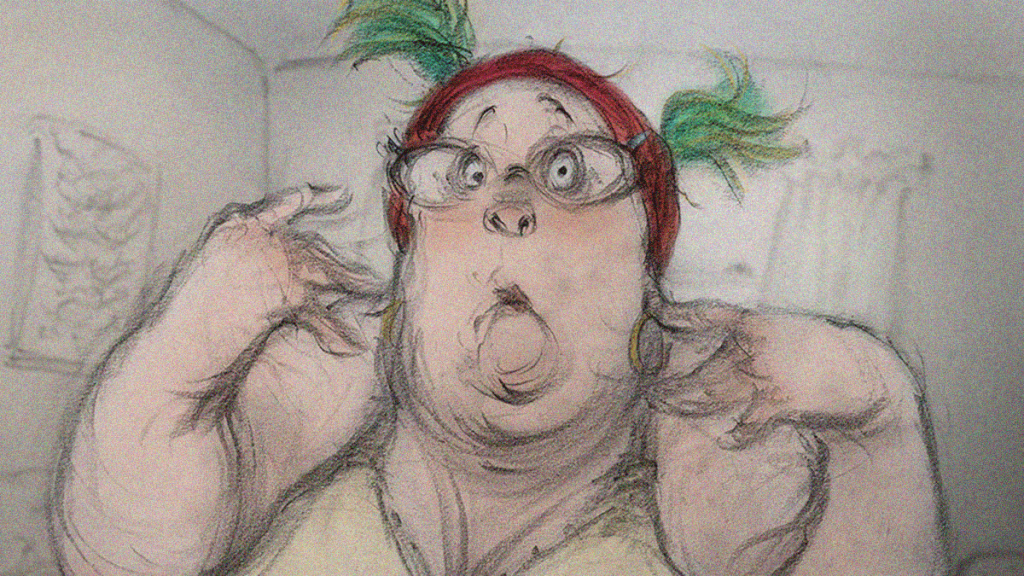
Fifteen years after the character’s last foray in Dreams & Desires: Family Ties and thirty-five years since her debut in Girls Night Out, everyone’s favorite Welsh housewife Beryl (Menna Trussler) is back to narrate a series of anecdotes centered upon her eccentric family while pursuing a new obsession: hyper-futurism. The original team of Joanna Quinn (director and animator) and Les Mills (writer) takes us behind the scenes of their star’s art by showcasing the tireless support of her husband (walking up and down the stairs nude) and her full-tilt embracement of her own body as a paintbrush. More than just her creations and the hoops she puts people through to create them, however, Affairs of the Art seeks to remind us that artistic creation possesses no defined boundaries.
Is her sister Bev (Quinn) any less an artist with her passion for taxidermy or affinity for plastic surgery (making her biology her canvas)? What about her son Colin’s (Brendan Charleson) creations in pursuit of his evolving passions for odds and ends like screw threads and birds—the latter of which involves him in a plot to avenge a pet’s death with murder? When art is involved, everything becomes fair game no matter how morbid (a tale of Bev spending hours with a dead body), X-rated (Beryl attempting to fit into an “uplift bra”), or absurd (mocking the family for going overboard while using a brush to apply blue paint to her entire body). Quinn and Mills take that to heart, pushing their characters into increasingly wild scenarios.
No matter how entertaining the hijinks, though, the draw is the animation. This sixteen-minute film is hand-drawn on paper before being scanned into a computer for coloring and compositing. Its rough, sketchy nature lends a personal touch that CGI cannot replicate, the organic movements and embellishments rendered with meticulous care right down to the apparently genetic buck-tooth appearance of Beryl’s so-called menagerie of “geeks.” The mixture of love and disgust and jealousy and admiration for each of this factory worker-turned-artiste’s journeys back in time delivers an energetic atmosphere of uncertainty as we’re never sure just how far Quinn and Mills will take this crew’s child and adult forms for a laugh. The answer is, of course: as far as necessary. Their dedication to the bit knows no bounds.

Nominee:
Animated Short
Bestia [Beast] [2021]
Rating: NR | Runtime: 16 minutes
Release Date: 2021 (Chile)
Director(s): Hugo Covarrubias
Writer(s): Hugo Covarrubias & Martín Erazo
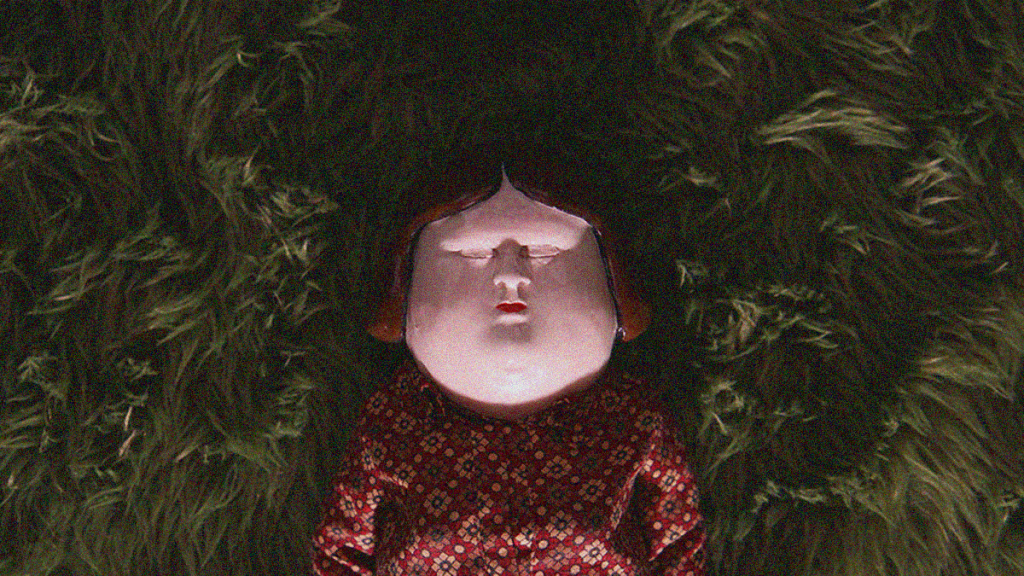
Her name was Íngrid Olderöck, otherwise known as “The Woman with the Dogs.” A Carabineros de Chile officer turned National Intelligence Directorate (DINA) agent under Augusto Pinochet, she received the nickname due to having trained a German Shepherd to sexually abuse and rape political prisoners of the regime in a middle-class neighborhood home coined the “Sexy Bandage.” She would later desert and fall victim to an assassination attempt led by the Movement of the Revolutionary Left (MIR) despite always assuming the hit was orchestrated by the Carabineros itself. She’d survive, claim madness with the bullet still lodged in her head, and ultimately die in 2001 of a digestive hemorrhage without ever facing charges for the human rights violations she committed in the 1970s. She is the Beast.
Directed by Hugo Covarrubias and co-written with Martín Erazo, this animated short seeks to address the darkness of Chile’s past by giving Olderöck’s boogeywoman form by way of an emotionless porcelain doll. The stop-motion animation aesthetic is absolutely stunning with the glossy sheen of heads and hands juxtaposed against rough cardboard sets and canvas bodies. Our first glimpse of her historical monster comes inside an airplane with the camera slowing creeping closer and closer to the cracked hole at her temple until we’re transported back through nightmares, memories, and fantasies. Outdoor scenes playing fetch with her dog Volodia make way for bloody decapitations, bestiality (with the help of fruit preserves), and foreboding ghosts lingering in the distance with blank faces devoid of features. It’s some truly disquieting stuff.
Part national identity catharsis and part political diatribe, Covarrubias takes us through the psychological struggles of an infamous tormentor in a way that ensures we provide her no sympathy. Her fate is karmic retribution, the demons haunting her waking and dreaming self her own creation and weight to bear. Some of the imagery is disturbing to the point of malicious intent via creative license, but you can’t really blame the filmmakers for raking Olderöck’s memory through the coals. Admiring the craft simply means enduring the subject matter’s unavoidable horrors. And although its impact surely hits harder for those who know the story and/or lived through that era’s prevailing sense of fear, learning a bit about who she was and what she did is enough to sufficiently follow along.
Nominee:
Animated Short
БоксБалет [BoxBallet] [2021]
Rating: NR | Runtime: 15 minutes
Release Date: 2021 (Russia)
Studio: Melnitsa Animation Studio
Director(s): Anton Dyakov
Writer(s): Anton Dyakov & Andrey Vasilyev
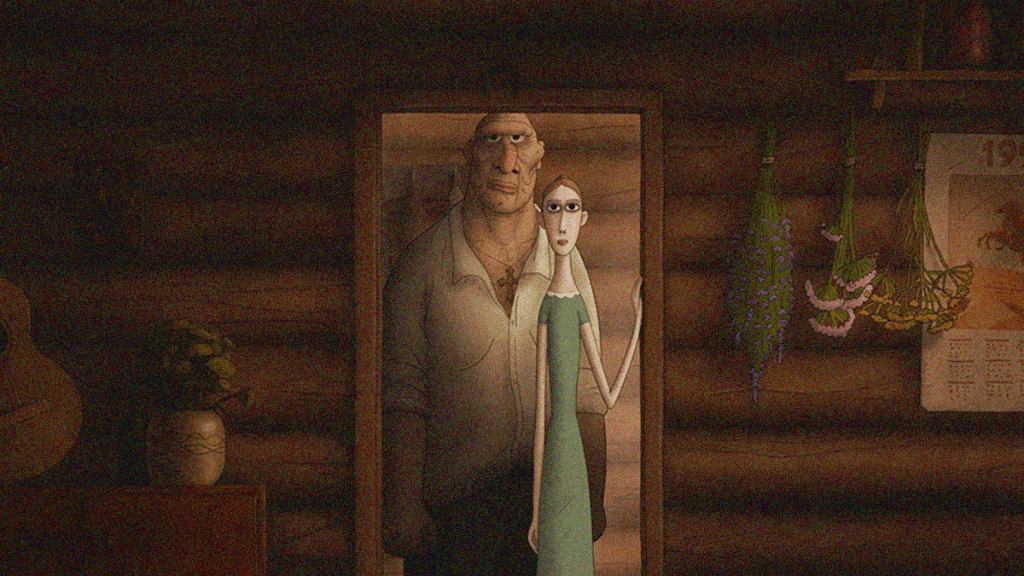
While a coup attempt against Russian President Boris Yeltsin unfolds at the parliament in 1993, a beautiful ballerina named Olga and a beaten-down boxer named Evgeny cross paths on the subway. The encounter lasts but a second with the former not even registering that it had before exiting the train car. If not for his television changing to static after news reports of the violence on the streets (147 people were killed with 437 others left wounded), that might have been the end of it. Instead, Evgeny leaves his apartment to find Olga outside crying about her cat caught in the tree. Ever the specimen of chivalrous masculinity despite his rough appearance, his pugilist climbs up to retrieve it before falling to the ground. A friendship is born.
Director Anton Dyakov and co-writer Andrey Vasilyev’s BoxBallet continues through cross-cut sequences of her rehearsals and his fights. Olga confronts the lecherous advances of her director, forcing a choice between personal safety and career advancement. Evgeny confronts a shelf-life long-since overdue as younger and better fighters use him as a punching bag to almost comedic effect (the boxing matches are rendered as stoic fighters being met by lightning-fast fists whether first-person or in profile). It’s beauty and brawn clashing at a moment of general strife with a sense of anxiety as far as whether they can exist in the other’s world. Her wanting to spend time with him as he disappears for the night to track down her purse-snatcher. Him replenishing her sugar with a 50-lb sack.
The question is thus whether one or the other will take the plunge and try. Even if he decides to get dressed up for her performance or if she chooses to watch him get bloodied and bruised, however, the other will have to meet them halfway. That’s the struggle. Risk everything you have now for the promise of love? And at a time when all-out civil war might break at any moment with Swan Lake playing on the TVs to block all updates about the coup? Nothing concerning this unplanned relationship is simple and yet we wish it could be so his saggy, potato-faced brute and her long-legged, elegant dancer might receive their happily-ever-after against all odds. With each abrupt cut to black, we pray the tides turn.
Nominee:
Animated Short
Robin Robin [2021]
Rating: G | Runtime: 32 minutes
Release Date: November 24th, 2021 (UK)
Studio: Aardman Animations / Netflix
Director(s): Daniel Ojari & Michael Please
Writer(s): Daniel Ojari, Michael Please & Sam Morrison
Not bad for a couple of flightless fools, eh?
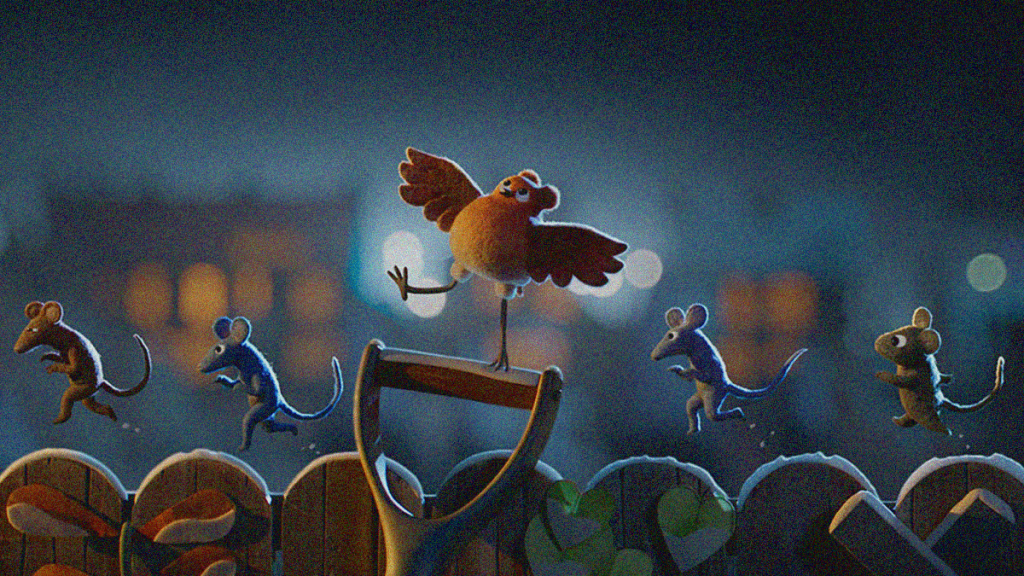
Familiarity means nothing as long as there’s enough heart. This is especially true with animated films such as Daniel Ojari and Michael Please’s Aardman-produced short Robin Robin. We have seen the scenario many times: a lost egg finds its way to the home of a pack of mice on a scary rainy day, forcing Dad (Adeel Akhtar) to bring it inside and ultimately raise Robin (Bronte Carmichael) as his own. Like with most of these oddball situations, that which makes her different from them is initially presented as a flaw (she can’t sneak when breaking into human homes for crumbs) before eventually proving a boon (those wings might come in handy if she ever learns to use them). And that revelation’s drama is both entertaining and endearingly sweet.
Co-written by the directors and Sam Morrison, the comedic struggles Robin faces introduce two outsiders to help propel her onto this path of self-discovery. One is a friend: Richard E. Grant’s “things”-obsessed Magpie with a broken wing. The other is a foe: Gillian Anderson’s malicious cat. And it’s an unfortunate set-back where dinner is concerned that brings them all together since Robin hopes to make up for her “mistakes” (an inability to be quiet or careful) by bringing home enough food for the entire family herself. Since sticking to Dad’s plan is hard enough, though, going out alone won’t be much easier due to an unawareness of just how noisy she is (a truth that’s exposed when she tells Magpie to follow her lead … and he does).
The humor is just offbeat enough in parts to resonate with adults while the gorgeous felt puppetry work (this is Aardman’s first stop-motion production without plasticine) provides the type of characters and world to steal the attention of any child watching. Ojari and Please aren’t afraid to make the scary parts scary either with Anderson’s cat proving a formidable antagonist with the sort of nonchalant malice of old like the Siamese cats from Lady and the Tramp. We feel the danger when it arrives and revel in the slapstick gags (as well as Magpie’s acerbic quips) used to ensure things never get too dark. Robin is finding the confidence to embrace her identity as both bird and mouse—an evolution of spirit that can overcome anything.

Nominee:
Animated Short
The Windshield Wiper
Rating: NR | Runtime: 14 minutes
Release Date: 2021 (USA)
Director(s): Alberto Mielgo
Writer(s): Alberto Mielgo
‘Cause soon enough we’ll die.
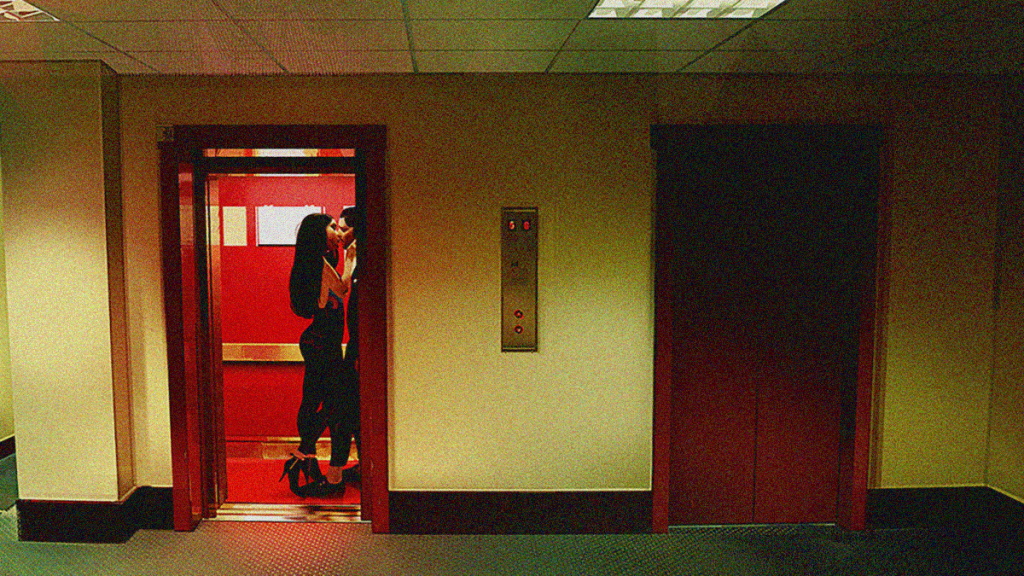
The first thing I thought while watching Alberto Mielgo’s short film The Windshield Wiper was that it must be utilizing rotoscoping. Every character populating his multiple vignettes about relationships—all sparked by a chain-smoking gentleman in a bar positing the question, “What is love?”—looks and feels real within his/her environments in a way that seems hard to fathom as not having been traced above live-action footage. As soon as you delve into the end credits, however, you see that it’s all been 3D-rendered by animators. The scenes are based on memories and eavesdropped moments Mielgo has experienced, but their look and feel are his own interpretations of them. It’s a glorious feat of artistry that ensures the piece is worth a look on aesthetic alone.
That the message it delivers proves so profound almost seems like a bonus despite it being the driving force behind the project. Each glimpse into these characters’ lives is filled with the hope, pain, and desire we’ve all felt at one time or another. Some of them are devastating (lost love, mixed signals, suicide). Some are familiar and perhaps generic in their matter-of-fact delivery (a shared cigarette on the beach or sex). Some are funny (two Tinder-users swiping away as they keep reaching for the same items at the grocery store). And some heartfelt and honest (a drunken homeless man airing out his emotions to a mannequin and asking for forgiveness). Brief interludes (the simplicity of a shared kiss) juxtapose against multi-part narratives to visualize love.
What quantifies it is your reaction to the romance and tragedy alike. There’s purpose to how Mielgo presents each chapter that goes beyond pacing and punchlines. He’s easing us in with silent moments of universality before punctuating the whole with quick bursts of suffering and longing that are no less important to answering that bar patron’s question than the rest. It’s all relevant—the XXX ads surrounding a public phone, the fallen petals of roses in the rain, and the courage to stop and say something to the woman you pass almost every day. They may be objectively different from each other in every conceivable way, but they all become each participant’s entry fee into the rarified space of feeling that indescribable feeling to which nothing else compares.
Winner:
Animated Short
Images courtesy of ShortsTV.




Leave a Reply