
Rating: R | Runtime: 116 minutes
Release Date: December 17th, 2010 (USA)
Studio: Paramount Pictures
Director(s): David O. Russell
Writer(s): Scott Silver and Paul Tamasy & Eric Johnson / Paul Tamasy, Eric Johnson & Keith Dorrington (story)
I thought you were my mother too.
It’s been a rough decade for director David O. Russell. He’s had highly publicized blow-ups with George Clooney and Lily Tomlin while his last project, Nailed, was shelved after financing fell through to the point he couldn’t finish filming. So, it’s almost a miracle he was given the opportunity to even fathom helming Scott Silver’s scripted The Fighter once Darren Aronofsky backed away after having completed his own ‘fighting’ film in The Wrestler.
And with the rave reviews from both critics and audiences, you could start giving Russell the benefit of the doubt by categorizing those on-set fights as aberrations. Not only has Mark Wahlberg worked on three of his movies, the temper storms from Christian Bale never escaped this time around—although I do believe staging a battle of Russell vs. Bale was a missed, albeit unnecessary, publicity stunt. Instead, his direction and ability to recreate Lowell, MA and the story’s central family becomes just as important to the movie as his stars’ magnificent portrayals.
After a friend saw the film, he told me it had become his dark horse Best Picture Oscar winner, calling it a “total crowd pleaser” and “Rocky with crack”. He was spot-on and, dare I say, almost selling it short since I’d argue it out-Rocky’s Rocky itself. Based of the true story of Micky Ward (Wahlberg) and his unique family, The Fighter is an underdog tale in the best sense of the word. There’s familial redemption, surprising success against all odds, and drug abuse reformation.
While Ward’s journey up the ladder to get a welterweight title shot is the main crux of the plot, his personal life becomes unavoidably intertwined. His half-brother Dicky (Bale) is a former boxer himself—once knocking down Sugar Ray Leonard—who’s now a crackhead screw-up reliving glory days through lies and fiction (brainwashing his own mind into believing an HBO documentary crew following him is filming a comeback shot and not a look into his addiction). Micky’s seven sisters from two fathers constantly buzz about with superiority complexes. His new girlfriend Charlene (Amy Adams) is marginalized by a family of which she despises anyway. And his mother Alice (Melissa Leo) usurps control over his life whenever possible.
But through all the craziness, Micky is constantly in a family-first mindset. There’s no way he couldn’t be with the close-knit, volatile bunch surrounding him with praise, disgust, and whatever emotion they feel will prey on his guilt to stay under their thumb. Dicky might have taught him everything he knows inside the ring, but Micky needs to step back and realize his brother, coupled with a money-hungry mother, is only making things worse once addiction takes over his life.
He gets the HBO and ESPN fights, but each opportunity is merely for the guy on the other end of the ring, turning Ward into a stepping-stone up. When they force him into a fight with a guy twenty pounds heavier, he complies, knowing the family needs the payday just as clearly as he knows he’ll get destroyed. Alice and Dicky are cut from the same cloth, forever looking for fame, publicity, and the media, knowing he wrecked his chance at being the ‘Pride of Lowell’ himself. So, they make sure to do whatever it takes—whether it’s best for Micky or not—to make sure his brother won’t fall short.
It’s the introduction of Charlene that finally initiates a change in Micky’s mentality. He realizes he needs to stick up for himself and do what he knows is right for his career. Even to this day the real Charlene can’t stand his sisters or Alice for their abrasive nature, bully mentality, and what they did to her man. Amy Adams embodies those feelings of loathing with the love she has for Micky as well as the compassion to understand these monsters’ importance in his life despite their destructive qualities. It’s a role very much against her Tinkerbell typecasting and will hopefully open doors to the challenging work she deserves in the future.
A big help to that performance, however, is Leo’s transformation into Alice. Adams has no choice but to play angry against this manipulative woman always seeking pity, cutting down her family (poor Jack McGee, as husband George, constantly barraged with verbal and physical abuse), and holding onto past successes (Dicky’s claim to fame being more important than Micky’s potential) before getting behind future ones. She is the evil that drives everyone.
Despite the fireworks from the ladies—and I don’t want to forget the scrappy Dendrie Taylor as ‘Red Dog’ Eckland getting punched almost as much as Micky—Russell knows the film is about the strained relationship of love and hate between brothers. Right from the opening sequence of Wahlberg and Bale walking the town of Lowell as cameras follow and townsfolk laud adoration upon them, we see what they mean to each other once the drugs and bad decisions fall into the background.
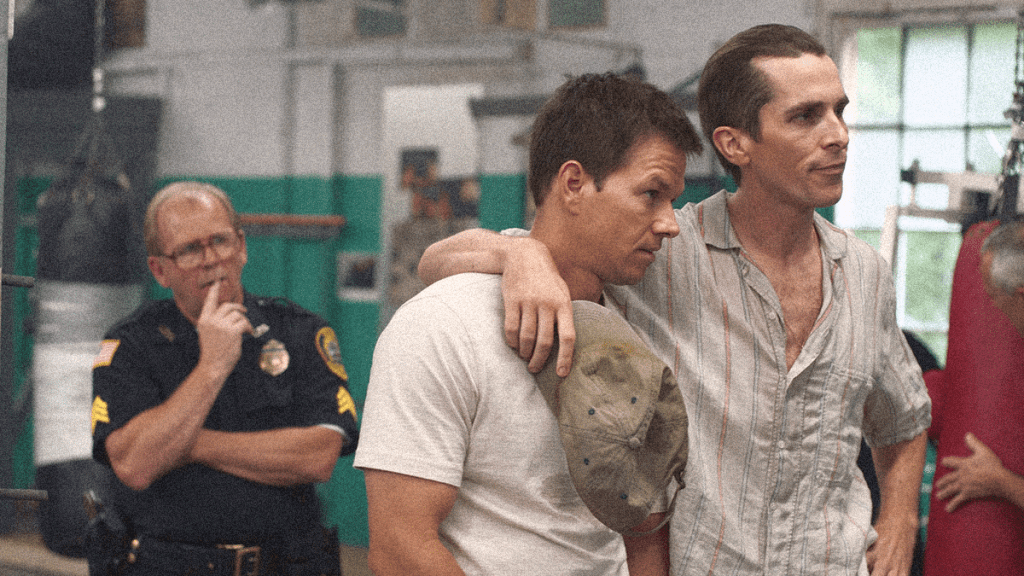
The ex-Funky Bunch leader shows again how impressive he can be when playing city street-type characters, allowing emotions to ring true beneath his tough exterior rather than induce laughter as he tries to be an “every man” or suburbanite science teacher. You believe his conflicted feelings towards every family member, his trepidation and anticipation for each fight, and the punches he throws and takes (supposedly full contact for realism). But, while he may be the star, Russell never forgets that it’s Dicky who’s the heart and soul—even if Mickey O’Keefe, (police officer and trusted co-trainer, playing himself), refuses to acknowledge the fact.
Bale hopes to transform from junkie to savior, using his love for family to finally escape the gutter and make good on his promises and failed dreams. Watching the real Dicky Eckland at the end credits shows just how impeccable Bale’s performance was at getting the ticks and vocal pattern down to let the man’s humanity ring true when his mistakes could easily have overpowered any good accomplished.
Micky Ward’s unlikely journey to the top not only changed him, but also the lives of those around him. Charlene finally had the opportunity to leave her party girl reputation behind and live up to the college aspirations she once had. Alice is able to see the error of her ways—although perhaps not fix them—and realize she has nine kids, not one. And Dicky uses what little he has left to help the young boy who grew up idolizing his every move find the victory he never could. The simple fact Micky never gave up by letting a broken hand or extra weight pull him into retirement saved Dicky’s life. The Eckland/Wards may not be the Cleavers, but at least they know love exists beneath the publicly ridiculed insanity we all see.

Winner:
Supporting Actor, Supporting Actress (Leo)
Nominee:
Motion Picture, Supporting Actress (Adams), Directing, Editing, Original Screenplay
Left to right: Mickey O’Keefe plays himself, Mark Wahlberg plays Micky Ward, and Christian Bale plays Dicky Eklund in THE FIGHTER. Photo credit: JoJo Whilden © 2010 Fighter, LLC. All Rights Reserved.




 jaredmobarak.com
Leave a comment