
While attending the 360|365 George Eastman House Film Festival in Rochester, I was struck by the selection of festival winners screening for its Upstate New York audience. With so many award winners, I went in blindly to whatever fit into my schedule—experiencing work I wouldn’t have a chance to see in theaters for months, if at all, here in Buffalo.
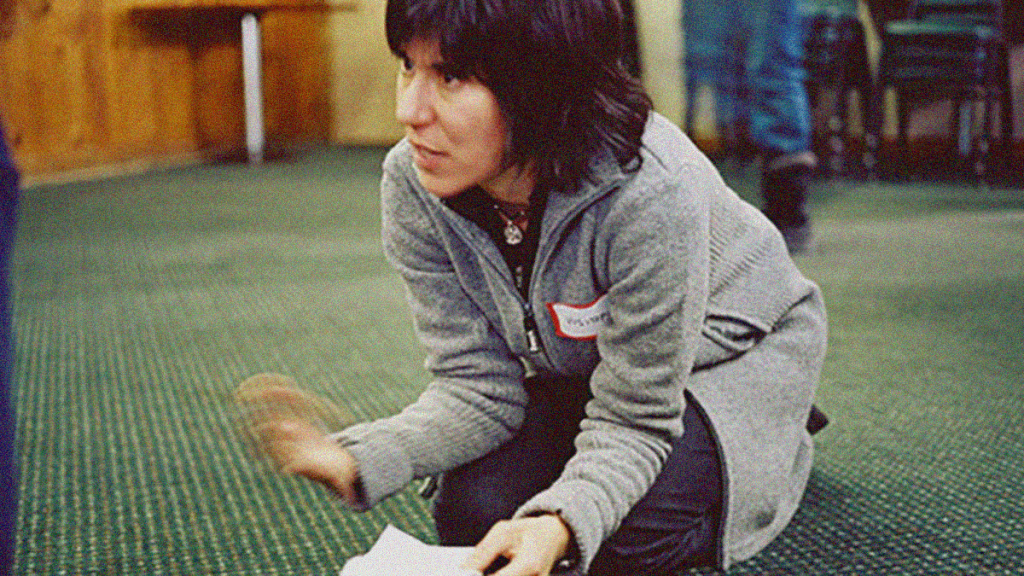
After three straight days of movies, Winter’s Bone, the winner of the 2010 Sundance Grand Jury Prize for Drama, ended up being the final film of my tenure there. I was aware of writer/director Debra Granik’s debut feature Down to the Bone, but mostly for the breakout performance of Vera Farmiga rather than the film itself. Amazed at the realism and drama infused throughout her latest, I made sure her name became a fixture on my ‘directors to follow’ list. So, when the opportunity for a thirty-minute interview arised, I jumped at the chance.
The whole thing happened out of the blue to be conducted just one day after I agreed to participate. Luckily, thanks to Netflix Instant Downloads, I was able to sit down and watch Down to the Bone the night before, getting a better handle on her style by comparing the two films. The interview, however, was to help market the July 27th release of Winter’s Bone in Buffalo. So, besides both movies, I also dug up the production notes online, prepared a few questions to lead with, and prepared for the conversation to simply evolve from there.
Granik proved to be a very passionate woman towards her craft and motivations in subject matter. An MFA from New York University’s Tisch School of the Arts helps explain her deft handling of the medium as well as bolster the fact she won Sundance’s Dramatic Directing Award in 2004 for her first film. A B.A. from Brandeis University in 1985, with a major in politics, then shows her desire to instill social change through her art.
Granik’s day had gotten off to a late start thanks to an earlier interview pushing subsequent times back, but she stuck to the line-up and pushed through her Northeast tour. Having already done one session with press from Ohio, Buffalo seemed the next logical choice—especially since she already had a connection to our fair city (more on this to come).
To start things off, however, I wanted to get a little background on her beginnings in the industry knowing that Down to the Bone was born from a meeting with Corinne Stralka and Rich Lieske—the subjects of her short film Snake Feed. The point of the encounter was to follow them and shoot documentary footage, a format that was the main impetus for her craft and first step into the industry. But the prospect of leafing through so much film and constantly finding new and interesting tangents and directions for the material to go proved overwhelming.
Debra Granik [DG]: “… in the end, I felt like to take that inspiration and find a way to distill it and organize it into a fiction [was] almost like a happy answer to the situation. The story can be infused—it’s not like a story based on a true story. It’s not that phrase. It’s inspired, inspired by life experiences, you know? And so I felt like there was some way that documentary technique, meaning observation of people and their daily life, could be used. So, in the end we could have structure. But I would like to do both [documentary and narrative]. Would I always try and do both? Yes.”
It was that structure that made the novel Winter’s Bone so appealing to her and producing partner Anne Rosellini. Daniel Woodrell’s work made its way to her on the usual circuit of unpublished manuscripts trying to find a cinematic home. Already seeing Ang Lee adapt Woe to Live On into his 1999 film Ride with the Devil, Woodrell felt his latest would transfer well too.
As far as Granik and Rosellini were concerned: he was right. They contacted him as soon as they finished reading to drop a line of interest and get the ball rolling. The process, she says, was fluid. They met with Woodrell, went to the very Ozarks community written about to scout locations, and began the conversion process from written word to visual image. And, although the finished work may be very close to the source, many changes were made as the script evolved throughout pre-production and filming. But no matter what details were added or excised, the structure that so enamored the filmmakers—the backbone of Woodrell’s novel—always remained intact.
DG: “It’s like, with a fiction, you can actually add things … you don’t have to stick to only the truth. You can literally add a Godfather figure. Or you can add a job the character didn’t do but wanted to do—or tried or failed at.”
These detail alterations came, for the most part, from locals on set. Those who lived in the Ozarks their entire lives relayed things like, “oh that’s not the toy they’d have” or “the language is wrong here, it should be ___”. These changes all added to the authenticity Granik sought and worked towards embodying the world she became part of for two or three years of research.
No example better illustrates this than the Dolly family horse. Here’s a member of the family that must be fed and taken care of on top of Ree, her young siblings, and her troubled mother. If just one paycheck is missed, they’ll discover how crucial every penny is to their survival. It’s therefore a crushing blow to realize the horse must be sacrificed. Ree takes it to the neighbor, asking for them to care for it on her behalf. It’s a sad goodbye illustrating the values and lifestyle those from modern cities might never fathom. The juxtaposition with a later question of whether Ree must also give up her brother allows us to begin comprehending how dire finding her father proves.
This wasn’t where the local help ended, though. Not only was almost every set and house filmed in Winter’s Bone an actual home lived in by someone willing to assist them, but many also acted in supporting roles and as extras. Granik used non-professional actors on Down to the Bone too—many of the Narcotics Anonymous patrons were real addicts on the mend—so this wasn’t her first time getting people to perform roles with the exact verbiage and mannerisms of someone in that situation rather than auditioning imitators.
Because she has never been afraid to go in this direction, I had to ask whether she felt their presence helped the professional actors find their voice and character by playing off someone who knew the life better than anyone. Unsurprisingly, she answered, “I think it does bring out stronger performances. I do.”
DG: “I was just thinking of one of the characters that Vera [Farmiga] dealt with in Down to the Bone. he was the public defender very near the town where she actually lives and we were filming. […] I was a little confused about getting the script right about the B-Class felony and New York State [note: the lead characters are arrested for possession late at night in the film].
“No one ever had to correct his script. He wrote those lines. He knew what a B-Class felony was. He knew what securing x-amount of heroin or whatever it was [meant]. He knew exactly. He dealt with people the likes of the character. He could deal with her frankly. He could tell her what her options were. He was versed in the fact that New York State had just started the drug court. He could explain what that was. I’m just saying, there was this really paltry line there in the script that dealt with what the public defender told her and he took it. He actually made it extremely precise and he dealt with her in the way he would anyone else. He didn’t get freaked out. I just kept saying look in her eyes and treat her just the way you would treat anyone else you’re dealing with at 11PM, you know, because they’ve just been brought in.
“And that same thing happened, I think, with the Army recruiter in Winter’s Bone. We talked to recruiters and in the end […] this one recruiter was brave enough to say he’d consent to be in front of the camera. And basically, what I had him do was answer Ree’s questions very realistically, by the law, in terms of when a person can actually enter the US military without parental consent. […] What helped him was that Jen [Lawrence] knew the scene. She knew the parameters, so she could keep the scene basically the same every time. She wasn’t going to fling new questions at him. She wasn’t going to disarm him. It wasn’t about [improvising]; it was about [her asking] him the same questions and him honestly answering her.
“But I think that Jennifer did get a lot. He didn’t answer everything exactly the same. His wording would change. In fact, he felt that he needed to be more emphatic, so he would say it a little differently. And that meant she couldn’t just be passively waiting to use his last word as her cue, because it wasn’t going to be the same last word every time. Instead, she had to listen so intently that she could actually respond very precisely. And that added a very important charge to the scene.
“So, the answer to your question would be: when it’s working, it can be very enriching for the professional actor.”
There is also one more advantage to using an unparalleled wealth of first-hand knowledge: budgetary constraints. The simple fact of using untrained actors means cast costs will go down. It’s a given and, frankly, a necessity for a small budget film going into production with less money than planned for like this one.
It’s not just about cost-effective performers, however. It’s also equipment like the use of the Red One HD camera. Granik spoke to me about how you can’t even compare this piece of machinery with the Sony PD-150 PAL used on Down to the Bone, (pretty much a handheld you could buy at the store). The only reason they were able to use the Sony was that they had a 35mm lens to attach. The Red became crucial to the picture clarity and even allowed the crew to need fewer people working it. By no means did the camera make filmmaking, as she coins, a ‘cinchy’ prospect. It still is very hard work needing an ensemble of dedicated people. The affordability, though, is a boon for sure. Especially being able to take multiple angles for the coverage she and her editor—on-set to help inform decisions—desire.
You also can’t disregard having someone you respect and trust by your side during the journey. For Granik, that person is producer Anne Rosellini. She helped get Down to the Bone made and was there from the start of Winter’s Bone as co-writer of the script. Granik couldn’t say enough about the partnership and how similar their sensibilities are while still containing a large capacity for creative tug-of-war when of separate minds. She says that when you find a relationship, as “mutually beneficial as this one, you don’t look to end it any time soon.”
So, don’t be surprised if Rosellini’s name connects to her third film and beyond. Granik trusts her to the point where, if an actor comes in and seemingly hits the audition out of the park, the process will continue if Anne doesn’t agree. The director then hopes subsequent testing will turn her producer around, but, if she still isn’t won over, Granik will have no problem going elsewhere for the role. It’s not that she second-guesses her own choices. She just respects her friend’s opinion enough to realize Anne might see something she cannot.
The team has seen amazing success, so you can’t blame them for sticking together. Winter’s Bone, as stated earlier, won the Dramatic prize at Sundance while Down to the Bone won both the Directing Award and Grand Jury Prize for Dramatic Performance (courtesy of Vera Farmiga) at the same venue six years earlier. But these accolades haven’t gone to Granik’s head. She answered my question about her acceptance into the event with, “It’s always a scary prospect.”
A firm believer that Sundance is a must for American independents, she realizes the auction aspect has become just as important as the screening opportunity. Filmmakers can stand by their work saying they haven’t compromised a thing and won’t watch someone buy the film for anything other than what they believe it’s worth. But Granik knows that mentality will only work for about twelve minutes. You still need to find financial backers to continue making your art. It’s not even about turning a profit to her. It’s about covering the startup costs and not finding herself in debt by the end.
Filmmaking isn’t easy. Granik says the only genre that might be is the romantic comedy due to its template for success and the droves of paying customers flocking to see them. And she’s grateful to have been able to make two movies that have gone on to find acceptance in the cinematic world even though both show a character’s struggle via serious looks at the less fortunate—a common trope for the Sundance stereotype that she has no problem with.
While critics may gripe about the festival experience being an auction house for dark subject matter, it’s a fact they must accept. With the economy where it is, Hollywood just isn’t willing to take the chance on work like hers. That leaves venues like Sundance crucial to the future of the medium to produce films besides the big budget fare making bank despite bringing nothing new to the art form. Soon enough, Granik notes, people will even begin making films on their phones or other similar technologies. That should only make things harder via over-saturation and competition, so story becomes even more important.
Granik wants to help create change where it comes to economic hardship in the world. By portraying it onscreen, she injects it into the audience’s collective consciousness more. So far she’s dealt with heavier material—addiction (Down) and poverty in a society outside the realm of the police (Winter’s)—but it will still be authentic if comedy seeps in. These stories about being unable to make ends meet don’t solely concern criminals or the unlucky, jobless, and homeless. You can have a minimum wage job and appear to be doing okay, yet still find yourself unable to stay afloat.
Humor becomes a big part of that as a coping mechanism to survive these dire situations and keep one’s head. Admitting it is a lofty goal to instill social change with her work, she’s nonetheless off to a fantastic start. Not only have these stories been crafted to contain the pain, suffering, love, and hope in situations seemingly devoid of a happy ending, but they’ve also left their mark on the industry and are being embraced by the public.
Some of that is thanks to the material drawing an excellent caliber of performers. Down to the Bone was a career-making role for Farmiga en route to eventually earning an Academy Award nomination for Up in the Air. And John Hawkes’ performance in Winter’s Bone is yet another notch in his already accomplished belt. Generally a supporting player in eccentric, smaller roles, Hawkes lets it all hang out as Teardrop, Ree’s dangerous yet compassionate uncle. Granik uses the word “religious” when talking about how he treated the character and script. He came on set with the part memorized and realized in look and action—so exacting in its detail that she was forced to reinstate some monologues she removed that she thought would be too hard to act out. Hawkes’ passion knowing how crucial those parts were to the whole showed Granik it could be done.
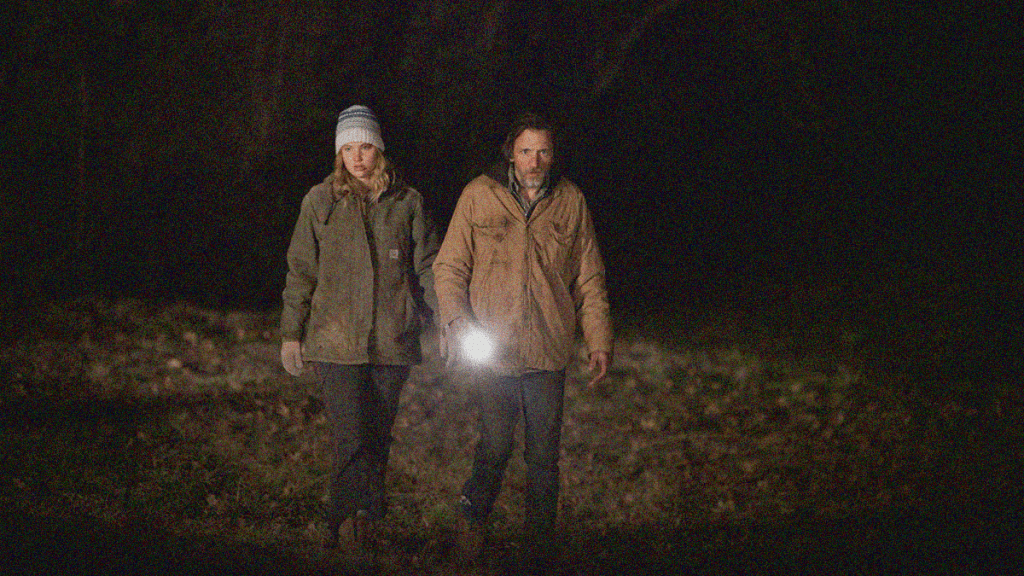
He wasn’t the only bright spot, however, as Jennifer Lawrence really lifts Winter’s Bone on her shoulders. The role of Ree went out on a wide casting call (Anne Rosellini said an Olsen twin was brought in for a reading during a Q&A after the screening I attended of the film), but too many young actresses just didn’t look the part. Ree Dolly is an intelligent-beyond-her-years girl. Attractive, but able to appear like she could be a farm laborer raising two kids on her own. The part needed someone who looked like they fit with the hard-edged inhabitants of their Missouri location. Lawrence came in and showed Granik and Rosellini exactly what they sought, embodying the character’s heart and soul. It’s a role that could do for her what Down to the Bone did for Farmiga.
DG: “I think [Jennifer will] have a lot of offers to be in a huge amount of films. I think that people will respond to the fact, first of all, that she’s had a very unusual early pathway, which is that she has not just been asked to play an attractive blonde. She has literally—all the films she has been in—been asked to use her mind as well and to show a full-fledged character.
“So, if that can continue, that will be a very unusual trajectory. That will be much more like what happened to Jodie Foster, in the sense that Foster was enjoyed as someone who people could also rely on being a very intelligent person as well as, sometimes when she was young, endearing or cute or whatever. [I mention Bugsy Malone to which she responds ‘Yeah, exactly’.] And, I don’t know, I think that, God, if things had gone right for Tatum O’Neal, I think maybe she could even have enjoyed something similar. If things hadn’t gotten so botched—what happened in her life and whatnot.”
The sheer joy with which Debra Granik speaks about her cast and crew is inspiring. She knows the amount of collaboration involved in the creation of one of her films and is grateful for all the help received.
At the end of our interview, I mentioned Winter’s Bone opening on Buffalo, NY screens in a couple weeks and she was excited by the prospect. With a great story, Granik told me about her own visit to the Queen City while casting Down to the Bone almost a decade earlier. Looking to meet Hugh Dillon (who ultimately won the male lead), she came to the city to watch him perform with his band The Headstones. This tidbit surprised me since I’ve been listening to the group’s music since high school courtesy of the Toronto rock station I keep my radio dial on.
Granik couldn’t get over the fervor we Buffalonians showed in a small venue, grooving and singing along to each song, as though “that lake [Erie] means nothing.” I told her that I’d do my best to get the word out on Winter’s Bone, hopefully pushing our city to rally around it as they do Canadian bands across the border. The Ozarks are like a whole other country themselves, so it shouldn’t be too far-fetched a goal to realize.
[1] Debra Granik. [2] Jennifer Lawrence and John Hawkes in WINTER’S BONE, photo by Sebastian Mlynarski.






Leave a Reply