
Rating: R | Runtime: 155 minutes
Release Date: August 26th, 2009 (France) / February 26th, 2010 (USA)
Studio: UGC Distribution / Sony Pictures Classics
Director(s): Jacques Audiard
Writer(s): Thomas Bidegain & Jacques Audiard / Abdel Raouf Dafri & Nicolas Peufaillit (original screenplay)
You’ve come a long way.
It’s weird because my view of the film went down ever so slightly after reading a quick blurb about director Jacques Audiard’s motivations for creating A Prophet. It’s not like I thought it was a masterpiece and now abhor it. No, it’s a very well made piece of cinema that I now must question due to it being said that it was made to create an icon for people who have none … meaning Arabs in France. So, he’s giving these people a hero to worship in the form of a convicted felon turned murderer turned mafia leader? I’m not sure that’s something I’d want to be affiliated with as an iconic representation of myself. Regardless of a quote I read out of context, however, I cannot deny the film’s power as it shows Malik El Djebena’s evolution while gleaning what it means to be a networked kingpin on the inside and positioning himself to become one.
We never really find out what sent him to prison. Our introduction is a young nineteen year-old sentenced to six years with a comment about beating up police officers (for which he refutes and claims innocence) being the only mention of a possible crime. He’s very green and out of his element when put into the general population. The only reason he’s even approached to warrant protection and membership into a sect of Corsicans is the fact that he speaks Arabic and can get close to a recently transferred Arab that they want dead.
It becomes a subject of kill or be killed despite his fears and anxiety knowing he could never personally harm a soul. But pressure proves too much and he soon realizes the Corsicans control this prison. To refuse or fail is therefore impossible. Once the job is finished, Malik will be owned by these men and billed as their “dirty Arab” before being relegated to cleaning, fetching, and doing all the dirty jobs. He’s now treated with disgust by the Corsicans and as a Corsican by the Arabs. Regardless of this truth, however, he’s still smarter than his inability to read and write lets on. So, he slowly learns the language and the rules of engagement to set the stage for a potential hostile takeover.
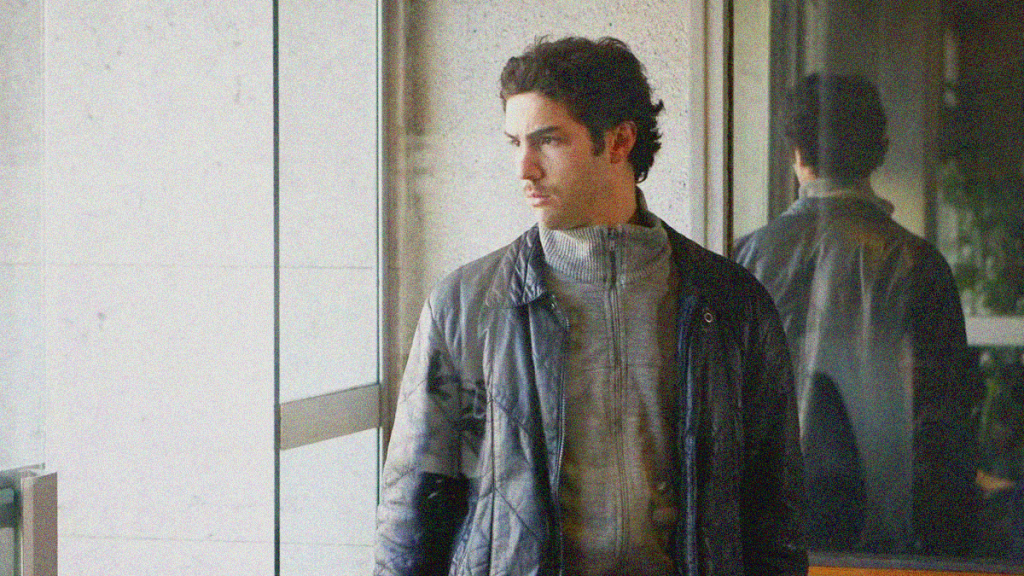
Played by first-time lead Tahar Rahim in a phenomenal performance, we really get to see his growing maturity as each year passes inside the prison. Malik arrives with a welt under his eye, scars on his back, and a temper hidden behind his soft-spoken, isolated demeanor. The beast within rises after every completed task to build this boy into a man as trust is gained and connections made. That newfound reliability stems from a new law allowing Corsicans to serve their time closer to home and thus abandon their leader César Luciani (a menacing Niels Arestrup, especially when considering his age and brutality).
So, Malik inherits everything. He moves next door as second in command despite still being treated as a lesser human—a fact that increases his resentment towards César. If nothing else is understood, this Arab knows that everyone is willing to do a favor as long as they get something in return. As such, whenever his boss sends him on a mission due to having earned leave days, Malik sets up his own relationships and business via the skills he’s cultivated on the inside. Speaking French, Arabic, and Corsican has allowed him to live on the border of every gang so he can move pieces into position and prepare for his opportunity.
Labeling him a “prophet” as the title implies comes from his uncanny ability to align himself with enemies and make them allies to each other. He plays every angle to gain their trust and respect before taking them under wing to the Promised Land. While this confidence is built brick by brick, it sometimes arrives by accident. Malik is often very unsure of himself, playing situations by ear yet always having the luck to say and do the right things at the right time. It’s as though he’s doing God’s work as a vessel led through these dangerous meet-ups unscathed.
Still a naïve young man (twenty-five upon completing his sentence), he basks in the little freedoms earned and friendships created while always being unable to shake the prisoner mindset. He even opens his mouth and sticks out his tongue when stopped at a airport metal detector through force of habit. Adel Bencherif’s Ryad helped him read and write on the inside and is therefore trusted to run his soon-to-be flourishing drug trade. Reda Kateb’s Jordi bought hash from him and gained favor to become Malik’s supplier in the prison. And even Slimane Dazi’s Lattrache—a man César sent him to deal with on behalf of the Corsicans—becomes an ally. Fate brought them into his life for this once scared boy to successfully lead them together.
The film is a set-up for his eventual usurpation of power at the prison since the writing is on the wall from the get-go. One could say the whole is a tad slow at points (it’s two and half hours), but I think that’s a disservice to the work since I don’t see how any scene isn’t necessary. Besides the gradual evolution of the man, Audiard has also infused numerous moments of dark beauty and dream-like sequences of aesthetic worth to add to Malik’s mystique. This mainly arrives in the form of his victim Reyeb (Hichem Yacoubi) appearing periodically as a vision to foretell the future while on fire.
Is he a demon leading Malik down the course of evil he takes? Interpretation is left to the viewer along with a seemingly random, mesmerizing scene of deer. The cinematography is interesting throughout and at its best when watching a shootout from inside a car—slomotion with bullets flying. There’s definitely something special about Malik El Djebena as either a fallen angel doing God’s work (evil for the purpose of good) or the Devil’s. I would just like to believe it’s a parable of one man’s willingness to survive and prosper rather than a vehicle for some figure to be idolized and worshiped as an Arab to look up to in France while applauding the death and destruction left in his wake.

Nominee:
Foreign Language Film
Tahar Rahim as Malik in A PROPHET. Photo taken by Roger Arpajou © 2008, Courtesy of Sony Pictures Classics.




Leave a Reply