
Rating: R | Runtime: 127 minutes
Release Date: March 18th, 2009 (Spain) / January 15th, 2010 (USA)
Studio: El Deseo / Sony Pictures Classics
Director(s): Pedro Almodóvar
Writer(s): Pedro Almodóvar
Living one life was not enough.
There was only one thing on TV growing up that I thought was even more amateurish and unprofessional then soap operas and it was the telenovela. The actors played the parts so over-the-top that I had to wonder if it was all done intentionally. No way were they breaking into the industry; they were horrible. The drama and insanity was too much to be able to watch longer than a couple minutes, not to mention I was young and reading subtitles was not something I wanted to spend time doing anyway.
It’s that preconception, though, that makes me see Pedro Almodóvar as the genius he is. His entire filmography uses aspects of melodrama and tragedy, showing characters striving despite or failing because of these artistic constraints. How he can turn that over-dramatic genre into the deep, personal masterpieces he creates is astonishing. And with this year’s Los abrazos rotos [Broken Embraces], he proves age has done nothing to slow him down.
A common theme throughout his oeuvre is women in trouble. His heroines are usually played by whatever muse has overtaken his sight at the time—Penélope Cruz remains the reigning queen (She is by far one of the best actresses working today despite underwhelming in English films)—and they always excel, whether in supporting roles or front and center. Even though every piece of promotional material, including the stunning poster, contains an image of Cruz, she is not the lead here. Instead, she’s the main force driving the plot for Lluís Homar’s Mateo Blanco/Harry Caine.
Just like Almodóvar needs a beautiful Spanish actress, he also seems to need a disability of some sort, adding even more emotional and dramatic edge to the story. Harry Caine is a former film director who is now blind. The man he was, Mateo Blanco, died with his sight, relegating him to be a screenwriter only due to never seeing celluloid again. Caine appears to be getting by well, reading his Braille, getting around town with his cane and help from strangers, writing with a young man named Diego, and still staying in the biz due to his agent Judit García. It’s tough to decipher through his introduction where the film will be going. There are allusions to father/son relationships that do eventually play an important role, but his discovery of the death of businessman Ernesto Martel is where the plot truly begins by drawing us into the intrigue, movies, sex, love, and betrayal.
Through flashback and story, the audience soon discovers the relationship between Martel and Cruz’s Lena, a boss and secretary that formed a close bond when helping to cure her father of cancer. We then see inside a locked drawer of Caine’s desk, filled with photos and memories he has shut away with his loss of sight. Images of him and Judit on vacation direct our minds towards a possible affair, but the reason Diego looks in the drawer is to find an image of a strange visitor that just left: director Ray X.
It’s quickly revealed that Ray is in fact Martel’s son as a past acquaintance of Caine’s sheds light on why the deceased man’s name struck such a cord. You see, there’s also a photo of Lena hiding away amongst those images, pushing the story forward by going back fourteen years to tell us about the love triangle that existed—and the deceit and horrible tragedy that soon resulted. Repressed back into the recesses of his mind, Caine did his best to forget his previous life, instead looking toward to the future with Judit and Diego by his side while carving out a new legacy. All it takes is one visit from the past to stir up old feelings that can no longer stay in the shadows. Caine must tell Diego the story, not only to ease the boy’s anger at Judit for keeping it from him, but also to go back and relive his happiness despite the pain endured.
By going back and forth through time, Almodóvar shows the audience how the relationships between characters changed over the years. We see how close Judit and Caine are in the present, but then the distance and jealousy of the past. We know of the life Lena lived trying to break into acting, but also the jubilant demeanor of her love when a real shot at success presents itself. As viewers, we infer and hypothesize what might have happened to change these connections. Some of these guesses prove correct, but the bonds between them have a much deeper and darker hold than the surface reveals. Love may drive everyone to seek out happiness, but it is fear that keeps them all from ever really reaching pure joy. Fear keeps the secrets hidden and fear makes their discovery rife with vengeance and hatred. This is Pedro at his best, delving into the core of emotive being. Bringing forth one’s desires to show the constant tug between love and heartbreak, and how one cannot exist without the other.
Maybe he’s so successful at melodrama because he gets talented actors to speak his words, something those television soaps can’t afford. Cruz is beautiful and vulnerable and the epitome of a broken person desperately trying to be whole for once in her life. Homar is magnificent in dual roles with Mateo’s zest for life and Caine’s sorrowful heart weighing him down. And Blanca Portillo shows her range as the friend/possible lover watching as Mateo/Caine morphs between personas, all the while knowing the part she played in the transformation.
Everyone, including José Luis Gómez as Martel, Rubén Ochandiano as Ray X, (going from flamboyancy—the running and haircut were almost too much—in flashbacks to the hardened man he becomes as a result of his father in the present), and Tamar Novas as Diego, bring a sense of realism to the film by bolstering the leads and causing the immense tension prevalent throughout. The drama is high with a mix of humor—the movie being shot by Mateo and Lena is a comedy after all, an interesting juxtaposition with all the tragedy going on behind the scenes—and Pedro masterfully weaves it all together by connecting the broken memories and lives left behind to open ours and the characters’ eyes to what really occurred fourteen years previously. Everything that led to the tragic night that changed them all.
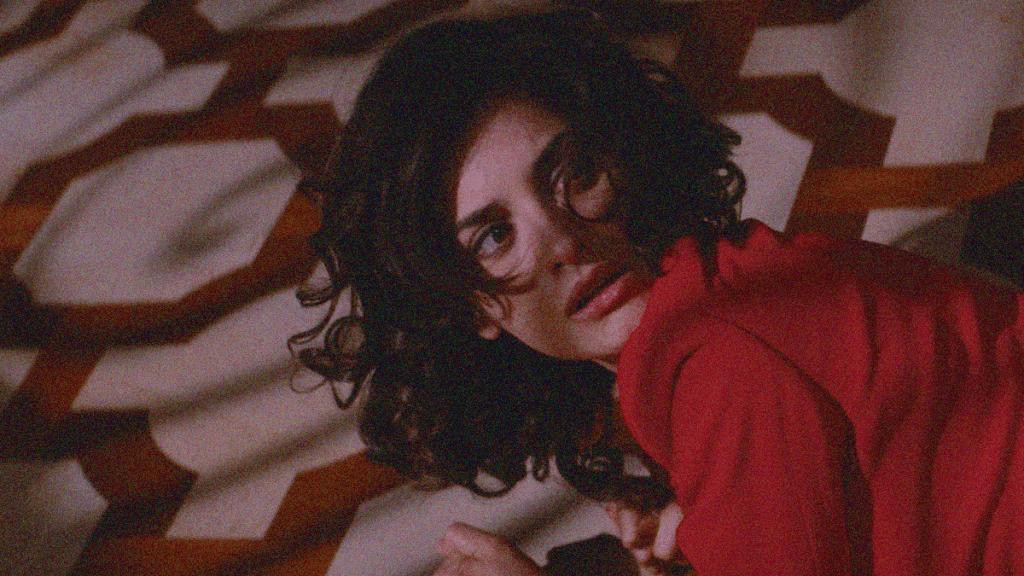
Lena (Penélope Cruz) after the accident in BROKEN EMBRACES. Photo by Emilio Pereda & Paola Ardizzoni / El Deseo, Courtesy of Sony Pictures Classics.


 jaredmobarak.com
Leave a comment