
Rating: R | Runtime: 105 minutes
Release Date: March 20th, 2026 (USA)
Studio: Roadside Attractions / Vertical Entertainment
Director(s): Stephanie Laing
Writer(s): Brant Boivin & Jonathan Keasey
All are welcome … some are court-ordered.
Based on the true story of Seattleite Amanda Ogle, Stephanie Laing’s Tow depicts one woman’s struggle for justice against a corrupt system weaponized by people too entitled to realize (and/or too heartless to care) that their bureaucratic games legitimately ruin lives. Because everyone caught up in this ordeal knows Ogle is the victim. They understand she’s correct and would prove victorious in a perfect world. Sadly, the one we live in is anything but.
Written by Brant Boivin and Jonathan Keasey, the film introduces us to Ogle (Rose Byrne) as she ultimately exploits that same system from the opposite direction. Alone, unemployed, and desperately clinging to sobriety, she finds herself living out of her 1991 Camry and moving about the city to use electricity and wi-fi at restaurants and squat in parking lots—always spacing locations out to never test the patience of those inevitably forced to send her away.
In a cruel twist of fate, the day Amanda finally secures a job is the day she loses everything. It’s not because she rolled the dice and parked somewhere illegally either. No, it was sheer bad luck that the car she needed for that new job got stolen while she was in the interview. Whereas you might presume the vehicle would simply be given back upon its recovery, however, the predatory nature of capitalist society demands the towing company get paid for its retrieval.
Again, in a perfect world, that bill wouldn’t fall to the aggrieved party. One could argue it doesn’t in this imperfect world either since a process for reimbursement does exist. You just need to pay it out of pocket first. And therein lies the problem here. Amanda can’t. The only way she could is to get the car back first and earn a salary. Since that’s an obvious nonstarter, she’s forced to figure out how to fight the entire situation through the same system that lets it happen.
I think my favorite part of the film is its depiction of those caught in the web with their hands tied. Does it perhaps absolve their complicity in certain situations? Sure. But there is something to knowing the tow driver (Simon Rex) is sympathetic to the injustice and the courthouse clerk (Ura Yoana Sánchez) will go the extra mile to try and expedite a process that was built to obfuscate and frustrate its victims into just giving up.
Well, Amanda Ogle isn’t going to comply. Is it to set an example and perhaps ensure someone else won’t go through the same nightmare in the future? No. It’s a point of pride. She refuses to be used, abused, and bullied into submission. She’s been through too much (yes, Amanda will eventually share her story at an AA meeting when the time is right). It’s the same pride that prevents her from admitting she’s unhoused. One isn’t separate from the other.
Does it mean she’s going to make matters worse before they can get better? Or course. Amanda has been surviving by the skin of her teeth for long enough to know that nobody is going to save her but herself. Yes, she’s lying to her kid (Elsie Fisher’s Avery) and the woman running the shelter that she cons into entering (Octavia Spencer’s Barbara) to buy time. Yes, she’s making enemies of those standing in her way (Corbin Bernsen’s lawyer). Impulse and instinct are all she has.
Well, that and an unlikely ally in twenty-four-year-old non-profit attorney Kevin Eggers (Dominic Sessa). Just as she tirelessly works to secure a court order for the release of her car, he puts everything he has into picking up the baton when her successful yet naive machinations hit a wall. Does he also make some mistakes? Altruism unfortunately doesn’t protect him from his inexperience. Tenacity (and a surprisingly ample budget), however, can force a trial date.
The whole can prove a bit muddled as a result. The first half of the film focuses on Amanda’s plight and the American reality that it’s nearly impossible to pick yourself back up financially when the bottom drops out. This is the strongest material due to its refusal to candy-coat how bad things can get for Amanda and those suffering similar fates (Demi Lovato, Ariana DeBose, and others). The shame. The deceit. The self-inflicted wounds. It’s a sobering journey.
The second half is conversely about the courtroom battle … or the hundreds of days leading up to the hope of having that battle. This section is condensed (with over-the-top dog glamour shots to mark the passing of time and remind us of the frivolity afforded by a wealth disparity often condoned by those closer to losing everything than they are to being billionaires), more prone to the comedy within the tragedy, and populated by necessary self-reflection.
We need the latter, but I’m not certain it’s granted the room to really hit considering it unfolds via brief flashes of emotional upheaval alongside those of judicial extortion and gags. The fact the script literally ends on a punch line proves this was probably intentional—that the humor was a goal rather than a necessity to soften edges. I get that desire to entertain, but it does sometimes feel like Tow isn’t giving its subject quite as much respect as it deserves.
That’s not to say the cast isn’t. There are some really powerful moments shared thanks to DeBose and Lovato. Spencer does well to balance the scales between compassion and firmness when it comes to running a shelter. And Rex adds a lot as far as wanting to help despite knowing he might be living out of his own car if he does. I liked Fisher too, but the script does them no favors by constantly using their emotion to serve plot (Amanda’s actions) over their own character.
Byrne is great, though. She embodies the “Rosie the Riveter” ethos that Barbara points out is necessary to survive her situation in the outside world, but also the pain and guilt beneath that façade when it’s finally allowed to show. The scene where Amanda does share with the group is the standout moment because the whole thing is working towards that release, but also because Byrne imbues it with an authenticity that rises above the obvious pathway there.
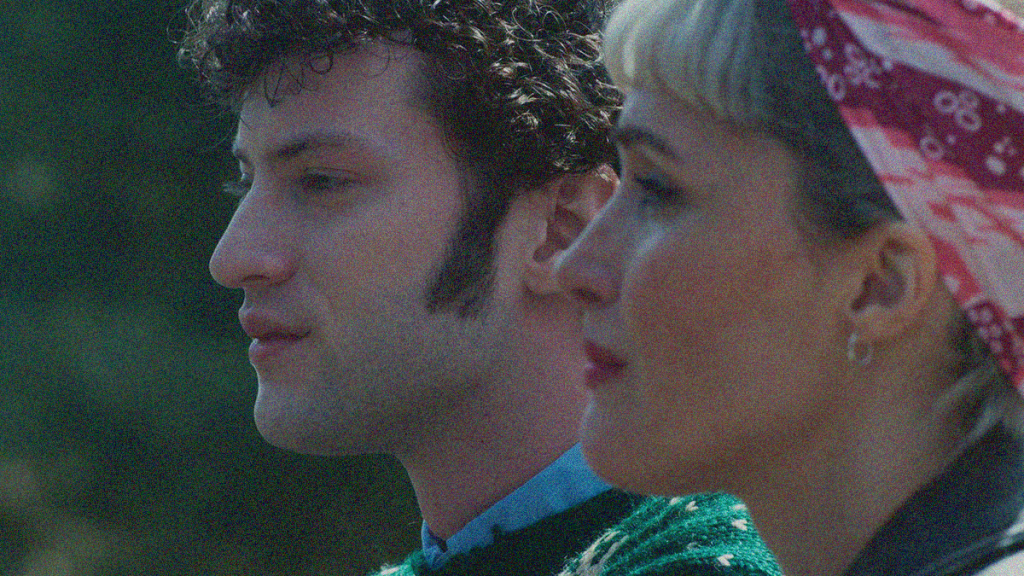
Dominic Sessa and Rose Byrne in TOW; courtesy of Roadside Attractions.




 jaredmobarak.com
Leave a comment