
Rating: NR | Runtime: 98 minutes
Director(s): Vera Miao
Writer(s): Vera Miao
Why do you want a home that doesn’t want you?
It started with a question writer/director Vera Miao posited to herself. “Could I explore diaspora through horror?” She explained during the Q&A how her impulse to do so was less about the act of moving itself and more about its lasting effect. The silence. The loneliness. The juggling act of holding onto your culture while attempting to assimilate. The reality that those who remain generations later lose the memory of that heritage yet are still judged by it.
So, after researching different parts of Chinese immigrant history in the United States, Miao stumbled upon the story of the Rock Springs Massacre on September 2nd, 1885. It’s a horrific American moment wherein white immigrant coal miners attacked a group of Chinese miners on their day off, killing many (officially 28 of 600 despite the number probably being larger) before leaving the community in ashes.
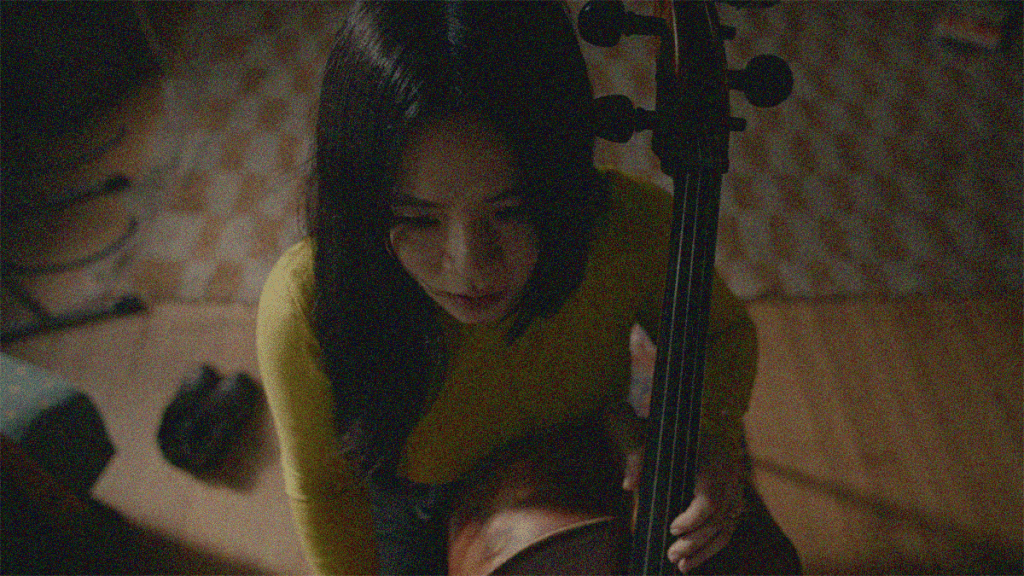
The idea of creating a ghost story around the event was solidified with grief serving as the through line that could take audiences from their story to a present-day family led by Kelly Marie Tran’s Emily that’s just a few months removed from her husband’s death. Rock Springs therefore begins with their arrival (Emily’s Vietnamese-American, Aria Kim as her suddenly mute daughter Gracie, and Fiona Fu’s Chinese-speaking Nai Nai) to that titular town.
Shot in chapters and, as a result, non-linearly, the first focuses on Gracie and her quiet sadness traversing her mother’s American need to move forward and her grandmother’s Chinese need to pray for her son’s lost soul and protection from the “hungry ghosts” rising in the night during the seventh lunar month. We see the trio’s struggle to communicate (Gracie knows English and Chinese, but won’t speak to translate) and the looming darkness for tragedy.
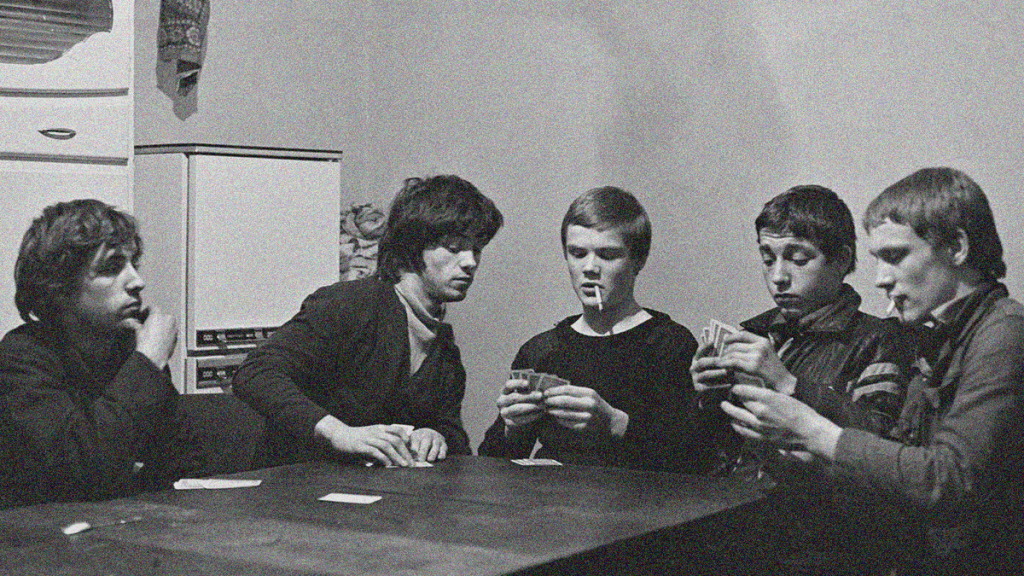
Miao then sends us back in time to 1885 with four Chinese coal miners enjoying a game of dominoes (each named after a real-life victim of the massacre). There’s the elder statesman with no reason to return home (Benedict Wong’s Ah Tseng), his compatriot who does (Jimmy O. Yang’s He Yew), and the two young newcomers they’ve put under wing (Ricky He’s Hoy Yat and Cardi Wong’s Tse Choy). No punches are pulled as their violent fate unfolds.
The film gradually shifts from atmospheric ghost story to full monster movie at this point—a fact that admittedly took me out of it for a little while. My guess is that a second viewing will work better because I’ll be expecting the tonal change with the knowledge of why Miao went that direction, but it’s jarring enough on a first look to threaten the efficacy of the whole. I imagine some of the poor reactions out of the festival are due to a knee-jerk thought that it feels goofy.
I think this is more about our expectations with the sort of creature effects being used than the ways in which Miao uses them because Emily’s chapter (one that rewinds back to their arrival to replay what we saw from Gracie’s perspective and continue from the point where hers ends) provides the horrific truth to what it is we are seeing. Tanja Dixon-Warren’s Donna enters to supply context and Emily accepts the fact that there might be something to Nai Nai’s prayers.
The result can feel jumbled, but I honestly believe that’s a product of having to learn on the fly. Those with a foot in the Chinese spiritualism at play with “hungry ghosts” will surely get on its wavelength quicker. Because hearing Miao and the cast and crew talk about the process and execution really gave me an affinity for the detail that went into making this film true to its heritage. The sound design and camerawork are intentionally born from its generational trauma.
And as Yang said, getting the story of the Rock Springs Massacre out now with everything going on in this country due to ICE is critically important. Maybe you won’t vibe with how its delivered via a slow-moving ghost thriller marked by bursts of monster gore, but you must appreciate the historical significance of its overall messaging. Rock Springs seeks to provide the necessary cultural context to an event only known through external second-hand accounts.

Kelly Marie Tran in ROCK SPRINGS; courtesy of Sundance.


 jaredmobarak.com
Leave a comment