
Rating: NR | Runtime: 97 minutes
Director(s): Ramzi Bashour
Writer(s): Ramzi Bashour
You don’t have to know until you know.
Already feeling listless and ornery due to her students not applying themselves and her decision to quit smoking, discovering her son is getting expelled from his senior year of high school becomes a sort of last straw moment for Layal (Lubna Azabal). She doesn’t have a support system to help deal with the turmoil as her ailing mother and sister are in Beirut and Daniel’s (Daniel Zolghadri) estranged father is out of the picture. It’s all very overwhelming.
There also aren’t many choices to move forward, though. Daniel has already been held back twice and no Indiana school is going to give him a third chance as a nineteen-year-old senior. He’s willing to resign himself to the fact that this could be the end of the road, but Layal refuses to give up. He might not be the best student or have the sort of future where finishing school is a necessity, but she wants him to graduate. She wants him to have that accomplishment.
So, with everything else going on, Layal calls her ex (Gabe Fazio’s Anton) and agrees to let Daniel enroll in California with him as long as she deems it a safe and responsible situation—considering she left him because he was a drug addict. The plan is to therefore drive their son from Indiana to Colorado where Anton will meet them and take him the rest of the way. As Layal presumed, however, circumstances soon prove that reliability remains a big question mark.
While an obstacle to the cross-country journey’s goal, this development ultimately becomes a boon to the story as it ensures mother and son spend more time together and endure the emotions inherent to being forced to improvise plans and better understand the other’s motives and desires. Because, despite what Layal says at the beginning about this not being a vacation, this trip has all the earmarks of supplying an escape that both desperately need.
Writer/director Ramzi Bashour builds Hot Water as an evolution of his characters discovering what it is they want moving forward instead of merely a narrative plot heading toward an end game. He does this by keeping that end game uncertain. Yes, they’ve all agreed to a specific arrangement, but it’s never presented as an ultimatum. Layal agrees to take Daniel and suss out the situation before turning back. And Daniel doesn’t yet know what he wants.
The people and places along the way become crucial pieces to their puzzle. An eccentric friend of Anton providing shelter when plans go awry (Dale Dickey’s unforgettable Sasha). A hopeful hitchhiker who crosses their path at two very disparate moments within their communal thaw from tense anxiety to a greater willingness for vulnerability (producer Max Walker-Silverman, director of A Love Song and Rebuilding). And the best motel clerk ever in young Ezz Ahsan.
The open road and gorgeous vistas become ice breakers of sorts that allow Layal and Daniel to witness the frustration and anger they both bottle up inside. Azabal’s scream at the side of the road and clandestine phone calls with her family in Lebanon (Layal doesn’t tell them her predicament nor her son what’s happening to them). Zolghadri’s violent streak escaping containment in a way that forces him to confront the fact that something is wrong.
Hot Water is a character study at its core born from Bashour’s own trek across America in his late-teens (he thought it interesting to see how one of his buttoned-up Arabic teachers would experience that same adventure). One that paints this country as a collection of colorful folks and singular philosophies that leave an indelible mark regardless of where you come from. Yes, there’s a crucial immigrant aspect, but it’s less about contrasts than universality.
What can someone like Sasha show Layal and Daniel about their own lives? What can this trip that started from resentful necessity add to their relationship simply by forcing them out of their routine to see each other as human beings rather than “mom” and “son”? It’s an opportunity for him to understand how much his mother loves him just as it is one for her to remember that she’s allowed to want to experience that same affection with her own mother again.
The film is therefore also about second chances. For a father to reconnect with his son (the venue of which shouldn’t surprise you due to Sasha and yet still will due to the absurdity of its introduction). For a young man to straighten out his priorities. And for a woman to break free from labels and reclaim agency within her own life. It leads to many dramatic moments that lean into their messiness because that’s life. Happiness isn’t a choice. It’s the result of hard work.
Great performances lead the way, but you must commend the crew for shooting on location with a shoe-string budget. Bashour’s Q&A spoke about improvisation and finding the spirit of the message to inhabit it rather than fabricate it. I loved the use of Daniel’s disposable camera photos (all shot by Zolghadri), the muddy waters of sometimes needing to be selfish (sorry, Max), and that an Indiana high school hockey team uses the Buffalo Sabres’ alt logo from the late-90s.

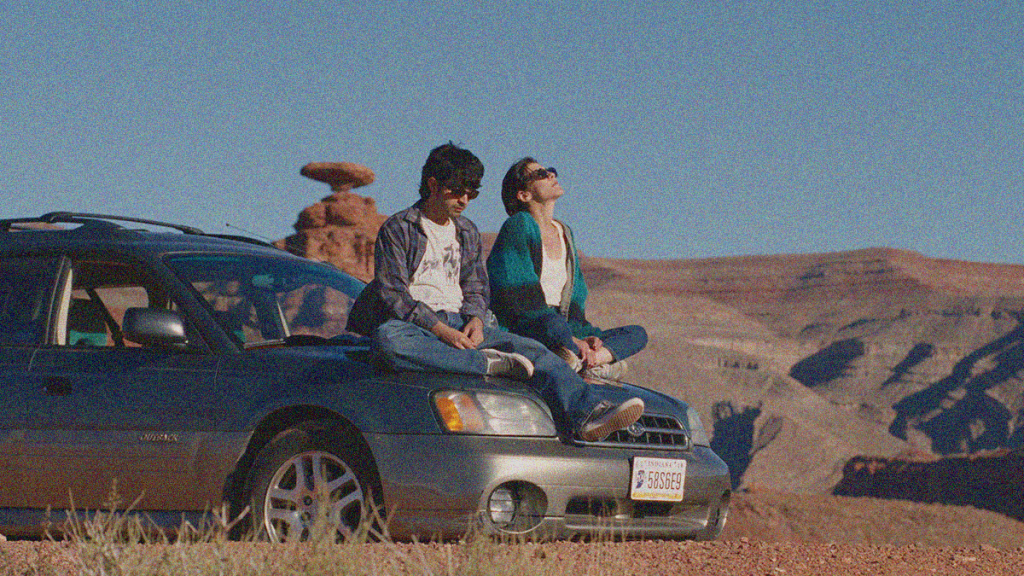
Daniel Zolghadri and Lubna Azabal in HOT WATER; courtesy of Sundance.



 jaredmobarak.com
Leave a comment