
Rating: NR | Runtime: 89 minutes
Release Date: September 17th, 2025 (Tunisia) / December 17th, 2025 (USA)
Studio: WILLA
Director(s): Kaouther Ben Hania
Writer(s): Kaouther Ben Hania
Let them rest awhile.
Anyone following Israel’s ongoing assault on Gaza knows the name Hind Rajab. And anyone who recognizes her name knows her fate. So, the question posed when considering how to tell this six-year-old martyr’s story is whether to do so via documentary conventions or cinematic dramatization. Both obviously have their own positives and negatives, but writer/director Kaouther Ben Hania’s description of the latter says everything about their differences. “It doesn’t report, it remembers. It doesn’t argue, it makes you feel.”
The Voice of Hind Rajab succeeds at exactly that—not just for its namesake, but also the Red Crescent members who worked tirelessly for three hours to secure her rescue. Because Hind’s voice isn’t the only one heard on the recordings from that day. There’s also the man who made first contact (Motaz Malhees’ Omar), his supervisor (Saja Kilani’s Rana), the man in charge of coordinating a safe route for the ambulance (Amer Hlehel’s Mahdi), and the resident Mental Health and Psychosocial Support Worker (Clara Khoury’s Nisreen).
Their roles become the avenue towards drama since Ben Hania makes the correct choice to let Hind live solely through the calls themselves. The last thing we need is an actor for the camera to keep cutting to as she hides in a shot-up car with the bodies of her murdered family. We can imagine the terror of her situation and understand the trauma from her voice. What we need help learning are the logistics behind what the Red Crescent does and the emotional cost of doing it. Why did it take so long? What, if anything, went wrong?
Ben Hania constantly reminds us what we’re watching is real by shifting from her actors to the footage at her disposal. Sometimes it’s a few seconds of untouched audio. Sometimes the repetition of a moment that’s heard for real right after we watched it performed. In one instance she even merges the two via a cellphone video wherein the screen filming the actors shows their actual counterparts as they mimic the same body positions in the background. The tension, frustration, and arguments are therefore all crafted from first-hand accounts.
It’s a lot to take in. Omar’s devastation from having heard Hind’s cousin getting shot to death. Rana’s fatigue from enduring this marathon of emotions despite having had one foot out the door at the end of her shift when the call came through. Mahdi’s attempt to juggle the girl’s wellbeing with that of his ambulance drivers considering the danger they risk entering a war zone opposite an Israeli military keen to shoot first and not bother asking questions later. Add Hind’s mother begging for help and it can be unbearable.
All the more reason to keep watching and listening. All the more reason to bear witness and refuse to forget the senseless slaughter of innocent lives caught between a centuries-long conflict that’s only become more volatile, skewed, and conflated with actual anti-Semitism thanks to an authoritarian ethnostate’s propaganda machine being regurgitated as fact by numerous so-called world leaders. If what we see and hear on-screen isn’t evidence of a war crime, do war crimes even exist? Shooting unarmed civilians? Blowing up an ambulance?
It’s also a clear depiction of what Apartheid rule entails considering the Red Crescent helping those in need in Gaza are located fifty miles away with few remaining heroes left alive to keep doing their job. Hind’s would-be saviors were located just eight minutes away from her car, but the only way to get them to her was to coordinate with the same army that had her pinned down as an enemy combatant. They need middle men with zero leverage power. At one point Mahdi all but blackmails assistance by calling an ambassador for a favor.
Yes, that tactic might have secured a green light quicker (if one was coming at all), but we’re dealing with a genocidal government. Who’s to say that the army didn’t grant it to specifically blow-up the vehicle it was supposed to protect? There’s no way to know and even less of a chance to find out when countries like the United States deem Israel trustworthy enough to police its own actions. This tragedy on January 29, 2024 wasn’t the result of an accident. You can’t keep saying Israel’s military is the best in the world and still excuse this many “mistakes.”
So, the Red Crescent must jump through their hoops. They must weigh the reality that they are dealing with situations devoid of good options. Because it’s not just about the victim. It’s also about the heroes. They must struggle with the fact that saving the future (Hind) and preserving the present (the ambulance drivers) aren’t always aligned. Omar speaks out of anger when he calls Mahdi a coward for waiting on protocol and safety measures rather than barging in to get everyone killed, but there is a modicum of truth to it.
That’s why this story is so devastating. It portrays the Palestinian futility of seeing the world numb itself to their extermination as well as the creeping sense of nihilism that comes from doing everything correctly only to fail again and again because the other side isn’t playing fair. It’s easy to get discouraged and look past the need to keep trying anyway. The role of films like The Voice of Hind Rajab is therefore to remind everyone that the work does matter. It exposes truths so that the next tragedy might be prevented.

Nominee:
International Feature
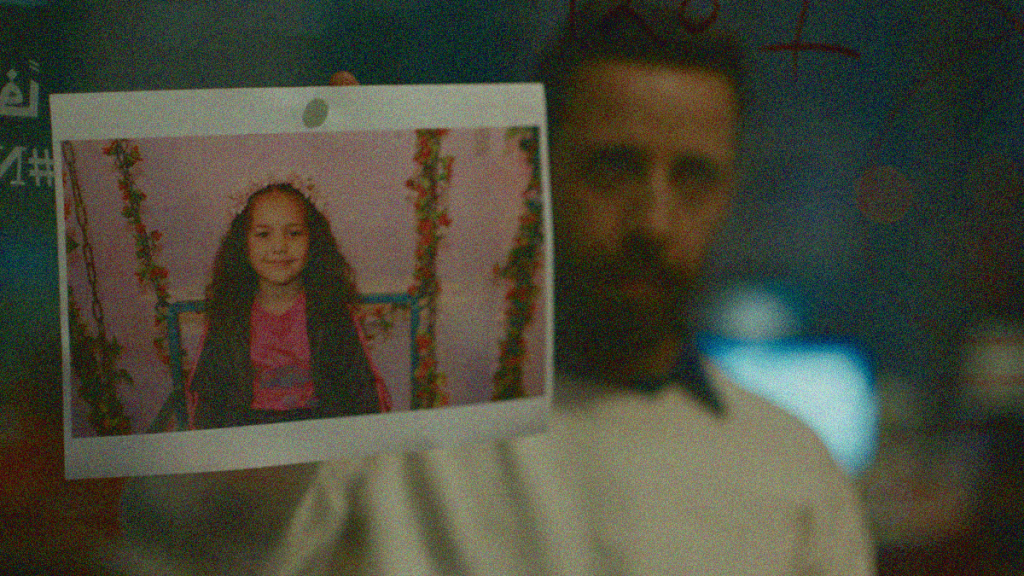
Motaz Malhees with a photo of Hind Rajab in THE VOICE OF HIND RAJAB; courtesy of WILLA.


 jaredmobarak.com
Leave a comment