

Rating: NR | Runtime: 160 minutes
Release Date: November 22nd, 2025 (China) / December 12th, 2025 (USA)
Studio: Huace Pictures / Janus Films
Director(s): Bi Gan
Writer(s): Bi Gan
What tune was he humming before he died?
Would you relinquish your ability to dream if it meant you could live forever? This is what the world under the protection of a group called “Great Others” has chosen. The idea is that dreams are what burn our proverbial candles. To aspire towards something better or imagine the nightmare of something worse is to expend too much energy and wear yourself out. But isn’t that part of being human? Of experiencing life? That’s what a select few believe. It’s why they still choose to dream and why the “Great Others” must hunt and destroy them.
Writer/director Bi Gan therefore subverts our expectations of what a monster movie is with Resurrection. In the context of our humanity, the “Great Others” should be portrayed as grotesque, authoritarian figures looking to snuff out the very concept of possibility. In the context of the world on-screen, however, it’s the “Deliriants” who seek to destroy immortality’s equilibrium by daring to escape reality through their minds. So, while Shu Qi initially appears to be our protagonist, she’s actually out to eradicate what’s left of our souls.
How do you find a dreamer? You must enter their dreams, of course. This truth leads Qi’s “Great Other” into the past where her target (Jackson Yee’s Monster) is hiding. Because it’s not a particular great dream for the latter considering he is a prisoner forced to cry so his tears can be sold to bar patrons as a drug, his exfiltration feels almost like a rescue sans context. The fact that Qi doesn’t just kill him upon capture also causes us to wonder just how dangerous he truly is. Not only does she let him keep dreaming, but she also watches from afar.
The question then arises as to whether “Great Others” have volunteered themselves for this job to preserve the status quo or to vicariously experience what they are forbidden to enjoy. By looking into one hundred years of the Monster’s final dreams before death, Qi is able to see what it is that humanity lost. If you want to put a label on it, her kindness to this creature exposes her to a century of art via cinematic language and convention. Romance. Horror. Mystery. Philosophy. Longing. The sensory overload of our melting candles.
Through Qi’s character, Gan treats his audience to the same. You could say it’s a result of our own reality also destroying our ability to dream with new digital technologies replacing tradecraft, original thought being repackaged as content born from algorithms to increase shareholder profits, and generative AI threatening the very notion of art itself. Or perhaps it’s just an excuse to travel back in time and play in the sandbox of practical effects and cinematic trickery. Either way, Resurrection proves an abridged account of film history.
Qi’s search for the Monster takes us into silent era aesthetics with a German Expressionist bent as she walks through frames compositing matte surfaces with live-action movement and scenes of broken sets forming walls and windows only when the camera is set in its designated spot. More than just a glimpse of the style, though, Ban leaves the surreal artifice in to the point where we see giant hands closing windows and pulling up pieces of the set while Qi roams. And the shadow work impeccably instills a Nosferatu sense of dread.
From there it’s the dreams Qi allows her captive to have. The first sees him as a film noir murderer named Qiu who wields a pen as a weapon to deafen his victims from the world’s sound so they can only hear God. The next has him as a former monk turned “mongrel” who conjures the spirit of bitterness in the form of his father (Yongzhong Chen) after tasting a rock. Then it’s a conman enlisting a young girl (Mucheng Guo) as his accomplice to feign “supernatural” smell. And, finally, a man in love with a woman (Gengxi Li) who he can’t touch.
Yee plays the lead in every chapter and truly sets each apart in appearance, mannerism, and voice. Gan shifts genre with every progression through time—each marked by narration with the final iteration taking place in 1999 on the eve of the millennia and the uncertain future it brought to allow its characters to truly live in the present. And that last past goes one step further too as its criminal underworld riff on Before Sunrise unfolds as a one-shot long take. It’s quite impressive with action, gore, and an ingenious time-lapse.
Resurrection is the best of what cinema can offer as an escape from reality and a yearning for more. It’s built upon our five senses, shines a light on the magic of set design and cinematography, and wields narrative motifs in ways that harken back to their invention while also giving them new life to prove their relevancy today beyond focus groups and demographics. In an industry increasingly asking filmmakers to conform for their paycheck, Gan reminds us of what can be done with the medium when they’re allowed to dream.

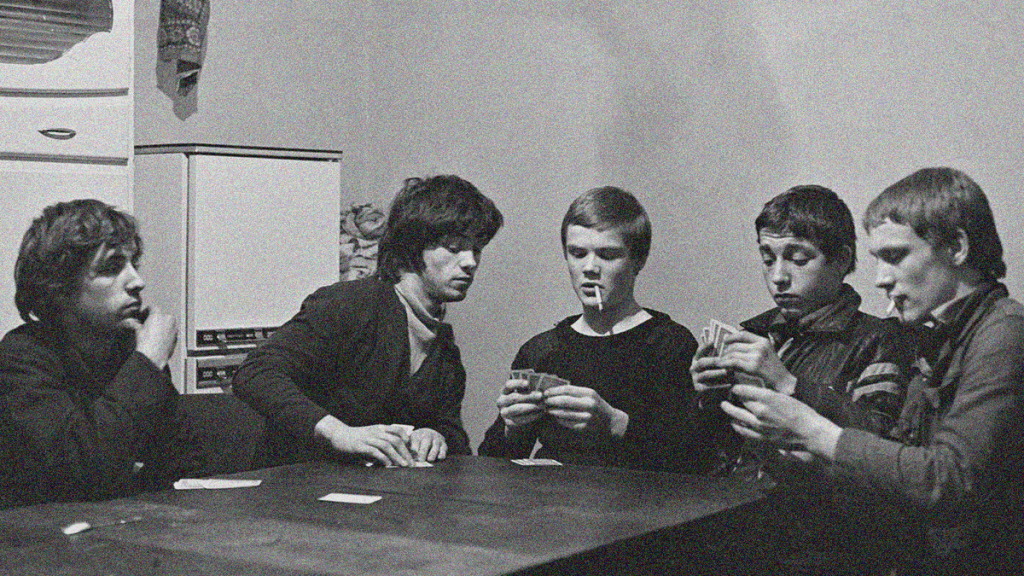
Jackson Yee in RESURRECTION; courtesy of Janus Films.


 jaredmobarak.com
Leave a comment