

Rating: PG-13 | Runtime: 125 minutes
Release Date: November 26th, 2025 (USA)
Studio: Focus Features
Director(s): Chloé Zhao
Writer(s): Chloé Zhao & Maggie O’Farrell / Maggie O’Farrell (novel)
I’ll tell it to take us both.
We meet Will (Paul Mescal) and Agnes (Jessie Buckley) as pariahs at the start of Chloé Zhao’s Hamnet (as adapted by her and Maggie O’Farrell from the latter’s novel). He is a Latin tutor working to pay off the debt his father owes the family of the boys he teaches. She is those boys’ half-sister, said to be the daughter of a forest witch and thus unsuitable for true love. It’s as though fate turns their guardians into the cruel creatures they prove simply to provide both an escape through the other. To turn their pain into joy.
They did exactly that at first. Yes, they used some manipulation to earn their marriage being that neither family (especially his mother, Emily Watson’s Mary, and her brother, Joe Alwyn’s Bartholomew) approved of the other. But who can say no to a baby? To happiness? It’s merely a shame that it couldn’t last—at least not in its current form with Will continuing to lose himself to the suffering of a small life within his father’s abusive shadow. So, Agnes sends him to London to write. To follow his dreams and make good on her premonition.
The first two-thirds of the film hinge on this ability to see the future of those whose hands she touches. It gives Will strength to leave knowing he’ll come back. It makes their son Hamnet (Jacobi Jupe) brave when having to say goodbye to his father yet again. And since you should already know the boy’s destiny going in, this gift may also feel like an unnecessary flourish made false before having the chance to believe. Well, that would be a mistake. Agnes might not know the details, but her vision of Hamnet and his father in London isn’t a hoax.
From the moment of Susanna’s (Bodhi Rae Breathnach) conception, Hamnet more or less becomes a waiting game for the inevitable death that sparks Will to write “Hamlet.” It’s a beautifully shot journey that takes us through the forest from which Agnes gains her power and maintains her connection to the past (namely her late mother) to the small home where Will was born. Initial animosity between Mary and Agnes soon gives way to love and the trio of Susanna, Hamnet, and Judith (Olivia Lynes) is always ready for a laugh.
So, when the death finally arrives, it does hit with the desired potency. Be it the false start, the bittersweet yearning to trick Death, or the circumstances of where each parent is in the moment, you feel the loss as strongly as those on-screen. Even so, it was expected. It’s literally the catalyst for the grief that gives birth to one of the most celebrated tragedies of all-time. My emotional response wasn’t therefore meeting the level of that which I’ve heard considering some movie theaters are handing out tissues. I worried I’ve grown too cynical.
With forty-five minutes left, however, I had faith Zhao would get me there. But I admittedly didn’t know how considering “Hamlet” the play has nothing to do with the experience Agnes and Will endure on-screen. Watching him write it to exorcise demons wouldn’t move the needle. Repeated scenes of Agnes telling Will he can’t know what she feels because he wasn’t there might move it a little, but you can only perform the same dance so many times. Zhao and O’Farrell agree. There’s none of the former and just one example of the latter.
How they do it is simple. “Hamlet” might not have anything to do with their loss literally, but boy does it thematically. More than just show us the parts from the play that prove it, however, Zhao goes one step further by letting us bear witness to Agnes and Will experiencing those parts for the first time themselves. The moment it clicks in her mind that he’s swapped roles with his dead son was the moment everything clicked for me too. The visually and emotionally effective (if narratively familiar) drama that preceded it was all building to this.
Buckley and Mescal’s death wails didn’t move me to tears, but their reactions to the actors (led by Noah Jupe as Hamlet—what a coup that Jacobi also acts for this dual casting choice to sing) and each other surely did. This is how you portray grieving parents exorcising their demons. Their grief lives through the art. “Hamlet” becomes an outlet to say what cannot be said (Will) and hear what cannot be heard (Agnes). The play doesn’t exploit their tragedy. It memorializes a life and ensures the entire world celebrates and mourns him with them.
Zhao is spot-on when she talks about Hamnet exemplifying the “alchemy” that can occur when one’s art is wielded as a therapeutic outlet. Whether from the novel or added for the film, she and O’Farrell’s metaphors and doubles (Orpheus looking back at Eurydice, the dark pit of the forest tree and the door of Will’s stage, the refusal to believe in Heaven so as not to let a soul leave our memory on Earth) are planting seeds for the characters’ brilliant moments of release (Agnes’ laughter and Will’s tears). In Zhao’s words, “Love doesn’t die, it transforms.”

Winner:
Lead Actress
Nominee:
Motion Picture, Directing, Adapted Screenplay, Production Design, Casting, Costume Design, Score
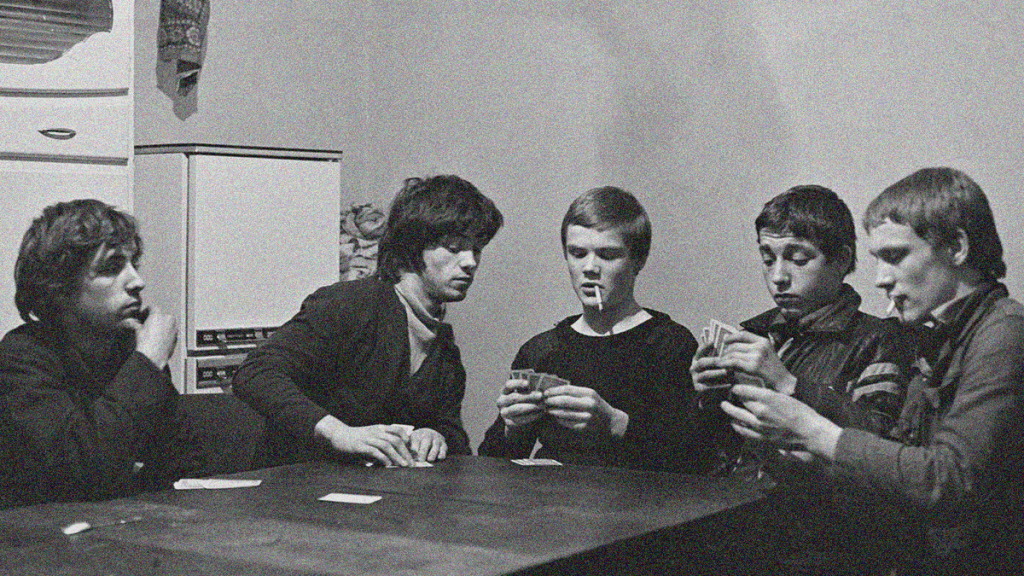
Jessie Buckley stars as Agnes and Paul Mescal as William Shakespeare in director Chloé Zhao’s HAMNET, a Focus Features release. Credit: Agata Grzybowska / © 2025 FOCUS FEATURES LLC.


 jaredmobarak.com
Leave a comment