
Rating: NR | Runtime: 89 minutes
Release Date: November 8th, 2025 (Slovenia) / December 5th, 2025 (USA)
Studio: Gustav Film / Kino Lorber
Director(s): Urška Djukić
Writer(s): Urška Djukić & Maria Bohr
If you don’t suffer, it won’t work.
Sixteen-year-old Lucia (Jara Sofija Ostan) is a dreamer. When her mind fixates on a sound or image, you’re lucky to steal her attention back without screaming in her ear. It’s a passion for beauty. Getting caught up in inspiration. Perhaps even Godly if you believe an olive tree, lipstick color, and insect buzz are His creations. To adults hellbent on control, however, it’s insolence. Punishable. They designate daydreams as distractions. Disrespectful to their work. Rather than let a child feel free, they force them to atone for daring to live.
As director Urška Djukić and co-writer Maria Bohr eventually reveal, however, we all deserve to enjoy a sweet grape without worrying about its indulgence. It might be the simplest of pleasures compared to what Lucia is ridiculed and humiliated for partaking in on-screen, but it also very clearly drives home this counterpoint to Ana-Maria’s (Mina Svajger) grandmother’s old-world lesson of eating sour grapes to earn God’s forgiveness for a sin. Because Lucia shouldn’t apologize for anything she does. She shouldn’t suffer for the world’s shame.
It’s why Lucia gravitates towards Ana-Maria at the start of Little Trouble Girls in the first place. Yes, the initial allure was merely to be in proximity to someone everyone else adores, but it’s soon replaced by the feeling of why that fact is true. It’s not attractiveness or coolness (although both surely help facilitate it). It’s confidence and sincerity. Whereas the other two girls in the friend group want to weaponize the superiority age and experience provides them, Ana-Maria uses hers to lend a hand instead. She reminds Lucia that her time will come.
Her mother doesn’t do that. She seeks to keep Lucia sequestered from adulthood (their parallel reactions while eating ice cream on the floor in front of a television whose film quickly moves into a sex scene says all you need). So does the church and its talk of God’s touch as opposed to human touch. Or her choirmaster (Sasa Tabakovic) reminding her that they have traveled to a convent to work rather than play. Ana-Maria floats between the weight of responsibility and desire for fun in a way that wakes Lucia up. It might even prove to be too much.
That’s the beauty of coming-of-age tales. Their characters need to learn where the hypocrisy of adulthood and immaturity of adolescence intersect. Add the repressive nature of religion to the equation and thoughts and emotions become even more confused. This is a new world for Lucia. She doesn’t know when mischief becomes sin or when games become real. And what happens when she decides to do the “right” thing by trusting an adult over her friend? A complete betrayal that proves authority figures too often conflate control with protection.
Because calling something sinful doesn’t explain why or give context to what Lucia should or shouldn’t do. It merely renders it verboten and, more often than not, alluring. She wants to spy upon the worker bathing naked in the stream. She wants to be included in the popular girls’ game of truth or dare. She wants to absorb the life force and excitement radiating off Ana-Maria. She wants to do all these things and yet the whispered voices of repentance scare her into thinking something is wrong.
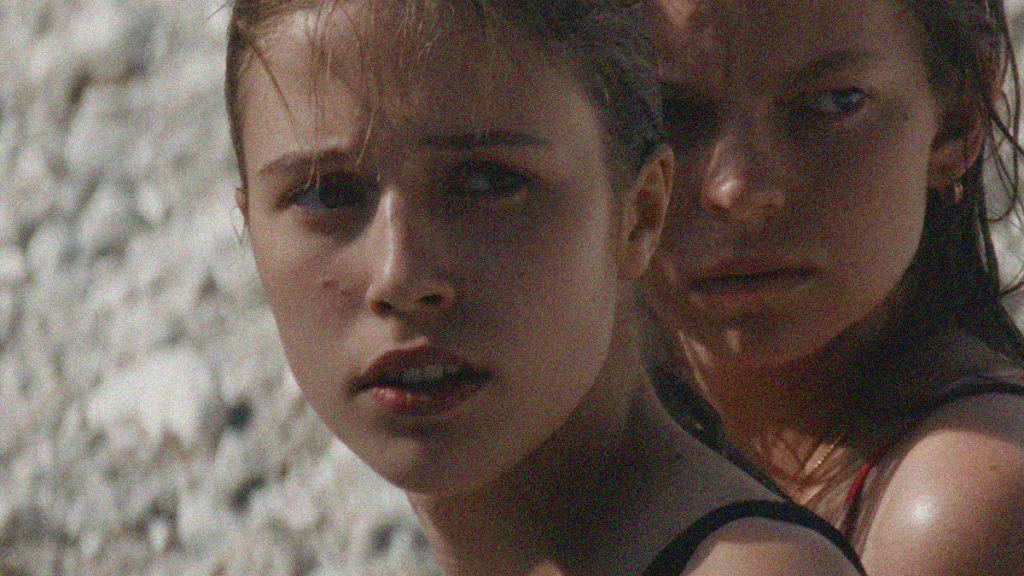
Ostan authentically portrays the embarrassment, insecurity, and fear that results when her decisions to give into temptation and banish it both leave her in tears. If doing the “right” thing leads to the same outcome, why not at least feel good by doing the “wrong” thing instead? We rebel against oppression. So, why not find answers that make sense through moderation rather than such an all or nothing approach? Lucia doesn’t deserve unwanted attention or punishment for making her perpetrators feel bad. After all, God created our earthly pleasures too.
Jara Sofija Ostan as Lucia and Mina Svajger as Ana-Maria in a scene from Urška Djukić’s LITTLE TROUBLE GIRLS; courtesy of Kino Lorber.



 jaredmobarak.com
Leave a comment