

Rating: NR | Runtime: 87 minutes
Release Date: October 17th, 2025 (USA)
Studio: Area 23a
Director(s): Gabe Polsky
Writer(s): Gabe Polsky
Everything we believe is a story.
There was a time in Hollywood where question marks were verboten in titles due to a superstition that the use of one would cause the project to bomb at the box office. I learned this fact a long time ago because it always seemed strange that Who Framed Roger Rabbit omitted the punctuation. The more you look, however, the more you realize there are a ton of films that do use it—enough to wonder if that superstition is apocryphal. Because some films, like Gabe Polsky’s The Man Who Saves the World?, don’t work without one.
Remove the question mark and the title becomes a statement: Patrick McCollum is the man who saves the world. That isn’t the filmmaker’s intent, though. It isn’t even what the filmmaker believes (at least not initially). No, Polsky comes at his topic from a place of pure skepticism because you cannot feasibly listen to McCollum’s story without assuming he’s a certified crackpot. It’s only when the details of that story start spiraling that you wonder if he might be telling the truth. Hence the punctuation. Could Patrick truly be our savior?
Polsky attempts to find the answer by following this bona fide renaissance man for over two years as he works to fulfill his part of an ancient indigenous prophecy wherein a solitary figure is foretold to unite the world’s native people so they can heal Mother Nature and therefore preserve mankind in the process. McCollum explains that four South American elders told him he was that figure and, through what could be construed as coincidental happenstance, he allows himself to believe it too. Not to become a prophet, but to facilitate a spark.
The film only works if it consciously understands its own subject’s absurdity. So, Polsky lets McCollum tell his uncensored story, hires a private investigator to do the necessary research confirming it, and experiences his genuine connection to the indigenous world with his own eyes. Because it’s one thing to delude yourself into becoming a white savior, but it’s another if the native people you’re trying to save bestow that title upon you unprovoked. Is Patrick McCollum probably a bit of both? Sure. But the work is getting done.
And that’s the real draw. Not that he’s the linchpin to some crazy idea of saving the Amazon (I do like that Polsky never conflates “saving nature to save humanity” with “saving humanity” since everything McCollum says being true doesn’t prevent mankind from destroying itself anyway), but that the actions born from that idea might do so regardless of veracity. It’s a chicken and egg conundrum wherein cause and effect can be found in hindsight. By giving McCollum importance, he unwittingly does important things.
So, while you must commend Polsky for never wavering in his desire for concrete answers to corroborate McCollum’s stories (or mocking him), you can’t argue with the latter’s declaration that being at the place of unification because of his part in putting its many sides together is evidence enough. That’s the beauty and frustration of faith: that which negates bias for one person is exactly what creates it for another. Add vast language and cultural barriers to the equation and it could be that McCollum and the tribes accidentally duped each other.
Does it matter? Not if it proves a success. Because nobody is being harmed—at least not as presented. If McCollum wants to spend his time and money pursuing this cause, why stop him? If the weird yet charismatic white guy who keeps popping up at their religious and indigenous gatherings serves as a crucial networking arm bridging divides and forming coalitions, why stop inviting him? In a perfect world these are all just human beings with a common goal. Race and prejudice are constructs projected upon them.
Will anything come of it? Who knows? As I said, saving the rainforest is a moot point if we keep killing each other anyway. But it is a piece to the puzzle—or “tapestry” as the late Jane Goodall (a McCollum friend and fan) describes it. It’s one domino that must fall so others may too. Whether it be based on delusions of grandeur or a leap of faith is inconsequential as long as the players involved see it as a path forward for their mission. Let the guy play his homemade violin (No one mentions the swastika on that first photo?) while acting as a matchmaker.
Because his near-death experience, insane resume, and half-built mansion by his own two hands aren’t even the strangest part of the whole. No, that’s multi-millionaire real estate mogul Joey Nittolo giving away his fortune to follow his third eye’s visions—one of which led him to McCollum and thus reinforced his role in the prophecy. Kudos to Polsky for somehow wading through it all with a straight face and open mind because it means we can too. Something we forget in today’s world of celebrity “geniuses” is that actions always trump image.
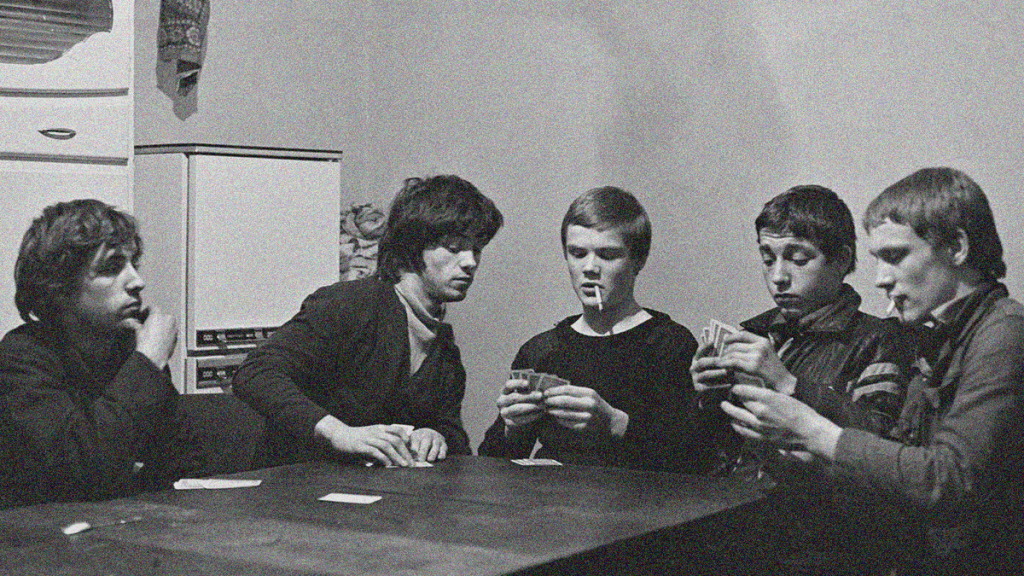
Patrick McCollum and Gabe Polsky in THE MAN WHO SAVES THE WORLD?; courtesy of Area 23a.


 jaredmobarak.com
Leave a comment