

Rating: NR | Runtime: 99 minutes
Release Date: October 3rd, 2025 (UK) / October 10th, 2025 (USA)
Studio: Picturehouse Entertainment / 1-2 Special
Director(s): Harris Dickinson
Writer(s): Harris Dickinson
You’re going to be just fine.
To read the press notes for Harris Dickinson’s directorial debut Urchin is to realize the artist’s politics are very clearly stated by a character named Simon (Okezie Morro). This is a man who witnesses a fight between Mike (Frank Dillane) and Nathan (Dickinson)—two unhoused vagabonds squabbling over money as the former knows the latter stole his wallet and the latter explains he only did it because the former owed him. Simon breaks it up, offers to but Mike a meal, and talks about the government’s apathy toward the homeless crisis.
This isn’t a “savior” character atop a soapbox, though. Dickinson strives to simply bring an authentic portrayal of men like Mike to the screen that gives them their humanity without also projecting judgement upon them. Simon is therefore a mirror upon those of us with the empathy to acknowledge there’s a problem and want to help in what little ways we can as well as a cautionary tale insofar as why that shouldn’t be our responsibility. Because without effective infrastructure to protect the unhoused, Good Samaritans are inevitably left vulnerable too.
Urchin is therefore best when exposing gaps in the system. That goes for people like Simon putting themselves in danger through compassion and those forced to interact with the Mikes of the world by no fault of their own (convenience store clerks and bouncers who must put their customers’ wellbeing first). It also goes for those who are paid to help yet receive none themselves—think the social worker keeping Mike at arm’s length or the mediator talking in a patronizing tone. Can you blame Mike for acting like a child if the system treats him like one?
It’s a complex question since you must blame him too. Mike is the one acting in ways that ultimately land him in prison, but he’s also an addict with obvious psychological trauma and emotional insecurities who often can’t stop himself from falling victim to his own impulses. That’s why I must commend Dickinson (who’s worked with homeless charities and community initiatives for years) for treating the issue with an objective lens. Show how people try, how they find their limits, and how they fail. Show how the cycle never miraculously ends.
Because Mike does surface for air. His most recent prison stint gets him sober enough to feel remorseful and determined to turn things around. But it’s not long after seeing him do the work before he inevitably stumbles without a safety net. That’s the real issue with understaffed institutions and hardline benefit caps established by politicians with no clue what it means to be unemployed or unhoused. Having Mike apologize to a victim feels like a fix-all path forward on paper, but it might do more harm if no one helps him navigate his emotions.
This is true in all aspects of life when things most people can brush off become triggers that set Mike back months in an instant. How do you teach someone responsibility and growth if they’ve never been one place long enough to fully comprehend their meaning? Mike isn’t wrong to complain about his co-worker in a hotel kitchen for slacking off and not checking his work. Should Mike take the initiative to ensure his work is pristine enough to not need checking? Sure. But he doesn’t have the temperament or social skills to get there.
So, the bottom drops again. Not so completely that he’s right back where he started, but enough to guarantee the next misstep gets him exponentially closer. More new friends Mike can’t quite let in without risking a backslide (Shonagh Marie and Karyna Khymchuk). Romantic entanglements he can’t approach in a mature enough manner to not reduce them to compulsory crutches meant to serve his needs (Megan Northam). More chances to find himself even worse off than before because the attempt to be better only proved hope was a lie.
Is the film a downer as a result? Definitely. Dickinson’s direction is assured and he throws in some intriguing flourishes that make you think (appearances of an old woman), make you confused (a journey through a prison drain and microscopic cells before landing in a cave to show Mike’s isolation), and make you wonder if he could have pushed things even further into allegory (the ending’s religious overtones during its final descent), but the miserabilism is unavoidable from this subject matter. Keeping things light only goes so far.
Credit Dillane for a lot of that heavy lifting too because his performance is worthy of all the accolades (including Un Certain Regard – Best Actor at Cannes). He lends the role enough charm and humor to make friends quickly while also imbuing the desperation necessary to turn on a dime and exploit that camaraderie for selfish gain. His Mike does endear himself to us. We want him to succeed even if we know in our heart that he won’t. Not that he can’t escape his demons, but that Dickinson’s goal is to show how “wanting” isn’t enough.
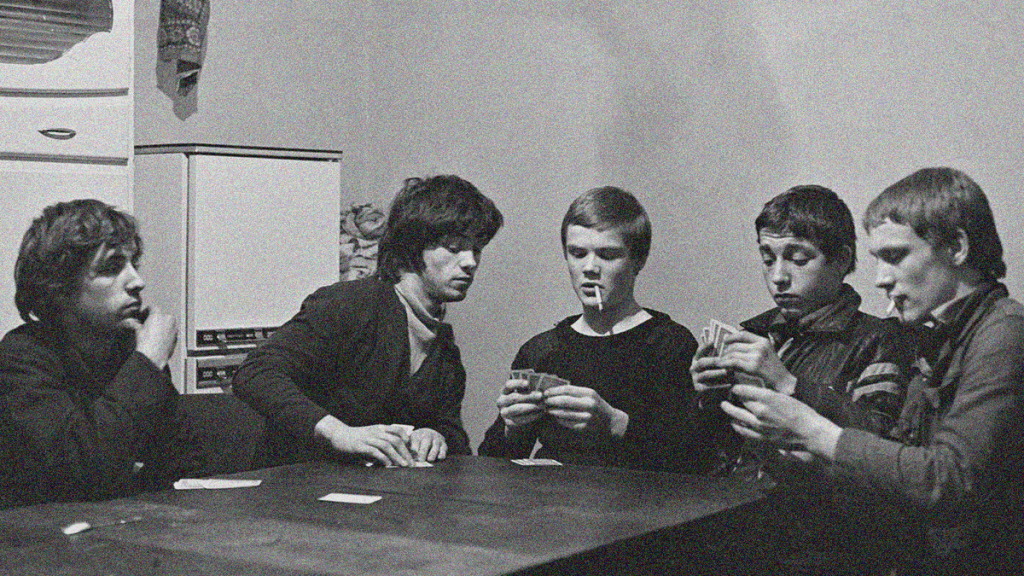
Frank Dillane in URCHIN; courtesy of 1-2 Special.



 jaredmobarak.com
Leave a comment