

Rating: NR | Runtime: 90 minutes
Release Date: January 31st, 2025 (Finland) / September 19th, 2025 (USA)
Studio: SF Film Finland / Music Box Films
Director(s): Charlie McDowell
Writer(s): Robert Jones / Tove Jansson (book)
Up to the stars.
It’s the first summer since Sophia’s (Emily Matthews) mother passed away, but she, her father (Anders Danielsen Lie), and grandmother (Glenn Close) are still going to try and keep their Midsommar tradition alive. Their cabin resides on an uninhabited island within a Gulf of Finland archipelago that’s been a family vacation destination for decades. Grandmother has been coming for almost fifty years and the thought is that maintaining this consistency will be good for the child’s grief. She also hopes it might wake her son up from his.
Adapted by Robert Jones from the novel by Tove Jansson, director Charlie McDowell’s The Summer Book begins as this trio comes ashore. They seem a happy bunch with Sophia’s excitement masking the reality of her mother’s absence until Father (her and Grandmother don’t receive names) is stopped in his tracks by what we presume was his late wife’s sun hat. All she wants to do is play and prepare for adventures while he sets up his drawing desk to complete work assignments instead. So, it isn’t long before Sophia realizes she’s alone.
Not fully considering Grandmother’s presence, but she can barely move around the rocks and moss even with the support of her cane. She must, though, because her son’s self-pity causes him to be absent during the day. Grandmother would love to get some time alone to read her book and relax, but Sophia needs stimulation and it falls on her to provide it—at least until she can hopefully nudge Father into acknowledging that his actions and attitude are only exacerbating an already untenable situation.
The film is therefore mostly Sophia and Grandmother engaged in conversations that inevitably find themselves flirting with the idea of mortality despite never literally mentioning the girl’s dead mother. It’s the fear of accidentally cutting a worm in half or praying for a storm to save her from boredom only to have one arrive and threaten the safety of Father. Grandmother does her best to keep up, but age is constantly rearing its head to frustrate her. She’s losing memories and desperate to make new ones.
McDowell’s leisurely pace allows us to float around them as their days compound. A couple other characters pop up to break the monotony (Ingvar Sigurdsson’s Eriksson bringing fireworks, a younger couple played by Pekka Strang and Sophia Heikkilä showing the old ways aren’t fully dead, and a new black cat), but the bulk of the time is spent on the main trio’s island in quiet introspection. Swimming. Planting a poplar tree in Mother’s memory. Drawing stories. Camping in a tent. Enjoying a bonfire.
Its ultimate message is that Sophia shouldn’t blame herself for tragedies outside of her control and Father should be there to assure her of that fact before any other responsibilities he may have. Grandmother is therefore doing her best to hang-on long enough for him to realize this because she knows Sophia will be lost if it doesn’t happen before her own death. It’s why she’s always nudging him to talk to his daughter and refusing to let him hide behind his sorrow as though he’s the only one in pain.
The Summer Book is a sweet yarn about love that isn’t afraid to let its heavy emotions breathe. While that’s great for its impact to land once they finally face what they’ve been avoiding, it also leads the whole to drag for a lot of its runtime. I love the idea of letting the truth be found in quiet moments and the contrasting evolution of interactions, but it’s tough to really latch onto anything when that’s the entirety of what we’re given. When the breaking point does arrive, it too quietly simmers back to a dulcet hum. Nothing to see. Problem solved.
I must also question the “book” considering it’s manifested as an end of summer gift that feels extremely contradictory. Yes, it’s a wonderful keepsake showing how much Father loves Sophia. And yes, she absolutely adores it. But when you think about its construction, you can’t shake the reality that its creation hinged upon him ignoring her this whole vacation. At best, it’s a misguided act since Father would have been better off playing with her instead. At worst, it’s a product of his guilt repurposing his art in an attempt to save face.
Perhaps it’s better explained in the source material or I’m reading too much into it, but that’s what happens when you leave so much unspoken. I have no choice but to interpret everything and Father’s epiphany cannot exist in a vacuum away from the rest since the melancholy of his actions and beauty of his gift are inextricably connected. It’s a minor quibble of structure and cause and effect, though. Nothing that ruins the overall essence of the journey or effectiveness of the performances. Just proof that less isn’t always more.
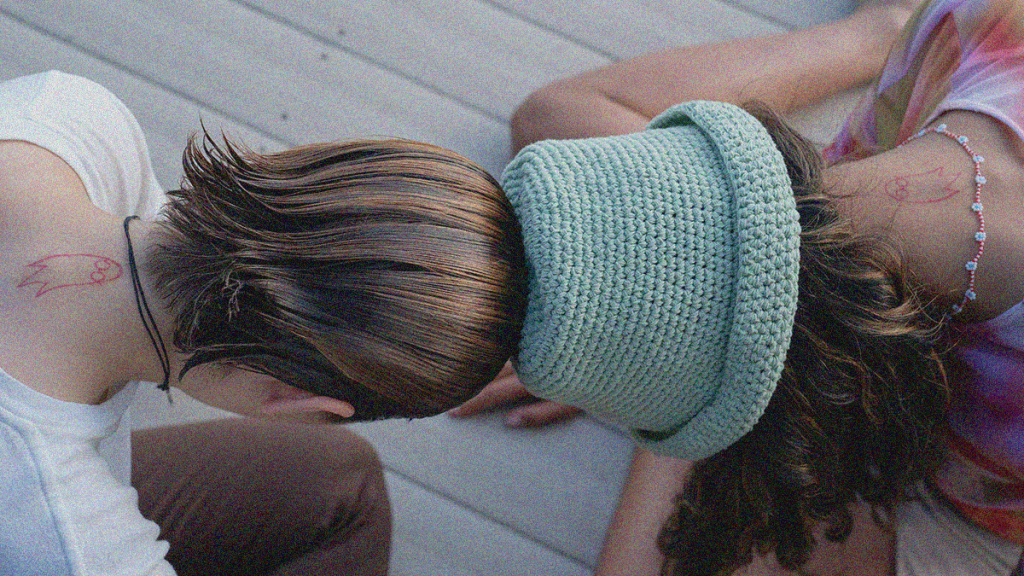
Emily Matthews and Glenn Close in THE SUMMER BOOK; courtesy of Music Box Films.

 jaredmobarak.com
Leave a comment