
Rating: NR | Runtime: 91 minutes
Director(s): Lorena Luciano
Writer(s): Lorena Luciano
He was very good at crafting myths to serve his purpose.
Centered around Gloria Branciani’s accusations of abuse by Jesuit Father Marko Rupnik, Lorena Luciano’s Nuns vs. The Vatican goes in-depth on the reality that the Catholic church has very intentionally focused on the altar boy victims of its priests’ crimes to erase fifty percent of the true number. Because every expert on the topic interviewed admits half of those who come forward are women—mostly consecrated nuns. To the powers that be within the confines of the church, any such acts are merely considered sins to be dealt with internally.
How can you therefore trust anyone to act? One priest is captured on-camera explaining that he doesn’t believe any of the talk surrounding Rupnik because he is both a “good man” and “friend.” While that in and of itself is to be expected, however, what he says next explains everything we need to know on the topic. “Even if there was a moment of weakness, I must forgive him.” Therein lies the rub. In an institution governed by the same men committing these heinous acts, they provide absolution to whomever and for whatever with zero oversight.
That is the power dynamic at play. Nuns are stripped of their autonomy the moment they put on the habit. They become conscripted to be obedient to God and therefore all his extensions into the real world. So, when a priest demands you remove your clothes or suggests a threesome as a means to reinforce the Holy Trinity, saying “No” becomes more than just rebuking the advances of a sick man. Due to the overlap of faith in Heaven and trust in its earthly stewards, that “No” suddenly becomes a rejection of God Himself.
For Gloria to come forward at all is a courageous act. To do so to condemn a man such as Rupnik—a right-hand to Pope John Paul II and renowned for his artistic talent with mosaics prominently displayed in Catholic institutions globally—provides the sort of inspiration that can truly spark a movement. Because Pope Francis finally talking about the prevalence of nun abuse due to media pressure from a Vatican publication isn’t enough. Not when the lack of accountability forms an impenetrable wall around the facts.
There are some really great subjects throughout the film that mine down and expose the problems inherent to seeking justice in these cases. The big factor is that most nuns believe in the sanctity of the church and go to their superiors for help rather than the police. As such, when they ultimately realize those men would rather protect the institution than those under their care, the statute of limitations would have run out. The evidence would probably be gone too as rumor states Rupnik’s boss burned all letters sent to him on the subject.
We also hear from an abused priest sent to one of the many “treatment centers” for abusive priests. He talks about the so-called therapy being more about providing activities than rehabilitation. Everyone was free to come and go as they pleased with weekend movie nights and regular excursions like canoeing to pass the time. Because that is the real purposes of these retreats: to keep sinful priests in a holding pattern until they can be reintegrated somewhere new. The most unsurprising statement made, however, was that he never witnessed remorse.
The details surrounding Rupnik are so wild that you can see why Gloria’s case is so crucial to the SNAP (Survivors Network of those Abused by Priests) network of survivors. Not only was he a major figure, but every reprimand and seemingly final punishment washed off him like nothing. He’s still a priest today despite excommunication and being stripped of his place amongst the Jesuits. As recently as 2023 his mosaics were still getting commissioned and installed in places of worship. It’s top-down authoritarian loyalty at its finest.
Yet Gloria’s strength never wavers. Bolstered by former nuns from the Loyola site of her abuse (Mirjam Kovač and Klara), she’s allowed Federica Tourn to tell her story and use it to find others willing to come forward. The question remains whether anything substantial will be done, but, as is admitted during the film, Pope Francis putting it on the record is a positive step forward even if it’s a bare minimum result. But that’s why stories such as these are so crucial to the cause. Change is only possible if someone is brave enough to light the match.

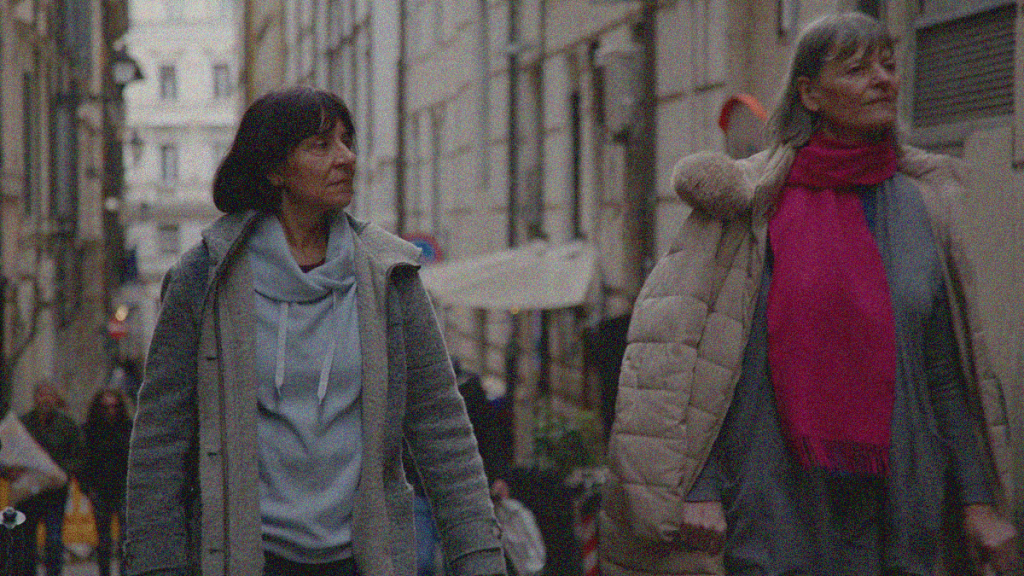
Gloria Branciani and Mirjam Kovač in NUNS VS. THE VATICAN; courtesy of TIFF.



 jaredmobarak.com
Leave a comment