

Rating: NR | Runtime: 139 minutes
Release Date: September 24th, 2025 (South Korea) / December 25th, 2025 (USA)
Studio: CJ Entertainment / Neon
Director(s): Park Chan-wook
Writer(s): Park Chan-wook, Lee Kyoung-mi, Jahye Lee & Don McKellar / Donald E. Westlake (novel The Ax)
If we don’t use paper, who will?
Never proudly exclaim how you “have it all.” Why play with fate that way? One day you’re eating eel off the grill with the family and the next you’re out of a job despite putting in twenty-five years. Then what happens if your expertise is so niche that there’s a good chance one or two people would be ahead of you in the interview rankings? What if your industry is dying to the point where companies must cut payroll and pivot to automation just to keep the lights on? You Man-soo (Lee Byung-hun) must confront all these questions to save the perfect familial portrait he’s created. His methods might be extreme, but he has No Other Choice.
Adapted from the novel The Ax by Donald E. Westlake, director Park Chan-wook and his fellow co-writers Lee Kyoung-mi, Jahye Lee, and Don McKellar push Man-soo to the edge of his sanity throughout the film. They give him the confidence to tell a prospective employer that his sole weakness is being unable to tell his boss “No.” They strip away his shame to grovel on the tiled floor of a restroom during a desperate attempt to get his resume in the hands of another. And they make him consider killing the competition just to steal a job. He would have done it too if not for the lucid realization that one corpse might not be enough.
Does that deter him, though? Of course not. He’s fighting a war for his family and there are no boundaries he won’t cross—no matter how difficult it is to ignore the moral threshold it will take. This is the main reason why the film is a comedy first and violent drama second. Because Man-soo is neither a trained killer nor a good liar. His wife (Son Ye-Jin’s Mi-ri) thinks he’s having an affair, staying out all night and coming home with injuries no one would ever receive on a real job interview. It’s to the point where she’s even gone back to work (she only ever quit because he told her to) just to stay afloat while awaiting the sale of their home.
It’s through this family dynamic that the literary adaptation evidence is most visible. There’s a lot going on. Mi-ri giving up dance lessons and tennis—both of which seem to also factor in her new young dentist of a boss. Their son decides to pivot a rebellious streak into petty crime to help raise funds. Their daughter is a cello prodigy who doesn’t speak beyond parroting certain phrases when they make an impact. Man-soo has a bonsai garden. His industry is paper manufacturing with its own rituals and loving attributes. And the men he must leapfrog in the job market all have their own independent lives that get revealed as he stalks them.
Don’t get me wrong, Park and company do a great job juggling all these threads into a coherent whole with fun connections that lead to hilarious misunderstandings and wild epiphanies insofar as how to better commit the crimes. There is an end reveal that’s purely superfluous considering where the characters are already positioned at the moment of its elucidation, but even that has a nice gag aspect to it. Especially because Lee is having such a good time in the role. I’ve seen him play so many super intense parts that I wasn’t quite certain what to expect here. But he is game for the tone and the physical pratfalls necessary to play the fool … while still also proving a formidable foe.
His adversaries are a major piece of the intrigue too, both because they’re so over-the-top in their unique characterizations and because they’re all pretty much just different iterations of Man-soo. They must be, right? They would be fighting for any job opening he wants and have been out of work for the same period of time—not to mention marital troubles, loneliness, and crippling anxiety. Having Park Hee-soon, Lee Sung-min, and Cha Seung-won bring them to life is merely an embarrassment of riches for what could be construed as meaty cameos. And if Man-soo wasn’t so hellbent on taking them out, maybe he’d learn a lesson or two rather than repeat their mistakes.
But that’s the appeal. We don’t want him to come to his senses. We want the silly carnage, bumbling police, and suspense of his family finding out and potentially blowing him in. We need it because letting Man-soo absorb the message being tossed around is much less entertaining. Actually learning that it’s not getting fired that matters but the actions taken in response to it is reserved for a straight dramatic take minus the snakebites, gunshots, and bodies wrapped in metal cord. Give Park credit for not giving us that version too since it would have felt more aligned to his career. Between this and Decision to Leave, it’s nice to see a celebrated auteur who refuses to grow creatively stagnant.

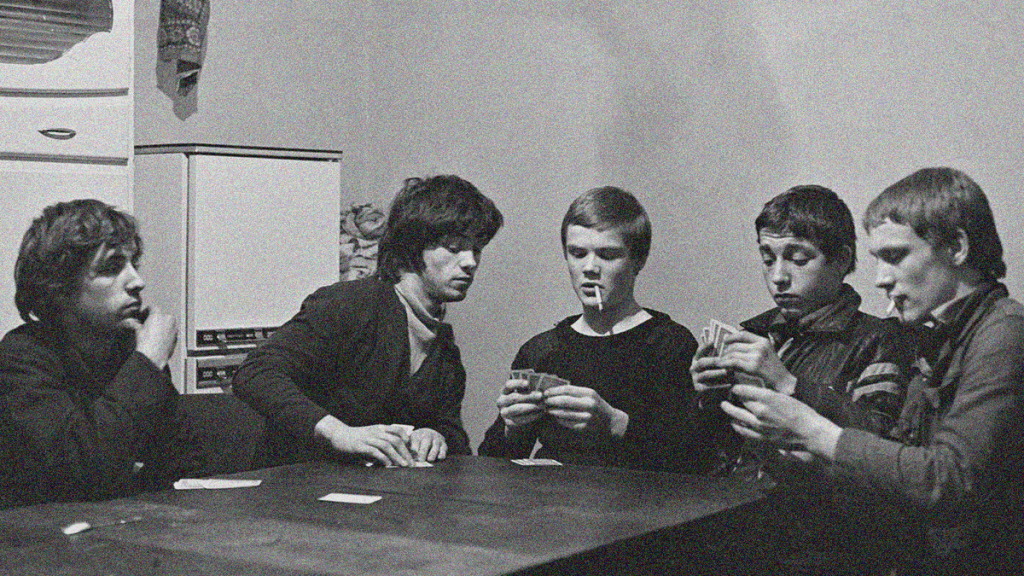
Lee Byung-hun in NO OTHER CHOICE; courtesy of TIFF.


 jaredmobarak.com
Leave a comment