

Rating: NR | Runtime: 119 minutes
Release Date: September 19th, 2025 (Canada)
Studio: Les Films Opale
Director(s): Philippe Falardeau
Writer(s): Philippe Falardeau & Alain Farah / Alain Farah (novel Mille secrets mille dangers)
It’s hard to be your friend.
Despite the English title (the original French translates to A Thousand Secrets, A Thousand Dangers) and the sentiments to Bill Withers’ song as selected by Alain (Neil Elias) and Vir (Rose-Marie Perreault) for their wedding, this day of celebration proves anything but a Lovely Day. Is it a result of bad luck? The powers of an evil eye? Absolutely terrible karma on behalf of the groom? Or is it simply the complex nature of being humans who rely upon other humans to support and love them? Because the evening does ultimately end with a smile. It’s just tough to imagine that being true considering all that occurs.
Adapted by director Philippe Falardeau and writer Alain Farah from the latter’s autobiographical fiction novel of the same name (hence the lead character also sharing his), we know things are going to be bumpy from the start due to Dodi (Mackbouba) dropping the ball on his Best Man duties. The plan was to pick Alain up in a rented Mustang. The reality sees them driving in bumper-to-bumper traffic just thirty minutes before showtime inside Dodi’s tow truck instead. These brotherly cousins are thick as thieves, though. Alain has incredulously handled his best bud’s questionable reliability for decades. It’s par for the course.
Dodi frustratingly exits the cab often to help toss trash bags into a garbage truck and move construction blockades—anything to propel them forward so they aren’t completely late. As anyone who has ever participated in a wedding knows, however, you’re “late” if you’re not present at least an hour in advance to assist with any finishing touches. So, arriving at the church proves just as chaotic as the ride there. Vir ignores tradition to welcome her husband-to-be. Ruby (Joëlle Thouin) makes a beeline for Dodi (her boyfriend) to give him a hard time. And the risk of Alain’s estranged parents causing a scene has him bracing for impact.
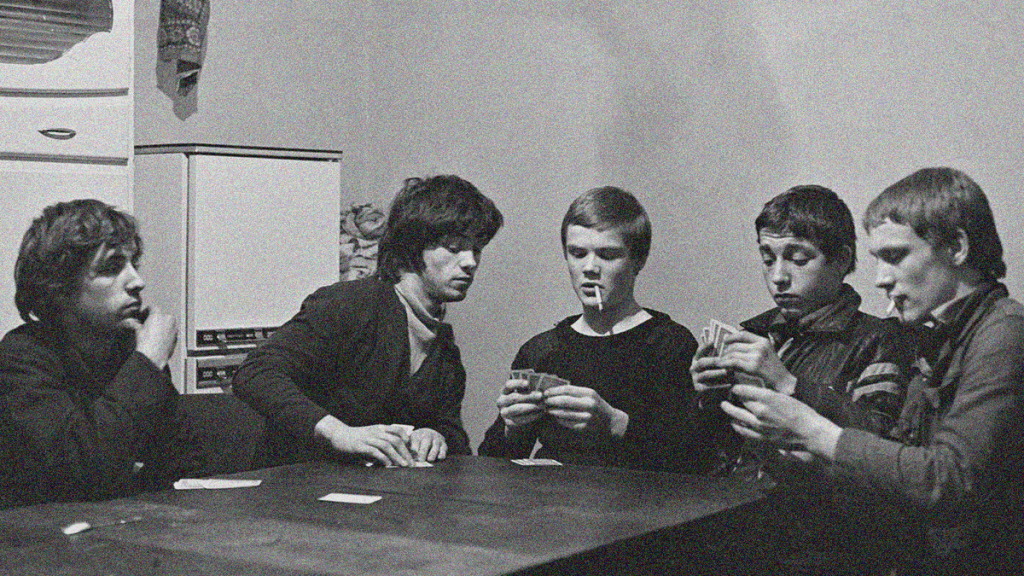
Rather than enter the venue with them, though, Falardeau rewinds things to provide us a new timestamped entry point of twenty-four hours before the wedding. We’ve already seen a few flashbacks of Alain’s childhood (presented with a change in aspect ratio from the full-framed stress of the current day to widescreen memories of the past) for context to his painful bowel troubles and constant threat of a panic attack, but this is a full restart wherein he arrives at his apartment with his tuxedo and promptly checks the task off his to-do list. Vir shows up. Dodi is already present. More context is shared.
The entire film unfolds non-linearly as a means to shroud certain revelations in the edit while exposing others through what could be construed as nightmarish visions compounding Alain’s already lengthy catalog of ailments. Things like Vir pushing his hand away at the reception or him turning white as a sheet from a phone conversation for which we don’t hear the other side. These tiny actions influence and/or foreshadow the drama coming next, but there’s also additional information to be infused at a later time to recolor things upon a replay. We go nineteen years in the past, thirty minutes into the future, etc.
And through it all we see the trauma young Alain endured to make him such an emotional mess. That’s not to say he doesn’t have a real medical condition in Crohn’s disease. It’s just tough to know where the physical pain of that affliction ends and the psychological conditioning from his Egyptian father Elias (Georges Khabbaz) telling him that admitting he has it is a weakness begins. The same can be said about his Lebanese mother Yolande (Hiam Abou Chedid) and the obvious resentment towards her ex that inevitably projects upon her son from having to be the one perpetually taking care of his suffering.
There are also deep-seated feelings born from childhood melodrama. Dodi is still Dodi at any age, but the unrequited love for Constance (Electra Codina Morelli) and racism towards Baddredine (Farés Chaanebi) open wounds that Alain is still reckoning with now. The latter point intrigues because cultural blurring is a common thread from multiple angles. Like Alain’s light skin allowing him to call himself Québécois despite his Arab heritage or his choice to marry in a Catholic church as a Maronite instead of at a Greek Melkite parish. (As a Lebanese Maronite myself, these religious choices can get blown out of proportion.)
So, of course Alain is a basket case. The lesson here isn’t about healing him, though. It’s to smack him awake to the fact that everyone loves him anyway. The anxiety and pain have clouded his judgement so thoroughly that he’s unwittingly throwing himself a pity party whenever something goes mildly (and often hilariously) awry rather than recognizing how he’s not the only person with feelings about or ownership in this joyous event. Alain begins to abandon those who would never abandon him and they ask for his forgiveness. The hope is that he’ll eventually accept his complicity and finally ask them to forgive him.
The comedy from this never-ending series of absurd pratfalls makes Lovely Day an enjoyable experience, but learning about and reconciling with the bottled-up anger within Alain renders it so memorable. The character is extremely relatable considering we’ve all positioned ourselves as the star of the story to accommodate the rage felt when being let down, nerves of presuming someone will ruin things, and shame in grasping way too late that the trouble is mostly our fault. But it’s not about you. Alain sees Dodi’s selfishness. His parents see it in each other via hindsight. It’s time to turn the mirror inward and acknowledge it in himself.

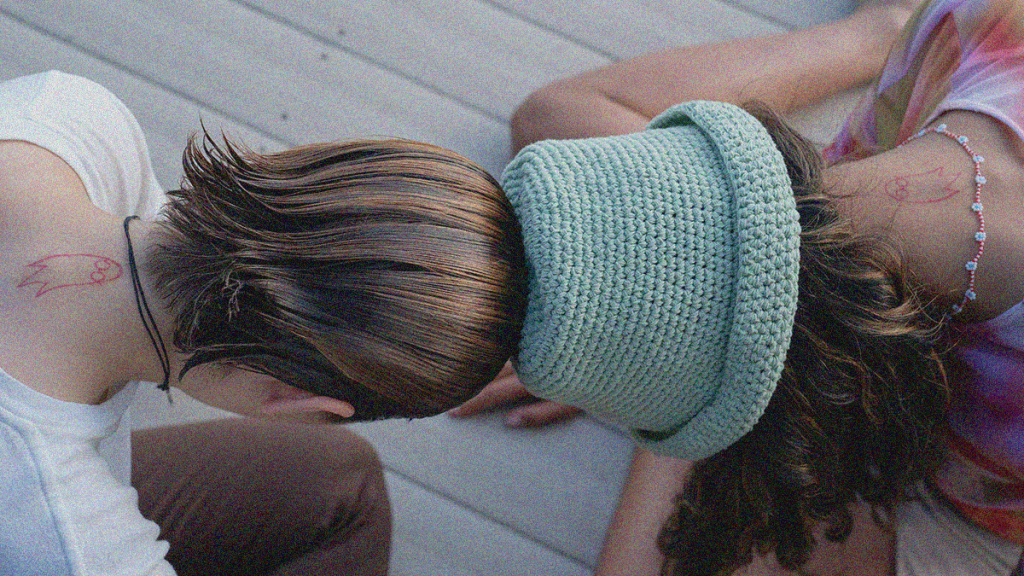
Neil Elias and Rose-Marie Perreault in LOVELY DAY; courtesy of TIFF.

 jaredmobarak.com
Leave a comment