
Rating: NR | Runtime: 83 minutes
Release Date: 2026 (USA)
Studio: Film Movement
Director(s): Orian Barki & Meriem Bennani
Writer(s): Orian Barki, Meriem Bennani & Ayla Mrabet
I don’t want to spend my life lying.
Based on a real-life conversation shared by co-director Meriem Bennani and her own mother, Bouchra (co-directed with Orian Barki and co-written by them and Ayla Mrabet) opens with a phone call. Aicha (Yto Barrada) is checking in on her daughter from Morocco while finishing up her cardiology paperwork like usual when Bouchra (Bennani) broaches a subject they’ve been avoiding for almost a decade. Stuck creatively, the latter has decided to find emotional catharsis through a script about the complex dynamic shared with her parents and seeks context from the opposite side.
We don’t yet know exactly what it is that lingers between them, but we can presume it once the awkward silences of past trauma brought up by that confrontation have Bouchra leaving her New York City apartment to reconnect with an ex-girlfriend (Ariana Faye Allensworth’s Nikki). Her sexuality is obviously a cultural sticking point—one born from the societal indoctrination of Aicha and her husband’s youth and religion. They never disowned their daughter, but they’ve also never been comfortable dealing with their shame. So, Bouchra has unwittingly and silently been forced to hide herself. And it’s taken a toll.
Hence the film Bouchra scribbles onto colored storyboard cards that unfold on-screen as both inspiration for the drawings and the finished product created from them. While one might portray this narrative fluidity as a fourth wall break between reality and fiction had Bouchra been a live-action production, its Blender 3D animation renders it a semi-autobiographical fiction wherein Bennani and Barki shift between the real Bouchra and Aicha and their cinematic counterparts. The former mostly interact on the phone while the latter is portrayed by visits to Morocco where “Film Aicha” (Dounia Berrada) lives and works as a painter.
It’s an inventive approach turning the whole into a meta film for Bouchra to exorcise demons and reconcile emotions. We see the memories conjured by their conversations like a letter long-since thought destroyed, the constant avoidance, and the need to shroud every new romantic adventure under “trip with friends” rhetoric. And since they live an ocean apart, Bouchra must find a way visualize her pain. Enter a potential Moroccan love interest in Lamia (Salima Dhaibi) to flirt with publicly and earn uncomfortable side-eyes from “Film Aicha”. Bouchra makes it so her mother can no longer just pretend it all away.
Neither can the audience with two sex scenes featuring ripped underwear and saliva pull kisses. For every moment Aicha is portrayed shielding her face comes two of Bouchra living her life without worrying about what others might think. Because this isn’t about self-hate or insecurity as an openly gay woman. It’s specifically about traversing the chasm that truth created between her and conservative family members wrestling the love they have for their child against the learned disgust for homosexuality that’s become synonymous with their religious piety. Bouchra wishes her mom could know the full her.
Cue the next phone call and the creativity it spawns. There’s the confrontational nature of Bouchra’s choices shown from “Film Aicha’s” fictional perspective and the eggshell walk from her own fictional counterpart in response. There’s the blossoming romance with Lamia and the complicated feelings that surround Bouchra’s real love life considering her history with Nikki and the potential pitfalls of rekindling a relationship (private or public) with her. It helps to also have Bouchra’s BFF Yani (Barki) as a confidante to work through everything … and pitch a legitimate (if unrealistic) million-dollar theme park idea.
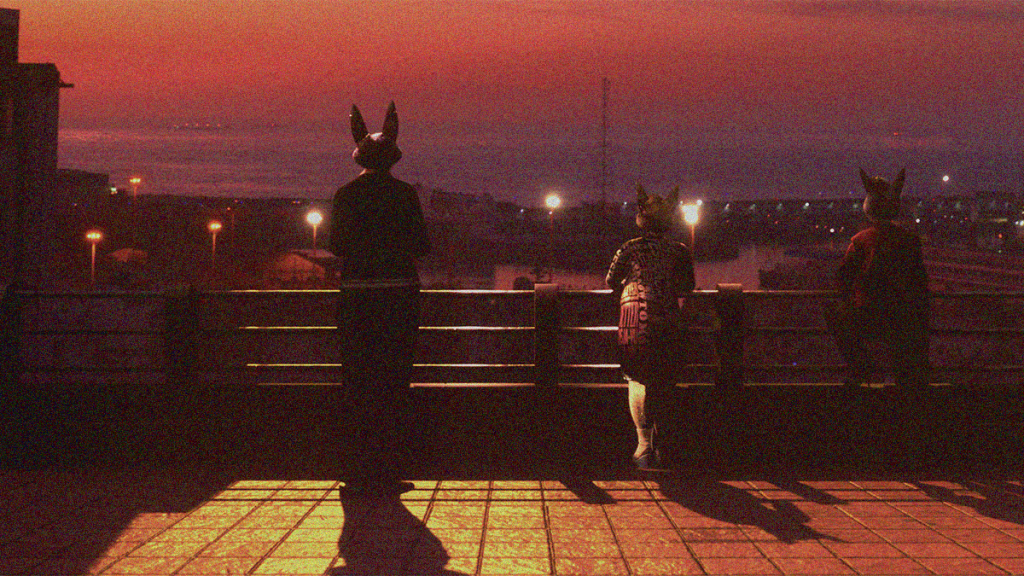
Oh, and did I mention they’re all animals? Yes, Bouchra and her mother(s) are coyotes. Niki is bovine. Lamia is a bear. This whole world aesthetically presents itself like an R-rated, multi-cultural Zootopia (without the one-dimensional race allegory) that shifts between English, French, and Arabic. Rather than have a specific rhyme or reason for which characters are which, I think this stylistic choice was made to create a remove from reality while also playing with the notion of children’s stories using animals as a teaching tool. It probably also helped cajole friends and family to participate by voicing “themselves.”
That sense of personal attachment is apparent as you can tell this subject is close to the filmmakers’ hearts. Yes, it surely let Bennani work through her familial identity crisis and her actual mother to better understand the consequences of her actions, but Bouchra also stands as an example for others to use in their own lives for that purpose. Because, like with Bouchra and Aicha, that much silence starts to fester in ways that let both sides blame the other for never “starting” a dialogue. Aicha sought to give her daughter control, forgetting that Bouchra already did initiate. Well, with this film as an icebreaker, there can be no confusion.

A scene from BOUCHRA; courtesy of TIFF.
 jaredmobarak.com
Leave a comment