
Rating: NR | Runtime: 124 minutes
Release Date: September 27th, 2024 (Japan) / July 18th, 2025 (USA)
Studio: Nikkatsu / Janus Films / Sideshow
Director(s): Kiyoshi Kurosawa
Writer(s): Kiyoshi Kurosawa
A sweet little plan.
We meet Ryôsuke Yoshii (Masaki Suda) after he earns a tidy sum extorting a stranger’s desperation. It’s the sort of deal that exists in a moral gray area due to the fact he technically did nothing wrong. Someone needed to offload product to presumably pay down debt and Yoshii leveraged that situation into low-balling him via a take-it-or-leave-it ultimatum only to then resell the stock at an almost 700% profit. Shady? Yes. But the seller could have done the same if he knew how. A lot of people would actually call it a shrewd move on Yoshii’s part, but that won’t also absolve him of being a scumbag for executing the plan.
Writer/director Kiyoshi Kurosawa does well to ensure we realize this is Yoshii’s first big score. Between showing him staring at the computer screen in hopes the merchandise sells out to his need to go to the bank to prove he didn’t dream it all, this is a man emboldened overnight by the taste of success. And if he did it once, he can do it again. Right? So, why not quit his factory job despite the owner pleading to put him on the fast track towards one day taking it over from him? Why not tell his girlfriend (Kotone Furukawa’s Akiko) to quit hers too with the promise she’ll be able to satisfy all her materialistic fantasies?
Cloud progresses rapidly as a result—both to move things towards its dramatic escalation and to get us wondering whether Yoshii is going too fast. His life becomes a paranoia feedback loop wherein he assumes his reselling compatriot (Masataka Kubota’s Muraoka) is phishing for details about his success and that Tokyo has become too unsafe to continue operating anonymously on the edge of legality. So, he moves to the sticks. Enlists a local kid (Daiken Okudaira’s Sano) he assumes is too eager for work to overstep any trust boundaries. And switches his business plan from opportunistic purchases to potentially bogus wares.
But the paranoia only increases since everyone knows what he does. They don’t know his username, but all online resellers have a reputation of being con artists willing to do anything for a quick score regardless of collateral damage. Yoshii does nothing to dispel that thought either as he grows more isolated and cagier as the days pass. Because he knows they’re correct. He justifies his actions to himself, but that doesn’t mean he’s dumb enough to not fear retribution. It’s why he can’t help thinking a late-night “prank” of a smashed window isn’t just a kid begrudging an outsider moving to town. It must be a warning of something worse. Yet he can’t rely on the police since they’d love to make a house call and arrest him.
Rather than simply let Yoshii drive himself insane from the stress of replicating that initial success (pushing Akiko away, questioning Sano’s loyalty, shipping from Tokyo in case local drivers snitch to the cops, etc.), Kurosawa dials things up further to introduce an online cabal of everyone Yoshii has screwed over either by fleecing them, conning them, or simply slighting them in wholly unrelated ways. These people are frothing at the mouth for someone to dox him so they can violently take a pound of flesh as penance. It’s mob mentality at its finest because they’ve radicalized themselves to be clear-eyed and dead set in their mission. Reclaiming their warped notion of dignity means Yoshii must die.
The film is therefore pushing the toxicity of the internet to its extreme so that the rantings and ravings of people letting off steam and finding kindred souls to lament their shared victimhood can spill over into the real world. It’s very effective too since Yoshii is such a normal, in-over-his-head character (expertly played with equal parts entitlement and fear by Suda) that we would never think he’d stumble into being hunted for sport. This is a guy whose ego will get him arrested or in hot water with the Yakuza because he dipped his toe in waters too deep. Inspire a hit squad of other ordinary people willing to risk their own lives for the chance to kill him, though? It’s crazy.
Yet that’s where we are as a society. I don’t know the nuances in Japan where this stuff is concerned, but almost every tragedy that occurs in America today has some origin in online chatrooms and social channels stoking terror and rage to the point where someone ultimately snaps. It’s tribalistic politicization against the opposite side of the aisle leading to assassinations. It’s “men’s rights” groups spewing misogyny and condoning domestic violence. It’s white supremacists dragging their xenophobic ideals of replacement theory into full-fledged designs for genocide. The only thing necessary to bring such like-minded hate together is a common enemy. And Yoshii is exactly that for these men.
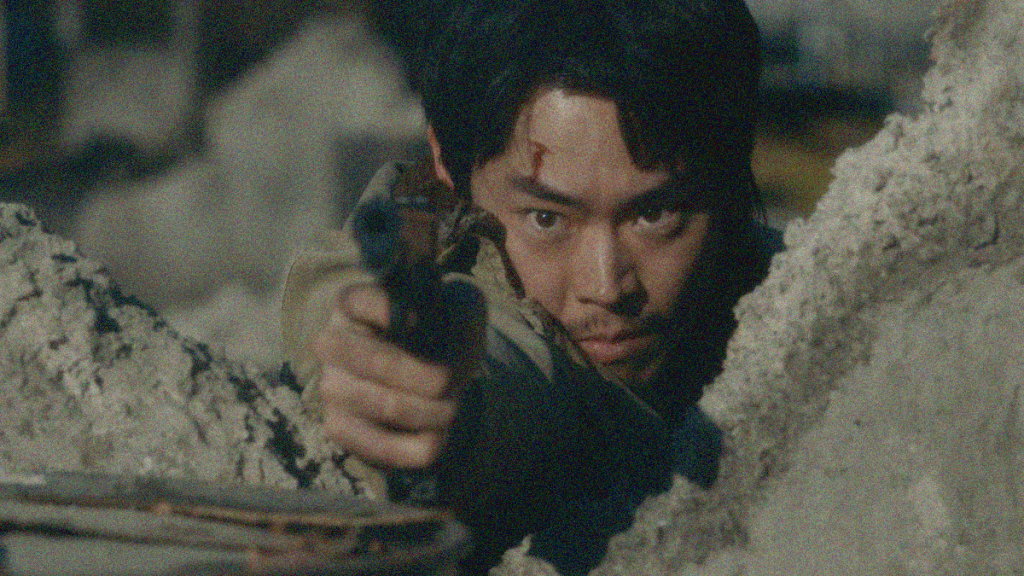
It culminates in a wild third act that Kurosawa fearlessly builds upon with new revelations to show there’s no talking these men down or chance of them getting cold feet in the moment. More than that, though, he always seems to have a narrative maneuver up his sleeve to bring Yoshii into the fight too. Because that is a guy who’d soil himself once things get out of hand. He really believes he’s just doing what anyone else would … just quicker and smarter. To throw him in this scenario and ask him to save himself, though? Does Yoshii have it in him? And, if he does, will pulling the trigger make it that much easier to pull it again? It’s just like with that initial windfall: You only need to sell your soul once.

Masaki Suda in CLOUD; courtesy of Sideshow and Janus Films.




 jaredmobarak.com
Leave a comment