

Rating: NR | Runtime: 117 minutes
Release Date: October 10th, 2024 (Germany) / August 1st, 2025 (USA)
Studio: Filmcoopi Zürich / Film Movement
Director(s): Ramon Zürcher
Writer(s): Ramon Zürcher
Uncomfortable things are kept quiet.
Jule (Britta Hammelstein) never understood why her sister Karen (Maren Eggert) moved her family into their old childhood home upon the death of their mother. She remembers how much they both hated that property. How much they both hate her. It’s why Jule got out when she did without ever looking back. She escaped the stifling nature of their mother’s gaze. The anxiety of feeling as if her mom would kill her if given the chance. So, why would Karen return? Why would she risk opening those wounds and letting the demons of the past ravage her present? Because it was never a loving home. It’s where love went to die.
As we soon discover, courtesy of Ramon Zürcher’s impeccably drawn script for The Sparrow in the Chimney, that fact remains. Karen and Markus’s eldest daughter Christina (Paula Schindler) fled like Jule yet still can’t shake the call of its dark force like her mother. Teenaged Johanna (Lea Zoë Voss) feels the anguish caught within those walls with a white-hot anger, constantly fighting with Karen as a means to keep from losing herself to its grip. And young Leon (Ilja Bultmann) is so confused as to the chaos surrounding him that he at once despises his mother while also trying to please her. This place’s hold has grown on them all.
So, bringing the whole extended family under the same roof is just begging for turmoil. Not only because the reasoning centers on Markus’s birthday despite him and Karen being on the brink of divorce, but also because Jule and Christina are coming back. That’s both a catalyst for Johanna and Leon to remember what they’ve been missing without their sister (as well as the jealousies they harbor from being unable to follow) and an opening for Aunt Jule to reveal family secrets they weren’t even aware existed. Secrets that simultaneously stoke even more resentment towards Karen for hiding these truths and empathy by finally understanding a little more about why she’s the way she is.
There’s also the sexualized energy of troubled and haunted people stuck in close quarters with reasons to want to drop a grenade and revel in the fallout. Johanna cannot stop herself from flirting with her uncle (Milian Zerzawy’s Jurek, Jule’s husband). There’s a lot going on with the tenant staying at the cottage on their property (Luise Heyer’s Liv)—a physical affair with Markus and an emotional one with Karen (less about a mutual desire for the other than wishing they could be the other). And don’t forget how that desire for anarchy can also manifest in violence when you have a bullied powder keg like Leon desperate to release the pent-up aggression that builds within.
It all leads to some intensely uncomfortable scenarios and heart-wrenchingly authentic moments of dissociative attacks (sometimes on others, but most often on oneself). Karen has all but transformed into her mother to the point where she genuinely asks where her former self has gone. Her children can’t help themselves from letting her know how much they’ve grown to hate her and Jule, seeing how justified they are in doing so from personal experience, offers zero compassion. Karen begins to harm herself to feel something. Leon harms himself to stop feeling what he is courtesy of the people around him (when cooking ceases to distract him). And Johanna is itching to punch someone in the face.
Things become so incendiary that Zürcher injects a magnificently nightmarish interlude of fantasy from inside Karen’s mind at the apex of the entire horde turning on her due to no fault but her own. It’s one of the best sequences of the year with Johanna’s music pumping, touchstones of Karen’s transformation into an oppressive killjoy returning (a sparking microwave of “fireflies”), the inevitable result of a previously vengeful act of cruelty, and a truly disturbing moment with a cheese grater all vying to give shape to this woman’s guilt, psychological trauma, and inability to stop herself from falling deeper into the void.
It’s the sort of sequence most films would end on and yet we’re about two-thirds of the way through with another full day of festivities to come. Why? Because it was all just to set the stage. Zürcher meticulously shows us everything wrong with this family, then makes that knowledge worse by exposing how the person doing the most to ruin things should know better, and then introduces elements that reveal how simple it would be to right the ship. The latter is easier said than done, though. Especially now that so many bridges have been burned and different connections have formed. A transference of power becomes an imperative.
What’s so good about the third act is that this transfer arrives as one thing before transforming itself into another. Because there are so many options at Zürcher’s disposal. Karen could simply leave and let the rest of them be happy without her. She could follow family history by removing herself from the equation in a more permanent way. Or he can acknowledge that none of this is actually her fault. It’s all a case of generational pain and misguided loyalty and crippling fear. Excising Karen will not destroy the ghosts haunting them. She must find a way to close this chapter of her life while there’s still time to repair the damage.
The form that takes is as poetic as it is cathartic. The script has been leading us there from the start and Jule gradually sharing truths prepares us to recognize this property as the symbols it contains. The main house, cottage, and tiny island out back signify duty, longing, and innocence respectively. For too long Karen has held one above the rest out of fear. She’s interpreted longing as sin because that cottage represented everything she lost as opposed to the promise of what might have been. Because that’s where love truly resides. Karen thought living in the main house could cleanse it, but it destroyed with her family’s love instead.
The beauty of a Zürcher film (ditto The Strange Little Cat and The Girl and the Spider before it) is that he filters fantasy through reality in ways that render the accuracy of what we’ve seen moot. Is what happens at the end of The Sparrow in the Chimney real? Define the word. Because whether it physically occurred or metaphorically occurred within Karen’s mind (Eggert astounds in the role), the result remains the same. Whether the wood and stone itself or its psychological impact was destroyed, its hold upon her has been released. This is a haunted house story by way of human truth rather than supernatural horror. Karen mustn’t defeat anything. She must only be willing to let go.
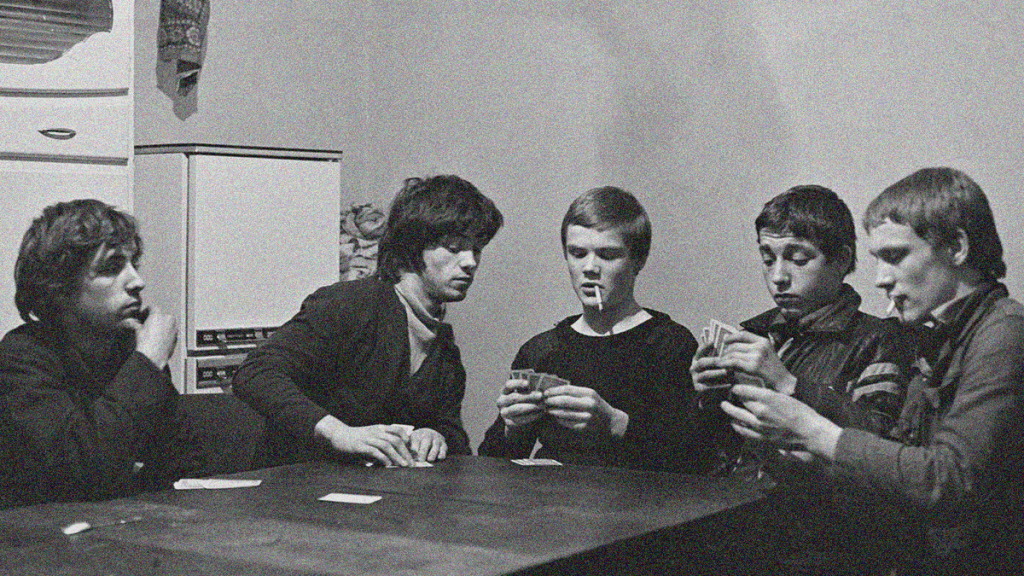
Ilja Bultmann, Andreas Döhler, Britta Hammelstein, Maren Eggert, and Lea Zoë Voss in THE SPARROW IN THE CHIMNEY; courtesy of Film Movement.


 jaredmobarak.com
Leave a comment