

Rating: NR | Runtime: 83 minutes
Studio: Raven Banner Entertainment
Director(s): Ava Maria Safai
Writer(s): Ava Maria Safai
Pain is beauty.
Yasamin (Rose Dehgan) has arrived in Canada—fulfilling a promise made by her North American culture-loving mother years prior. Sadly, this high schooler is only being accompanied on the journey by her father (Ashkan Nejati’s Ali) and grandmother (Maryam Sadeghi’s Zoreh). We don’t yet know for certain what happened to her mom, but we can assume the worst due to Yasi’s inherited obsession with fitting in amongst the West. She wears out an old sitcom VHS to perfect her English and flips through a Teenybopper-adjacent magazine to stay up on the latest fashion trends for optimal assimilation. Because, despite her grandma’s advice to be emboldened by and cherish her uniqueness, Yasi needs others to love her first before allowing herself to do the same.
Intentionally treading a path through the aesthetic tropes of a Mean Girls or Heathers, Ava Maria Safai’s Foreigner quickly takes on a much more sinister slant once the bell rings to end Yasi’s first Canadian classroom experience. In just the brief moment between reaching down for her bag and looking up with the intent to leave, three students have suddenly appeared before her with creepily menacing grins. Kristen (Talisa Mae Stewart) and Emily (Victoria Wardell) don’t utter a word as they flank Rachel (Chloë MacLeod) so she can take point on the trio’s casually racist introduction. It’s a mix of curiosity, dominance, and misplaced duty since their fascination is less about learning about Yasi than it is wondering if they can strip her down and build her back up in their image.
In that way, the film perhaps finds more similarities to Neil LaBute’s The Shape of Things as far as the psychological rewiring of its lead goes. Because Yasi’s family sees what’s happening and try to talk sense only to be shutdown with the excuse that her friends know best. The trouble with needing acceptance from others before giving it to yourself, however, is that you lose your grip on knowing whether your choices are a result of their demands or a self-fulfilling prophecy of what you’ve already demanded from yourself due to the stress of emotional and geographical upheaval. I look to the fact that Safai fast-forwards a week from the day Yasi buys blonde hair dye before showing her use it. Rachel wasn’t forcing her to do it right away. Yasi merely used her enthusiasm to justify it.
Because she’s been on this road towards assimilation well before meeting her new friends. She’s been watching that VHS tape and scouring those magazines under the auspices of “homework” to be a good Canadian … and, by extension, a “normal” human being. Yasi is coming at this entire experience from a place of othering herself as a default defense mechanism against the inevitability of strangers doing it—so it won’t hurt as much. By refusing to give her classmates or her new community a chance to judge her poorly, however, she also takes away their ability to actually accept her as she is. It’s no wonder that she has left herself open to being possessed by a zār—an entity that craves control.
Well, that’s what I’m getting from some minor research into the subject since its arrival as a plot point comes much closer to the end than anticipated. So much closer that one late cut had me wondering if everything we’d seen was a dream. That’s how little Safai digs into the zār’s purpose, origins, or demands. It becomes a “generic demon” as a result—disappointing considering the platform a Persian story could have given this very specific Horn of Africa and Middle East-based spiritual “wind.” It serves as a metaphor for Yasi’s internal conflict between identity and appearance or culture and desire. An excuse for the rebellious actions of a teen pushing her true lifeline away to embrace the supposed security of tourists orbiting out of curiosity rather than compassion.
I hate to say it, but I don’t think the finished film would be any different if that aspect was removed entirely. That’s how shoehorned in it feels and how much it serves as a mask to what one could already construe as the influence of consumerism and Western media (which connects Yasi to her mother regardless of the zār’s presence). The one thing it does add is a supernatural monster-fication of this young woman that teases something crazy only to be what’s stopped in its tracks by the aforementioned cut. Sometimes the film feels just as unsure about its identity as its lead by suppressing its Persian-ness so as not to alienate its Western audience. Perhaps another layer to the commentary? Budgetary constraints?
Either way, I did enjoy Foreigner‘s contemporary spin on the genre and its use of the immigrant experience as a basis for horror (the scene where Yasi meets Rachel’s parents conjures the same discomforting sense of uneasiness as the Armitages’ party guests sizing up Chris in Get Out). Safai’s script is at its best when its sprinkling in the “Oops, did I do a racism again?” dialogue and retractions both because of the authenticity of the impulse and the performances (especially MacLeod) that ensure we know they weren’t slips. It provides Dehgan a great showcase to play against in her feature debut, effortlessly shifting from abject terror to indignation to body-snatched bubblegum vacancy.

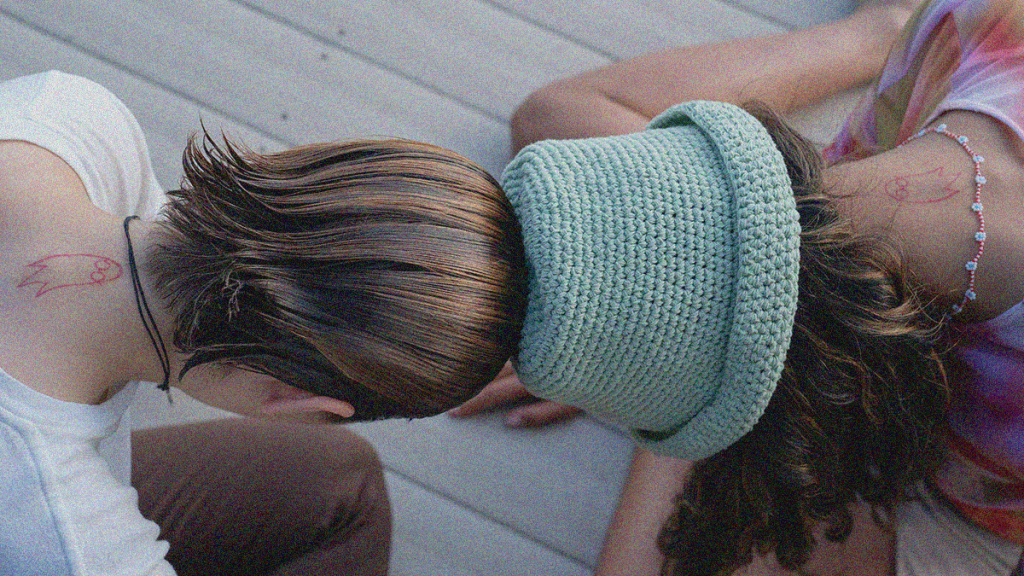
Chloë MacLeod and Rose Dehgan in FOREIGNER; photo by Saarthak Taneja, courtesy of Fantasia.

 jaredmobarak.com
Leave a comment