

Rating: NR | Runtime: 90 minutes
Release Date: March 28th, 2025 (Canada) / April 4th, 2025 (USA)
Studio: Game Theory Films
Director(s): Naomi Jaye
Writer(s): Naomi Jaye / Martha Baillie (novel The Incident Report)
No actions were taken.
Whenever a cinematic adaptation of a novel doesn’t click for me, I assume it’s because said adaptation comes from a place that demands familiarity with the novel. I feel this very deeply with Naomi Jaye’s variation on Martha Baillie’s Darkest Miriam because there does seem to be something here. I simply cannot penetrate the laborious pacing or obfuscating structure. I know it’s supposed to be about Miriam (Britt Lower) coming to grips with her father’s death, but it’s almost impossible to reconcile that with what must occur to achieve that goal. The most integral piece to the puzzle—a romance with Janko (Tom Mercier)—is itself a manufactured mirror too fabricated for its charm to win out.
Chapter One is about introducing Miriam before eventually leading her to a moment of clarity about her loneliness. It’s an odd little adventure through the eccentrics she must deal with as a public librarian that’s made sinister once threatening notes apparently left for her (although their connection via Verdi’s opera Rigoletto is one only she and her father would know) attempt to cloud the quirk with suspense. Rather than pursue this angle further than our quizzical hypothesis that she’s leaving them for herself, however, we shift gears from goings on inside the library to goings on outside courtesy of a near injurious accident on her bicycle.
Chapter Two commences (Did my waning attention make me miss the Chapter Three interstitial or are there just two?) to portray the result of a doctor’s visit wherein the attendant’s intake questions force Miriam to realize she has no one else in her life. This is the impetus that gets her introvert to walk across the park during lunch and strike up a conversation with Janko. Yes, her interest in him predates the moment, but it’s tough to truly understand her feelings beyond this pragmatic impulse without some internalization (presumably available in the text). We go along with the courtship and try to mine deeper alongside Janko (he tells her everything about himself while she remains closed off and silent when asked to “tell her story”), but never get anywhere.
So, when tragedy inevitably strikes to bring things full circle, I couldn’t really feel anything. I became as seemingly apathetic about it all as the main character despite her tears revealing a crack in the armor. And with little left of the runtime, I hoped for some sense of closure despite fearing that none would come. Because we still don’t know who wrote the letters (so I’ll keep presuming she did). We still don’t learn more about her father (beyond his addiction to books and dementia). We still don’t even really know how she feels about what’s happened. Jaye alludes to an awakening of sorts wherein Miriam allows herself an outlet through the poeticism of her “incident reports,” but that’s confusing too since her father was already an amateur poet.
My most interesting read of the whole is therefore that we haven’t experience reality at all. Everything has been a projection of Miriam’s desire to keep her father alive. She imagines him in another poet (Peter Millard’s John B.). She digs out Rigoletto to fill the air. And Janko’s avid reader and aspiring artist becomes an embodiment of everything she misses. We’re seeing Miriam’s memories of her dad through the triggers that remind her of him. Everything that happens is therefore less important than its impact upon her. Our interest in the supporting cast is only insofar as how they connect to him rather than how they exist themselves. Unfortunately, I didn’t care enough about Miriam for this to fly.
So, I’m left wondering how much more of Darkest Miriam on-screen would make sense if I read Baillie’s words. How much of what Jaye injects into her script with implicit visual language is the product of her knowing what each moment explicitly means, forgetting that an audience coming in cold (like me) won’t be able to follow along? Or maybe the film just wasn’t for me. Maybe I just didn’t get it. Which is too bad because there’s still a lot to like. Lower is good. Mercier is super charming. And the library’s menagerie of patrons and employees supply the perfect off-kilter, straight-faced comedic energy I adore. The pieces are simply better than the whole.
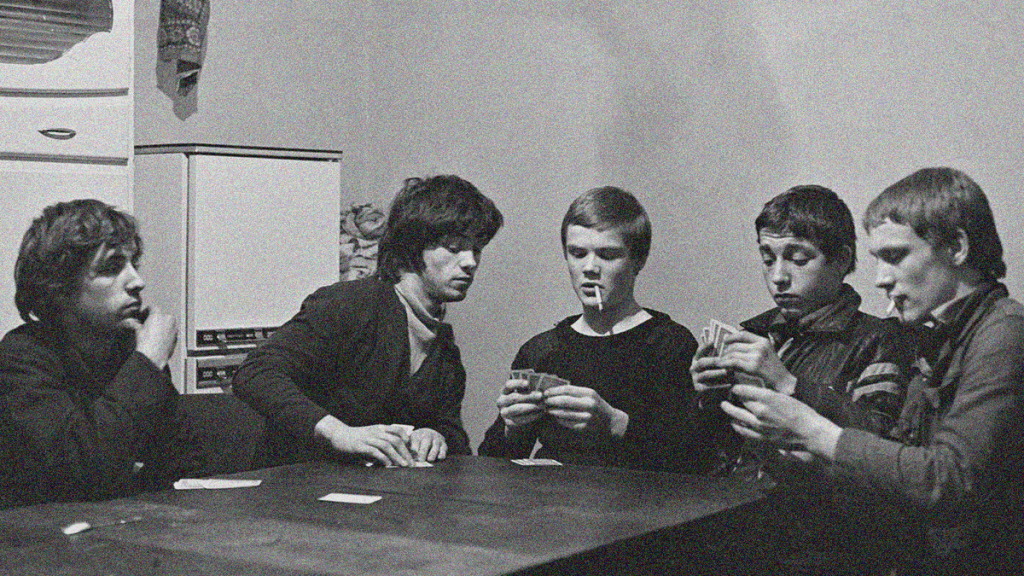
Britt Lower in DARKEST MIRIAM; courtesy of Game Theory Films.


 jaredmobarak.com
Leave a comment