

Originally posted at The Film Stage
Beautiful Men [2024]

Rating: NR | Runtime: 18 minutes
Studio: Miyu Distribution
Director(s): Nicolas Keppens
Writer(s): Nicolas Keppens
You deserve to be happy.
Three brothers. One appointment. A lot of fog. Welcome to Nicolas Keppens’ Beautiful Men, a comedic short set in Istanbul at a hotel mainly used for its proximity to a world renowned hair transplant center booked so far in advance that Steven’s (Tom Dewispelaere) mistake will ensure they’ve all wasted a ton of money. Because there’s no wiggle room as far as securing two more slots during their short trip. And since he took point and only found out his error upon arrival, it’s on him to break the news. How will they decide who gets to change their life?
While that question does ultimately get asked, however, the fact this trio (rounded out by Peter De Graef’s Koen and Peter Van den Begin’s Bart) has traveled so far for this procedure should tell you their conundrum is about more than hair. Sure, going bald can cause anxiety and insecurity, but, more often than not, such superficial “problems” prove to be the product of other things. Fears of intimacy. Fears of isolation. Fears of mortality. Whenever Steven tries to get the other three alone to break the bad news, something arises to distract, frustrate, and/or consume one or more of them. They’re each some variation of a raw nerve.
As such, the obvious punch-line isn’t that whoever wins turns his life around at the detriment of the others. No, it’s the reality that acquiring new hair won’t actually change anything for any of them. They’ll still be insecure, jealous, and greedy. They’ll eventually find something else to fixate on or misread or sabotage. They are flawed human beings desperate for a new start because it seems easier than working on the present. That they’re depicted via some of the most fluid stop-motion animation I’ve ever seen within stunningly designed and constructed sets only enhances their malaise so those moments of emotional potency land with the authentic mixture of desire and acquiescence they deserve.

Nominee:
Animated Short
در سایه سر [In the Shadow of Cypress] [2024]

Rating: NR | Runtime: 20 minutes
Director(s): Hossein Molayemi & Shirin Sohani
Writer(s): Hossein Molayemi & Shirin Sohani
The mood swings and fits of flashback-induced violence have proven too much for the daughter of a retired sea captain suffering from the PTSD of war. She can handle the property destruction and self-harm because she’s used to managing it with medication, but his blindness to reality has now begun to spill over into his interactions with her too. So, she makes breakfast, packs up her things, and heads for the door—pausing briefly at the stir of his awakening to listen in hopes of him saying something to make her stay. He remains silent and she’s gone.
This is just the prologue to Hossein Molayemi and Shirin Sohani’s In the Shadow of the Cypress. The young woman doesn’t get far from their beachside hut before letting out a scream. That’s when her father leaps to attention to see what’s happened and the two peer upon a whale in the sand. Wordlessly deciding to work together to save the beast, they attempt to keep it wet while trying to drag it back into the water via motorboat tow. The frustration of failure inevitably ignites another rageful reaction as the captain retreats to the remnants of his ship and the horrible memories he desperately clings to with guilt.
The drama’s intensity increases as the animators provide quick-cut glimpses into that inescapable past. We see where his pain originates and understand the shame driving his relationship with his daughter. The textured color cel animation is stripped down to lines for a better sense of fracturing and searing emotion within his mind—a direct contrast to the delicately beautiful, surreal depictions of emotional strife outside it via melting and shattering forms. Rather than become about reconciliation or forgiveness between parent and child, the veteran’s last-ditch attempt to save the whale turns to acceptance and sacrifice. Because the only way to move forward is finally letting go of everything behind him.
Winner:
Animated Short
あめだま [Magic Candies] [2024]
Rating: NR | Runtime: 21 minutes
Director(s): Daisuke Nishio
Writer(s): Ichiro Takano / Heena Baek (book)
I might as well ask first.
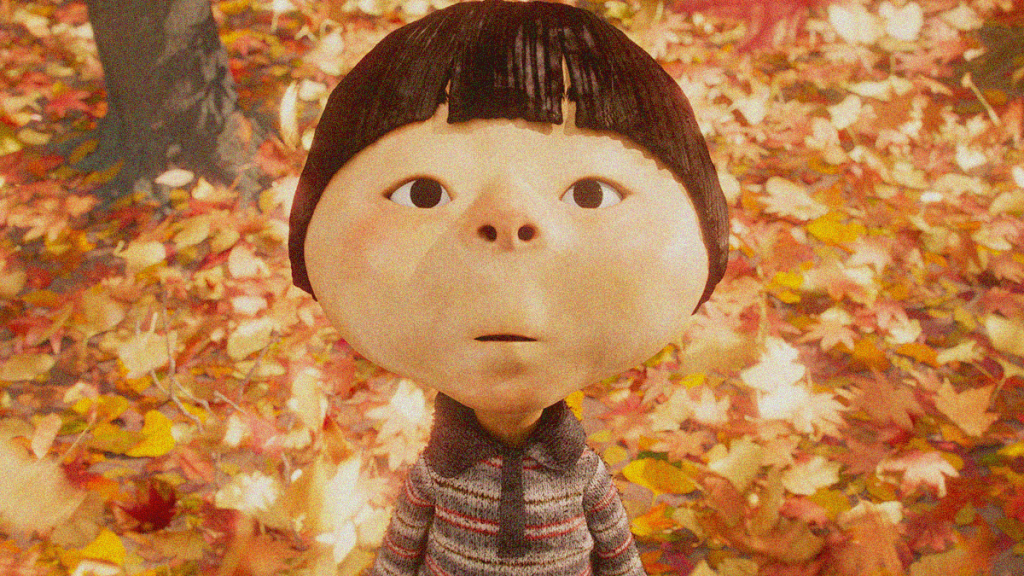
The other kids never ask Dong-Dong (Haruto Shima) to come play with them, so he spends his time on the fringes of the playground behind some bushes to shoot marbles alone. Is it therefore a product of them not wanting to be his friends? Or is it that they’ve never seen him or noticed an inclination that he wanted to join them? These are the types of questions a young child like Dong-Dong wouldn’t think to dismantle because it’s often easier to occupy yourself and not have to think about anything else. You don’t need to share. You don’t need to worry about things going wrong. You don’t know what it is you’re missing.
So, director Daisuke Nishio and screenwriter Ichiro Takano’s adaptation of Heena Baek’s book Magic Candies introduces a fantastical way in which Dong-Dong is forced to confront that unknown. He isn’t a bad kid, though. This isn’t some Christmas Carol-esque bid to save his soul. It’s merely a construct through which he’s able to mature—to open his eyes to the fact that it’s not hard to find yourself taking the world around you for granted. Heck, it’s not hard to take yourself for granted. By supplying Dong-Dong a bag of marble-like candies with the ability to give him a sixth sense to converse with the impossible, he can finally escape his own head.
First it’s the couch. Then the dog. They explain how life impacts them and how it isn’t personal when they steal the remote or only want to sleep respectively. It’s simply what happens through use and age and he shouldn’t hold it against them. On the contrary, now that he understands, he can better support them so they can support him back too. Add a bubble to Heaven and a glimpse inside a tough but fair father’s heart (words flying through the air with physicality, such as couch cushions or leaves, to leave their mark) and it’s like a door has opened. Dong-Dong must only walk through with the knowledge that his voice possesses the power to let the world better know him too.
Nominee:
Animated Short
Wander to Wonder [2024]
Rating: NR | Runtime: 14 minutes
Release Date: September 12, 2024 (Netherlands)
Studio: Bantam Film
Director(s): Nina Gantz
Writer(s): Daan Bakker, Stienette Bosklopper, Simon Cartwright & Nina Gantz / Nina Gantz & Simon Cartwright (idea)
Nobody’s bloody watching!
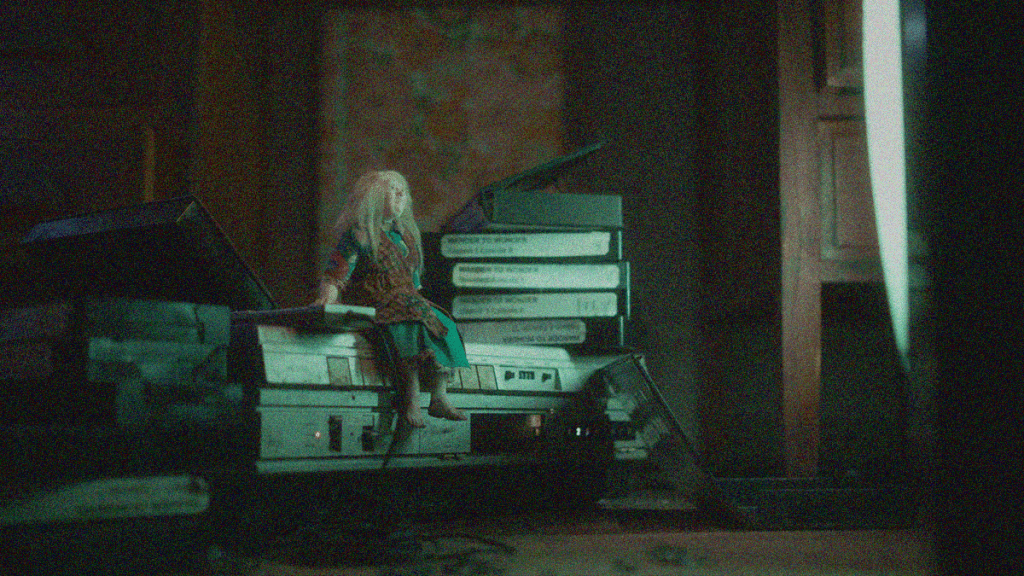
It’s a wildly inventive and unhinged idea originated by director Nina Gantz and Simon Cartwright (who both teamed with Daan Bakker and Stienette Bosklopper to write the screenplay). Think Mister Rogers’ “Neighborhood of Make-Believe” meets Toy Story in a darkly depressing way wherein the beloved puppets (Amanda Lawrence’s Mary, Terence Dunn’s Billybud, and Toby Jones’ Fumbleton) exist outside of their children’s show host Uncle Gilly’s (Neil Salvage) imagination. So, when he tragically dies without warning, these tiny furry creatures become left alone to fend for themselves within the only world they’ve ever known: their DIY film studio.
There’s an extra caveat to Wander to Wonder, though. These “puppets” are actually miniature humans wearing furry costumes. The result therefore skews towards stranded island territory wherein the three must figure out how to survive physically (smashing jars of gherkins helps), emotionally (reading old fan mail and using the camcorder to record “new episodes” on VHS tapes that never air), and psychologically (stir crazy doesn’t begin to describe their descent into Lord of the Flies madness). With no one to supervise or witness this strange season of unscripted programming, decency and sanity rapidly decay.
Gantz provides another glorious example of stop-motion animation with impeccable production design to reveal just how long the trio has been alone and how desperate they’ve become. A VHS tape mountain climbs towards a frosted window onto a world they cannot enter. Flies buzz around the growing filth and waste. And two shoes remain motionless in such a position that we can assume they remain on the feet of their late caretaker. It all adds up to a sad state of affairs that lead to experimentation, unnecessary risk-taking, and an inevitable full-scale destructive cleanse that unwittingly provides the opportunity for their long-awaited release.
Nominee:
Animated Short
Beurk! [Yuck!] [2024]

Rating: NR | Runtime: 13 minutes
Studio: Miyu Distribution
Director(s): Loïc Espuche
Writer(s): Loïc Espuche
Kissing when you’re that old should be banned.
Combating shame is difficult as is, so adding the ability for the world to know when the desire for a kiss strikes you would probably kill everyone on the spot. Well, that’s exactly the world in which young Léo (Noé Chabbat) and Lucie (Katell Varvat) live. When an older couple looks longingly into each other’s eyes, their lips begin to glow with a glittery sparkle. So too does the younger couple behind the water slide. And the soccer players watching highlights on their phone. Léo, Lucie, and their friends think it’s so gross that they excitedly seek out other duos at risk of a smooch so they can laugh, point, and yell, “Yuck!”
Loïc Espuche’s film is about peer pressure and our yearning to conform. Because it’s not our fear of being singled out for something bad that cripples us, it’s the likelihood that we’ll earn that “bad” label regardless of whether our action was. So, when Léo discovers his own lips glowing at the sight of Lucie, his instant reaction is to hide. Not because he’s embarrassed she’ll find out he likes her, but because everyone else might too. And if one peer mocks him, the others are destined to follow. It doesn’t matter that the person screaming “cooties” the loudest is often doing so because they must shift attention off themselves for doing the same thing.
The result can be painful since mankind’s penchant for self-censorship is high. We’d rather sabotage our happiness than deal with the pain of outside jealousies. Even if Lucie reciprocates Léo’s curiosity to kiss him back, the humiliation society uses to stigmatize acts of an intimate or sexual nature won’t let that win defeat the promise of abuse. He starts feeling like he deserves the ridicule. That he should scorn himself for wanting what the world says is wrong as a means of control rather than education. Thankfully, when night falls and pretense gets erased by the involuntary fantasy of dreams, Léo might just discover the hypocrisy and find the courage to overcome.
Nominee:
Animated Short
Images courtesy of SHORTS.



 jaredmobarak.com
Leave a comment