

Originally posted at The Film Stage
A Lien [2024]

Rating: NR | Runtime: 15 minutes
Studio: WILLA
Director(s): David Cutler-Kreutz & Sam Cutler-Kreutz
Writer(s): David Cutler-Kreutz & Sam Cutler-Kreutz
A few wrinkles, but they aren’t going to judge you for that.
Would Sam and David Cutler-Kreutz’s A Lien be better if it went even darker? I think so. Because it’s tough to tell a story about America’s immigration laws being corrupt insofar as how ICE (U.S. Immigration and Customs Enforcement) hides behind their enforcement while also allowing those same laws to give Sophia Gomez (Victoria Ratermanis) a necessary sigh of relief. The reason this choice doesn’t totally derail the film’s effectiveness, however, is that its softening of the blow is also a great depiction of the hypocrisy and luck our nation is built upon. Maybe a different agent doesn’t look at the passport. Maybe the bureaucratic red tape prevents Sophia from showing it to him. The process feeds on “ifs.”
Why else would Sophia and Oscar (William Martinez) be forced to jump through so many hoops and segregate their paperwork amongst multiple departments and building floors despite only being there at the government’s own request? The checkpoints are a feature, not a bug. It’s about insulation and judgment. If Oscar and Sophia are isolated away from each other, the chance of an issue when ICE inevitably comes to take him away is lessened. Everyone can simply tell her to follow protocols, jump through a few more hoops, and discover she’s hopeless to combat her worst nightmare from occurring. Come here under the promise of cooperation so we can exploit your trust for partisan politics.
It’s therefore no coincidence that the camera pans up to a television set to find Donald Trump speaking. That’s when we become fully aware of the time period (his first term in office as president) and realize how this potentially wholesome moment of finally living the American Dream is about to turn sour. From that point on it’s a race against time through the gauntlet of segregated agencies and purposefully fostered apathy to simply force someone into doing the right thing. Because, let’s be honest. A legal citizen should never be taken under the mindset that they must prove their own legality. The system should have confirmed it first. The system should have worked. Unless, of course, its failure is the point.

Nominee:
Live Action Short
Anuja [2025]

Rating: NR | Runtime: 22 minutes
Release Date: February 5th, 2025 (USA)
Studio: Netflix
Director(s): Adam J. Graves
Writer(s): Adam J. Graves
You make something out of nothing.
Two paths come into focus for Anuja (Sajda Pathan), a young, intelligent street child in India. Attend a math exam with the potential to provide her a scholarship for a boarding school or help out the manager (Nagesh Bhonsle’s Verma) where she works to earn extra cash and ensure her sister Palak (Ananya Shanbhag) won’t be fired in retribution for declining the opportunity. It’s an impossible situation that pits present comfort against future success. It doesn’t matter how smart Anuja is, either choice will be leaving something on the table—if not for her, than Palak.
This looming decision is the perfect bit of drama to punctuate Adam J. Graves’s Anuja and reveal the trying circumstances so many Indians endure due to poverty. Pathan is a street child herself, so she understands the futility inherent to that life and thus possesses the innate desire to embrace the fun that comes through this artistic reprieve from it. Hers is a humorous and heartfelt performance of trying to be a kid regardless of the adult pressures and pitfalls that surround her. At the end of the day, Anuja and Palak only want to ensure the other’s happiness.
Unfortunately, due to the nature of this being a short, what should prove a climactic turning point becomes a never-ending crescendo. I understand wishing to leave things to interpretation—especially when there’s no “correct” answer—but doing so renders the whole thing into twenty minutes of build-up without a release. We get to know these girls and their ingenuity only to be stuck in a perpetual state of not knowing whether escape remains possible. It’s therefore an effective journey that ultimately feels incomplete since presenting Anuja’s experience as unique demands a payoff. Too few are afforded this chance for its open ending to resonate as a universal question.

Nominee:
Live Action Short
Ik ben geen robot [I’m Not a Robot] [2024]
Rating: NR | Runtime: 22 minutes
Studio: The New Yorker
Director(s): Victoria Warmerdam
Writer(s): Victoria Warmerdam
You wouldn’t be the first to find out this way.
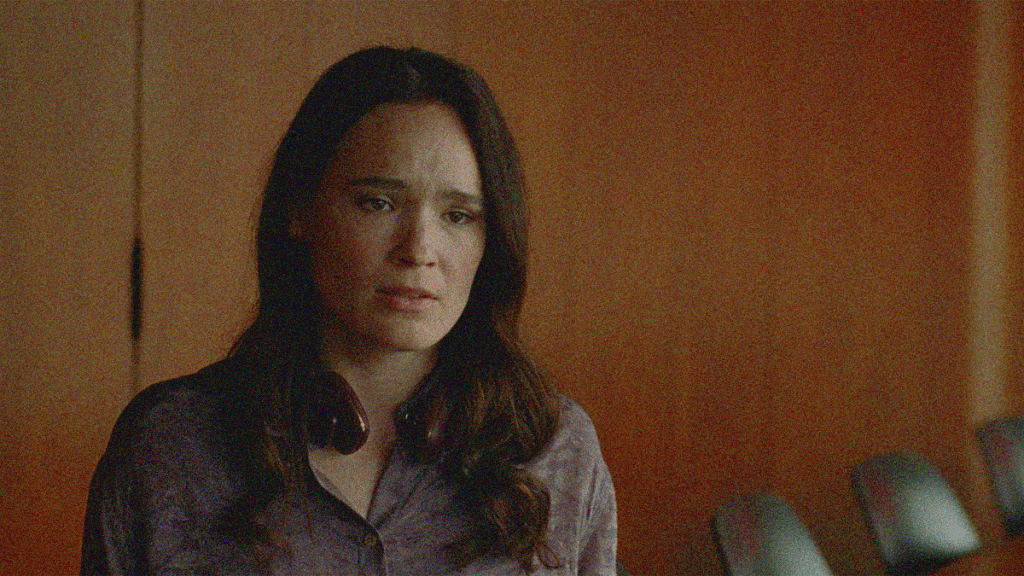
Do you ever get frustrated because your Captcha isn’t working? We all know John Mulaney does. The premise of his joke that we all spend most of our day telling robots (computers) that we aren’t robots (bots) just to view our own files is legitimately absurd. It only makes sense then that someone would create a premise where it wasn’t. Cue Victoria Warmerdam’s I’m Not a Robot and the surreal realization that, perhaps, Lara (Ellen Parren) is wrong in thinking she’s not. After all, it is the simplest answer to her inability to solve a series of Captchas blocking her from upgrading a program at work. One can’t prove their humanity if they aren’t human.
By building her story on the basis of this earnest binary, Warmerdam ultimately ensures her premise becomes even more absurd than Mulaney’s. Because making it true means concocting a more detailed test (those last few questions are gold). It means crafting a world that would allow bots to live alongside humans outside of the world of social media and the internet. It means finding a surreally dark fail-safe that renders the obvious “Well, I’ll prove to you that I am human” scenario moot. Warmerdam does it all with laugh-out-loud wit and captivating drama as we accompany Lara on her journey towards clarity.
The addition of a choral cover of Radiohead’s “Creep” is a nice touch (even if it was on The Bends rather than the more apt Paranoid Android). Parren delivers a fantastic performance that shifts from frustration to fear to defiance with every new revelation. And the way Warmerdam brings this notion of coexistence with bots (something we have all let become a norm in our daily online interactions and something companies like Meta, Alphabet, and X are using to erase mankind’s autonomy rather than artificially replicate it) into the real world is perfection. Because, in the end, mortality truly is the sole separation. And life proves meaningless without it.
Winner:
Live Action Short
The Last Ranger [2024]

Rating: NR | Runtime: 28 minutes
Director(s): Cindy Lee
Writer(s): David S. Lee, Darwin Shaw & Will Hawkes / David S. Lee (story)
My grandma always tells me I’m wild.
A white rhino named Thandi was left for dead in 2012 after poachers hacked off her horn. Cindy Lee’s The Last Ranger dramatizes the events surrounding that incident by also spotlighting the heroic efforts of South African preservationists and the unspeakable depths some will fall as a result of poverty. Because it would be too simple to just create a black and white glimpse of these tragedies. It’s not about strangers coming in to terrorize these creatures and the protectors who risk their lives to stop them. It’s also about those caught in-between, struggling for their own survival. We are all susceptible to being exploited in unforgettable ways.
Screenwriters David S. Lee, Darwin Shaw, and Will Hawkes use the backdrop of COVID to push Thabo (Makhaola Ndebele) into a corner demanding his soul for escape. It’s why he’s seeking work from secretive places while his young daughter Litha (Liyabona Mroqoza) hopes to sell his wooden wildlife carvings to tourists that no longer come. So, she takes a ride with local conservator Khuselwa (Avumile Qongqo) to see the actual animals Thabo uses as models instead. It should be another quiet day—one where Khusi can chaperone her guest while also keeping an eye on the rhinos while her partner (David S. Lee’s Rob) fixes a broken fence. That’s when everything falls apart.
The result is violent. We don’t see the chainsaw running through a rhino’s flesh, but the blood drenching the poacher is plentiful. The animal isn’t the only casualty either considering this horrible practice, one that Lee reveals is a key contributor to organized crime internationally, leaves countless human victims in its wake too. These tragic crimes impact the community as well as the ecosystem. They create martyrs as well as heroes while exposing how callous and opportunistic the villains are in using and abusing locals for paydays with zero remorse. Yet Lee’s film also reveals how hope remains. That our better impulses will prevail to keep fighting while the world turns away.
Nominee:
Live Action Short
Čovjek koji nije mogao šutjeti [The Man Who Could Not Remain Silent] [2025]

Rating: NR | Runtime: 13 minutes
Release Date: January 16th, 2025 (Croatia)
Director(s): Nebojsa Slijepcevic
Writer(s): Nebojsa Slijepcevic
We won’t let them touch any of us, right?
When Milan (Silvio Mumelas) admits to his fellow passengers that he does not have papers, Dragan (Goran Bogdan) looks to diffuse the tension of their train having just stopped due to a paramilitary checkstop by saying everything will be fine. It’s easy to pretend that will be the case. Even easier to say their car will band together and refuse to let the soldiers take anyone away. It’s not until the man darkening their door (Alexis Manenti) demands to know Dragan’s family’s patron saint that reality sets in. His words are made hollow in an instant as fear takes hold because we know he won’t move a muscle once Milan is dragged out.
Nebojsa Slijepcevic’s The Man Who Could Not Remain Silent isn’t therefore titled after Dragan. No, the “man” it references is Tomo Buzov (Dragan Micanovic)—a man the film memorializes during the end credits. Dragan is, however, the lead. He’s the everyman from whose perspective everything that happens derives from because he unfortunately epitomizes the majority of people caught in these types of situations. There are the victims (Milan). The heroes (Tomo). And those who do remain silent (Dragan). It’s through watching the persecution of the first and the courage of the second that we understand the conflict within the third. Because it’s not that Dragan doesn’t want to help. He simply knows trying will forfeit his life.
The message is therefore a powerful one. For survivors of the genocide that occurred in Bosnia and Herzegovina circa 1993, but also for those who find themselves victims and observers of current ethnic cleansing operations and political erasure campaigns. Who will stand with the voiceless even if it means relinquishing your own? Who will prove men like Manenti’s character are acting illegally under the guise of authority by sacrificing themselves to do so? Because Slijepcevic’s final pan of the camera isn’t to provide one last objective look at the train car. No, it’s to drive home that Milan’s presence, despite Tomo’s absence, is the point. These atrocities are never about “safety” because their target is never the real threat. They’re about power. And there’s no larger threat to power than defiance.
Nominee:
Live Action Short
Images courtesy of SHORTS.


 jaredmobarak.com
Leave a comment