
Rating: NR | Runtime: 97 minutes
Release Date: August 29th, 2025 (USA)
Studio: Greenwich Entertainment
Director(s): Rachael Abigail Holder
Writer(s): Paul Zimmerman
You can’t get caught up in what’s behind you.
It was brought up in both the introduction and post-premiere screening Q&A at Sundance that Paul Zimmerman’s script for Love, Brooklyn didn’t set out to be about Black characters. Despite being written by a white man a decade older than director Rachael Abigail Holder, however, she saw herself and the people in her life and community on the page since the relationships he wrote were intrinsically human above anything else. We’re talking people struggling to hold onto their identities amidst professional and personal upheavals. People wading through the ups and downs of love while reconciling their evolutionary paths with memories from their past.
How unsurprising then that an industry hellbent on feeding us the line that minorities should be able to see themselves on-screen regardless of what the actors look like passed on the project the moment Holder made those universal characters Black. Talk about extra motivation to get it made too—to give the Black community a complex romance devoid of the usual gang violence and tragedy Hollywood has made synonymous with their patronizing “Black film” label. Because if they must project themselves onto whoever the A-list romantic white leads of the day are, why can’t white audiences do the same with André Holland, Nicole Beharie, and DeWanda Wise? It’s another case of financiers fearing a “problem” their reluctance created.
Thankfully, Steven Soderbergh (at the behest of Holland, his High Flying Bird star) agreed to put up the money to get the ball rolling because the result is a breath of fresh air where honesty and authenticity in the genre is concerned. Too often, this sort of quasi-triangle (Holland’s Roger and Beharie’s Casey used to date and now remain close friends while he pursues romance with Wise’s Nicole) has only one result regardless of the end game being rekindled love or confirmed love: one of the women will eventually become the villain and Roger will have his decision made for him as a result even though his being in the middle really means he’s the one who must be the bad guy by taking responsibility and ending the charade.
It’s therefore extremely important to give them each three-dimensions outside of their pairings. We must see how stuck they are in their own heads and desires when it comes to life itself. Roger has grown cynical and nostalgic for a Brooklyn that’s disappeared—a problem considering his current assignment is to write about how Brooklyn evolved to become stronger and more visible than ever before. Casey has dug her heels into a dream of success as an art gallery owner in the building her grandmother willed her despite the block transforming itself around her. And Nicole, justifiably so, has found it difficult to let go of what her life was supposed to be (before her husband’s untimely death) to embrace what it can still be now.
The result is ultimately that they’ve begun to unwittingly use each other to satisfy the absences in their lives that they refuse to acknowledge. Roger holds onto Casey (as she does to him) for the indelible connection and camaraderie they share while pursuing Nicole for physical pleasure. They both procrastinate at work to avoid the inevitable and distract themselves from what they can no longer provide themselves with alcohol and weed. And when they discover the other is seeing someone, they find jealousy rise up with no way to confront it considering they believe it shouldn’t exist. It does, though. Even Nicole knows it. And since she’s also using Roger for the intimacy she can no longer receive from her late husband, can she really blame them?
They’re all running in circles—especially Roger. He moves from one to the other, often in the same night, to satisfy his needs. Sex with Nicole indoors. Public fun with Casey outdoors. When things get too difficult in one sector, he retreats to the other. When things become tough in both, he feels sorry for himself instead of realizing he’s the only person who can extricate himself from the situation. Both women know that too. They hold on in the hopes he’ll figure it out, but even then we don’t quite know what will happen. Because Casey is the one who broke it off. She likes to know Roger will pick-up the phone when she calls, but doesn’t necessarily want more. And Nicole is the one keeping Roger at arm’s length. Even if he chooses her, she’ll be taking a huge risk as far as reopening wounds with a daughter (Cadence Reese’s Ally) in tow.
Things must get messy because life is messy, but Holder never lets it fall into cliché or melodrama. Yes, these characters all get hurt at some point, but they are mature adults. They understand their respective blame as well as their need to take stock. And it’s really only when they don’t have each other as distractible coping mechanisms that they can finally look inside and see it isn’t about failing the ideal of their former selves as much as accepting the person they used to be is gone—a truth that’s neither better or worse … just different. It’s up to them to embrace this new day and move forward without looking back. Because what was still remains. It’s a huge part of who they are now. And the possibilities for what’s next are endless.

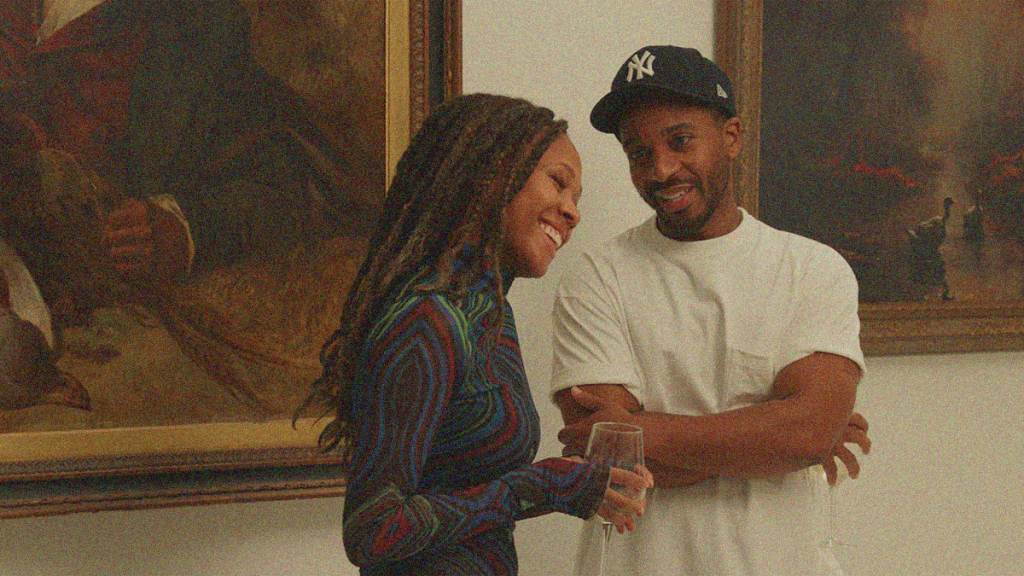
Nicole Beharie and André Holland appear in LOVE, BROOKLYN by Rachael Abigail Holder, an official selection of the 2025 Sundance Film Festival. Courtesy of Sundance Institute.

 jaredmobarak.com
Leave a comment