
Rating: R | Runtime: 107 minutes
Release Date: August 9th, 2024 (USA)
Studio: National Geographic Documentary Films / Variance Films
Director(s): Julian Brave NoiseCat & Emily Kassie
I’ll never forget, and it’s pretty hard to forgive.
There’s a reason Julian Brave NoiseCat and Emily Kassie’s documentary into the investigation of abuse and murder at the Saint Joseph’s Mission residential school near Williams Lake, British Columbia begins with a content warning. Not just because of the physical evidence that proves the atrocities occurred, but also the first-hand accounts from survivors. It’s one thing to see Charlene Belleau and Whitney Spearing’s suspect board with strings and dates putting everything onto a timeline. It’s another to listen to Larry Emile break down remembering what he saw and even worse to watch Julian’s father Ed Archie Noisecat come to grips with the reality that he was never supposed to live.
I think that familial, personal connection allows Sugarcane to go to the dark places in which these types of journalistic exposés aren’t often able to go. You need a ton of trust to go on-the-record and revisit a nightmare that you will never be able to shake. Trust that it’s safe to talk about it at all considering many of the interviewees were beaten by their parents and punished by their community for telling their stories when it happened. Trust that the piece in which their testimony will live for perpetuity won’t turn out to be some exploitative hack job that makes matters worse. Trust that speaking it aloud might bring a modicum of peace after decades of heartache. This film is as much about reportage and a bid for reconciliation from the Catholic church as it is healing for a people.
You mustn’t look further than Julian to know the latter considering he feels the pain as deeply as his father and grandmother. That trauma is passed down generation to generation and leads to shame, alcoholism, and suicide. Rick Gilbert travels to the Vatican as part of this mission only to admit to the current Superior General of the group that ran Saint Joseph’s (The Missionary Oblates of Mary Immaculate) how the impact of residential schools has trickled down through four generations of his family. And how could it not when DNA tracking proves the rumors he’s been told since childhood—that his conception was the product of one of those priests raping his mother? It’s not just about the bodies lost. It’s about the lives that must bear the horror of their own existence.
You must give all the survivors and witnesses love and support for speaking their truths so that the world must listen. Sure, there will always be those who refuse to believe like the writers of racist bile Williams Lake’s chief Willie Sellars receives online, but the majority of us do. The facts are indisputable. They must be for Justin Trudeau to finally travel to the reservation and admit the nation’s complicity or for the Pope to vocalize an apology for what transpired in his church’s name. That doesn’t mean anyone should simply forgive and forget, though. As Rick tells Superior General Louis Lougen, it’s the Bible that states words are just a first step. The guilty must also atone. Restitution must be paid and justice found.
The hope is that Sugarcane helps ensure this tragedy won’t be swept under the rug a second time. But, even if our increasingly hateful world does avoid learning from the past, at least the men, women, mothers, fathers, sons, and daughters have been able to let it out. Maybe releasing the secrets that have always stood in the way of their personal bonds will help strengthen their love so they might be able to forgive each other for what this trauma has made them do. It’s a lot to unpack—especially considering the point of these schools was to strip indigenous people of their culture. To homogenize and assimilate those they allowed to live. Those like Julian and Willie (and those younger) must now reconcile nation against land in language, history, and identity. The damage runs deep.


Nominee:
Documentary Feature
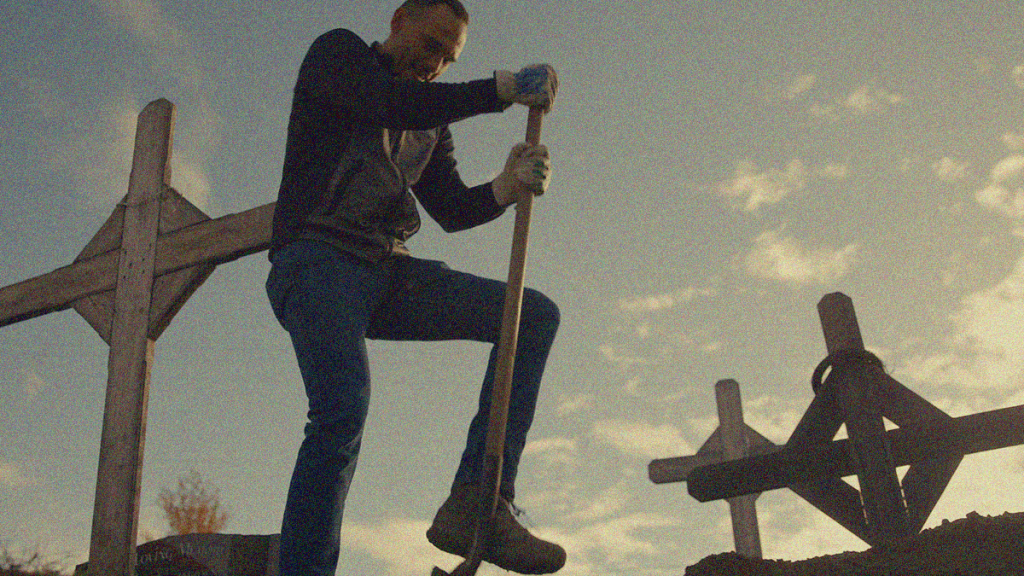
Chief Willie Sellars digs a grave for community member Stan Wycotte, who took his life on the first National Day for Truth and Reconciliation in Canada. (Credit: Emily Kassie/Sugarcane Film LLC).




 jaredmobarak.com
Leave a comment