

Rating: NR | Runtime: 152 minutes
Release Date: September 22nd, 2023 (Poland) / June 21st, 2024 (USA)
Studio: Kino Swiat / Kino Lorber
Director(s): Agnieszka Holland
Writer(s): Maciej Pisuk and Gabriela Lazarkiewicz and Agnieszka Holland
What world do you live in?
It’s a dream come true for Amina (Dalia Naous) and Bashir (Jalal Altawil). Unable to survive in Syria with ISIS and Russia threatening death, his brother has set in motion a plan to get them to Sweden. One plane ride to Belarus so they can cross over into Poland and then a ride through Europe to freedom. Everything is paid for. The danger is low. The governments of both Belarus and Poland have made it clear that this is something they are working with the refugees to accomplish. So, the confusion that arises upon their arrival courtesy of border guards on either side screaming in their faces while violently accosting them is warranted. They were practically invited over and now they’re being left to the wolves.
Agnieszka Holland holds nothing back in this damning critique of her native Poland. Co-written alongside Maciej Pisuk and Gabriela Lazarkiewicz, Green Border reveals the truth of how these two nations initiated a deadly game of political warfare by using innocent migrants as their pawns. Because neither the Poles nor the Belarusians are initiating deportation papers. Sending everyone back to the Middle East and Africa wouldn’t serve their purpose of screwing with each other on an international scale. So, the Belarusians plank over the barbwire and yell at the refugees to run across while the Poles lift the same fence to yell at them to go back.
The longer it goes on, the more men, women, and children inevitably die. That’s the goal. Why? Because these countries have seen that the world doesn’t care about living beings having their rights trampled on. The international community simply turns its head and spouts company lines like “Do it the right way next time.” No, the world only lifts its head when bodies are found because you can’t sweep that evidence under the rug (well, you couldn’t, but Gaza has certainly proven you can now). The corpses become the border patrol’s weapons. Throw them to the other side and hope they are found, documented, and reported on. Make the other side look eviler than them.
This is the Sisyphean drama that opens the film. Bashir and Amina’s family, alongside an Afghan English teacher (Behi Djanati Atai’s Leïla), discover their roles very quickly. Into Poland. Back to Belarus. Return to Poland. And around and around they go. Other refugees tell them they’ve gone through this dance five or six times already. Their phones have been destroyed by the guards. Their money has been extorted. And they are covered in blood, mud, and desperation. Everything that’s happening is against the law, but what can the law do if it’s unable to witness the atrocities? Because Poland covers its bases well by designating the border an “emergency exclusion zone.” Only authorized people can enter and all others are arrested on sight.
While Green Border is justifiably a harrowing tale of despair with little hope, Holland and company do give voice to those willing to do their part to inject as much of the latter as they can. Even their roles, however, are complicated. Guards like Jan (Tomasz Wlosok) have the conscience to not turn someone in at home, but few options to not participate in the carnage when on the clock. Activists like Marta (Monika Frajczyk) push right up against the edge of putting themselves in danger to petition for asylum knowing it’s a long shot at best, but they live to fight another day when they need to risk making this one their last. That’s where Julia (Maja Ostaszewska), Zuku (Jasmina Polak), and Bogdan (Maciej Stuhr) come in as frustrated souls bridging the gaps regardless of the consequences.
Even when things are going well, though, tragedy still strikes. You can’t blame Holland for going for the jugular either as far as making that tragedy as horrific as possible since reality spares no one. Many people die during the course of the movie and every single one is preventable. How do we know this? One: Because those deaths are intentionally orchestrated by evil regimes who seem to revel in the abuse they’ve been indoctrinated to dole out (“every Syrian is a bullet in Putin and Lukashenko’s guns”). Two: Because Holland exposes the other side of Poland’s “charity” via a brief epilogue mirroring this crisis with that on the Ukrainian border. You can probably guess things go much smoother there. I wonder what the difference is?
At two-and-a-half hours, the script never lulls. It helps that we bounce between characters—meeting some early on before they get their own focus in a later chapter. Jan and Marta connect Syria and Ukraine. Julia connects Jan and Leïla. So on and so forth. We see Bogdan’s rage find a productive outlet. We see Jan’s guilt assuaged by rebellion. And we watch as Bashir and Amina devolve into ghosts of themselves. You won’t therefore be leaving without your own fair share of anger for what happens even as some good does ultimately occur before everything fades to black. Will it be enough to push you towards donating money? To radicalizing yourself into the fight like Julia? Or will you be Basia, explaining how you did your part voting for the opposition and now must look after yourself since they lost?
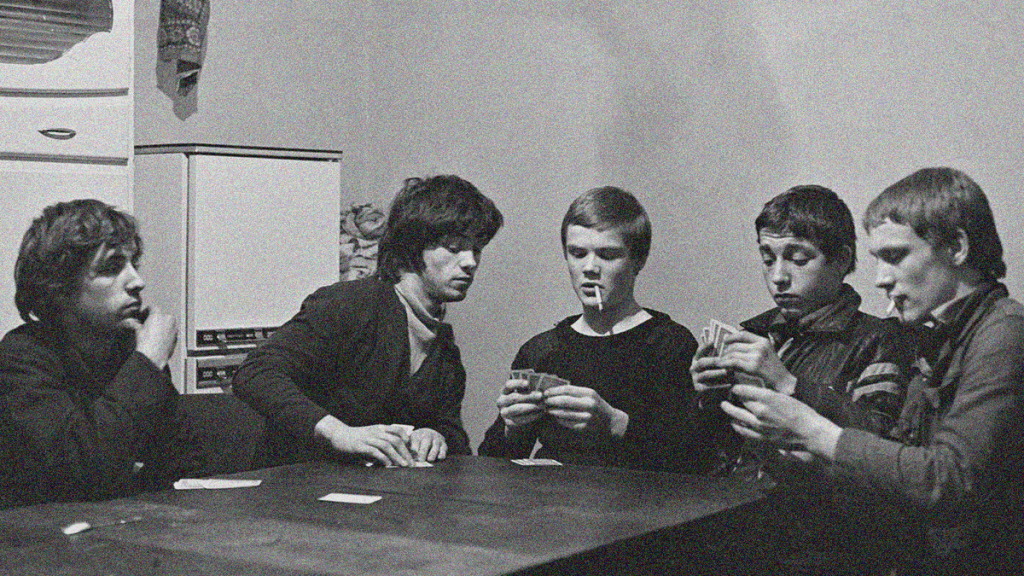
Jalal Altawil in GREEN BORDER; photo by Agata Kubis, courtesy of Kino Lorber.


 jaredmobarak.com
Leave a comment