
Rating: NR | Runtime: 123 minutes
Release Date: December 6th, 2024 (USA) / January 23rd, 2025 (Denmark)
Studio: Nordisk Film Distribution / MUBI
Director(s): Magnus von Horn
Writer(s): Line Langebek Knudsen & Magnus von Horn
You’ve done the right thing.
A young Danish seamstress (Vic Carmen Sonne’s Karoline) can’t afford her rent on paltry wages. She can’t supplement that income with a widow’s benefit either since her husband (Besir Zeciri’s Peter) has yet to be declared dead despite having gone missing a full year ago. So, you can’t blame her for falling under the spell of her wealthy employer (Joachim Fjelstrup’s Jørgen) once he is “touched by her story.” To have hope for a way out? Hope for new love? Hope for a family? From being a few kroner away from living on the street to wearing a fancy dress with the promise of marriage and status? It’s a literal dream come true.
That’s when director Magnus von Horn pulls the rug. Because right as things seem to be trending towards happily ever after, he and co-writer Line Langebek Knudsen point the camera outside the doors of Karoline’s work at a solitary man standing in the distance. We know right away who he is—even before he begins to shout her name. Peter has returned. Injured, traumatized, and burdened by shame. Rather than lie, however, Karoline admits she’s fallen for someone else. She admits her pregnancy. And she asks Jørgen to marry her. Best friend Frida (Tessa Hoder) is correct to call her brave because life is never that easy. Especially not in 1919 Copenhagen. Especially not for a woman.
One blow follows the next as The Girl with the Needle inevitably makes good on its title with Karoline smuggling a giant metal spike into the bathhouse to give herself an abortion. That’s where she meets Dagmar (Trine Dyrholm) and her daughter Erena (Ava Knox Martin) promising a happier ending for both mother and baby. If Karoline is willing to carry the child to term, Dagmar will find it a good home … for a price. And, in a fit of desperation, maybe Karoline can help do the same for others in similar circumstances. Because it doesn’t matter that buying and selling babies is illegal. It’s worth the risk to give women with no other choice the chance to live without the burden placed upon them by men.
The script is pretty straightforward for the first two-thirds or so as a result. Contrast points abound whether the cruelty of a mother slapping her child in the face at the start opposite Dagmar’s warmth towards Erena or Peter’s compassionate “freak” opposite Jørgen’s well-to-do coward. Karoline is forced to travel between worlds, watching those with everything squander their souls while those with love to share are left destitute. Yes, she often goes where comfort seems easiest devoid of loyalty—but it’s not like anyone else has ever been loyal to her. Peter never replied to her letters that he was alive. Jørgen chose wealth over responsibility. Maybe Dagmar will be different. Maybe this partnership can be built on trust.
Well, prepare yourself for a wild, heartbreaking, and ultimately hopeful final third as von Horn discovers there’s an infinite number of rugs beneath Karoline’s feet that can still be yanked. Both Sonne and Dyrholm excel here as their characters attempt to salvage the life they longed for despite the truths that have made doing so unsalvageable. What packs an even bigger punch, though, is the way that their actions are actually serving as commentary on the world at-large—at the tail-end of World War I, but also today—when it comes to motherhood, bodily autonomy, and economic systems to care for the children that moral outrage foists upon the populace. What’s happening is unspeakable, but it also proves to be a service society’s collective ignorance demands.


Nominee:
International Feature
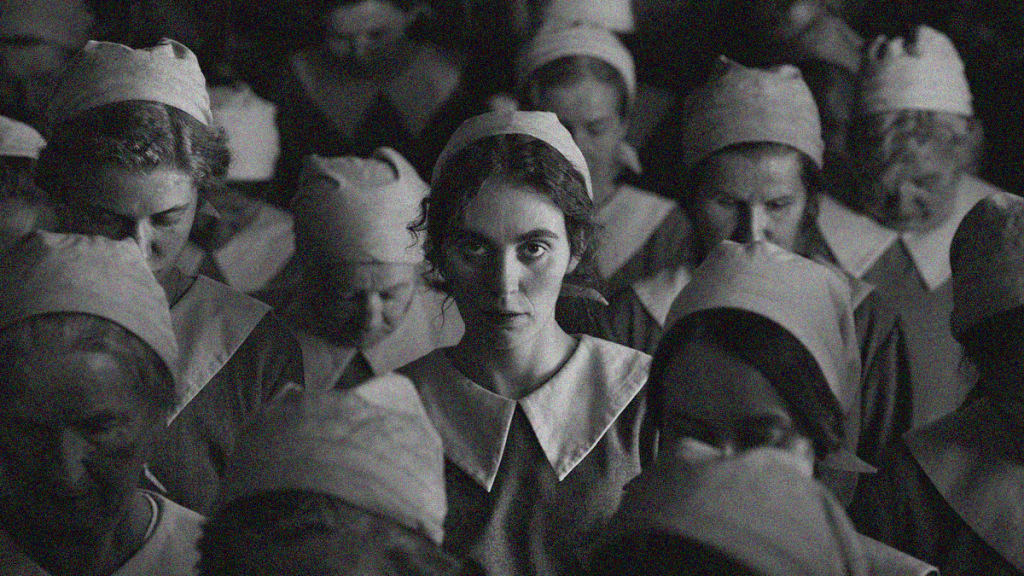
Vic Carmen Sonne in THE GIRL WITH THE NEEDLE; courtesy of MUBI.



 jaredmobarak.com
Leave a comment