
Rating: R | Runtime: 95 minutes
Release Date: December 13th, 2024 (USA) / January 9th, 2025 (Germany)
Studio: Constantin Film Verleih / Paramount Pictures
Director(s): Tim Fehlbaum
Writer(s): Moritz Binder and Tim Fehlbaum / Alex David (co-writer)
It’s not about politics. It’s about emotion.
It’s wild to think that the mess we’re in as far as broadcast reportage becoming more about ratings than facts is a result of an ABC sports crew working one of the biggest news events in international history. Yes, things got really bad when for-profit news channels and organizations made it so editorializing became synonymous with truth simply because the entertainment value lured viewers from the staider reality of objectivity, but the tragic hostage situation that occurred during the 1972 Munich Olympics paved the way. Why? Because it was live. And what does the uncertain immediacy of live television foster? Mistakes.
I’m a sucker for a good process film and Tim Fehlbaum’s September 5 (co-written by Moritz Binder) delivers a great one. Not only because it’s a tense affair that approximates Roone Arledge’s (Peter Sarsgaard) goal of “following the story,” but also because it presents those moments of spontaneous ingenuity and fallibility that arise from a situation that had never occurred before. That it was a sports team handling it was thus a major boon for the format (who better to understand the energy and emotion of a battle unfolding in real-time) and perhaps the worst thing possible for the sanctity of truth. Sports is all about speculation and commentary, after all. You report on what you see and contextualize it after.
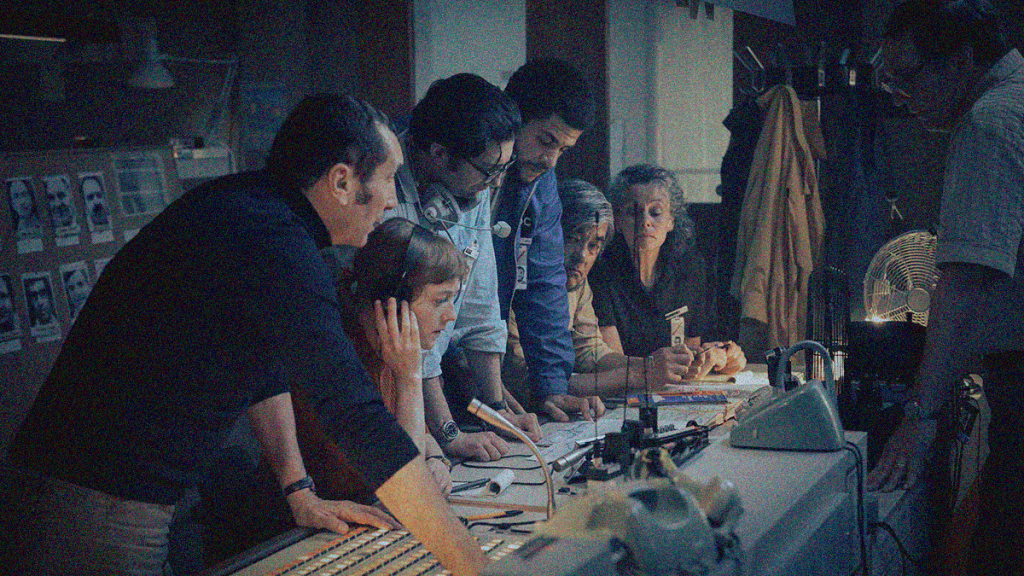
The chaos is obvious when you’re teaming Peter Jennings (Benjamin Walker) hiding in the Olympic Village after everyone else was evacuated with Howard Cosell reporting from an underground parking garage. Arledge, Marvin Bader (Ben Chaplin), and the green Geoffrey Mason (John Magaro)—who ultimately took point—were forced to utilize every resource at their disposal regardless of whether it was in their current wheelhouse. A studio camera is wheeled outside for a live angle. Gary Slaughter (Daniel Adeosun) is dressed to impersonate an athlete for unfettered access between Jennings and the control room. And German translator Marianne Gebhardt (Leonie Benesch) is deputized as Mason’s eyes and ears on-the-ground. They can only pray the ordeal gets resolved … and hope they capture every second.
I love the little moments born from necessity. Technological fixes like superimposing the ABC logo on the camera before allowing CBS to broadcast their feed or wiring a telephone to go live on the air in under sixty minutes. Moral quandaries like Roone and Marv arguing about whether they should ask an Israeli athlete what it means to win a medal on German soil pre-attack and then whether they should keep the cameras rolling if a Black September terrorist murders an Israeli athlete on live TV. And, of course, weighing the desire to be first on every single development against the policy of needing three sources for confirmation. These aren’t easy scenarios to wade through—especially not when you only have seconds to come up with an answer.
What September 5 does best, however, is reveal the slippery slope that’s been all but buried under an avalanche in the decades since. Because even those fighting on the side of decency and compassion at the start of the day quickly get caught in the rush of the moment. Sure, ratings are always top of mind, but I’m simply talking about capturing and releasing footage of a terrorist attack to the world as it’s happening. Mason and company get so wrapped up in the excitement and artistry of their accomplishments that they completely forget about the potential ramifications of those actions. Being able to watch as German police enter the hotel for an offensive is revolutionary—but it’s also dangerously irresponsible upon recognizing that the terrorists are watching too.
Therein lies the inherent commentary on display despite the film itself running pretty apolitically from start to finish (placing the neutrality of good journalism front and center). While Mason, Bader, and Arledge ultimately do make mistakes, they did not have the experience necessary to prevent them. They are sometimes quick to embrace the mental gymnastics they believe will absolve them from responsibility if things go poorly, but you can’t really blame them since they also have the wherewithal to question what they’re doing. Put them in the same situation tomorrow, though, and all bets are off since protocols will have been instated, debates fought, and liability defined.
And yet, as evidenced by the dereliction of duty that often passes for objective journalism today, it seems the industry learned all the wrong lessons. They learned how to bend those protocols, dismiss those debates, and manufacture loopholes out of liability (or simply have the money to not care). They saw the effectiveness of the visual language of live sports and made it so the culture of celebrity criminals, ambitious reporters, and clout-chasing influencers would replace the integrity of a trained professional. Here they were considering what it would mean for the families of the hostages to watch their children die and here we are scrolling our social media feeds to find every angle imaginable of the most heinous horrors you can imagine. We wonder why we’ve gone numb.
This is where it started. Ground zero. Arledge leveraging his unique position to strong-arm competitors for airtime. Mason gradually losing his wider appreciation for the moment in service of that bloodlust desire to “get the shot.” The ease at which people can dress-up their language to lie without technically presenting that lie as truth. It’s a damning display of our impulse to move the line and yet also a laudable depiction of trendsetting men and women operating at en extremely high level in impossible circumstances. I’ll even go so far as say it was nice and inspirational to again be able to have respect for people in the media doing their best regardless of whether it doesn’t prove enough. Because we used to believe they’d learn the lesson. Now we know they’ll just exploit it.

Nominee:
Original Screenplay
Jacques Lesgardes (Zinedine Soualem), Marianne Gebhard (Leonie Benesch), Geoff Mason (John Magaro), Carter (Marcus Rutherford) star in Paramount Pictures’ SEPTEMBER 5, the film that unveils the decisive moment that forever changed media coverage and continues to impact live news today, set during the 1972 Munich Summer Olympics.




 jaredmobarak.com
Leave a comment