
Rating: NR | Runtime: 86 minutes
Director(s): Sareen Hairabedian
Writer(s): Sareen Hairabedian
How can you live with a neighbor who wants to take your country?
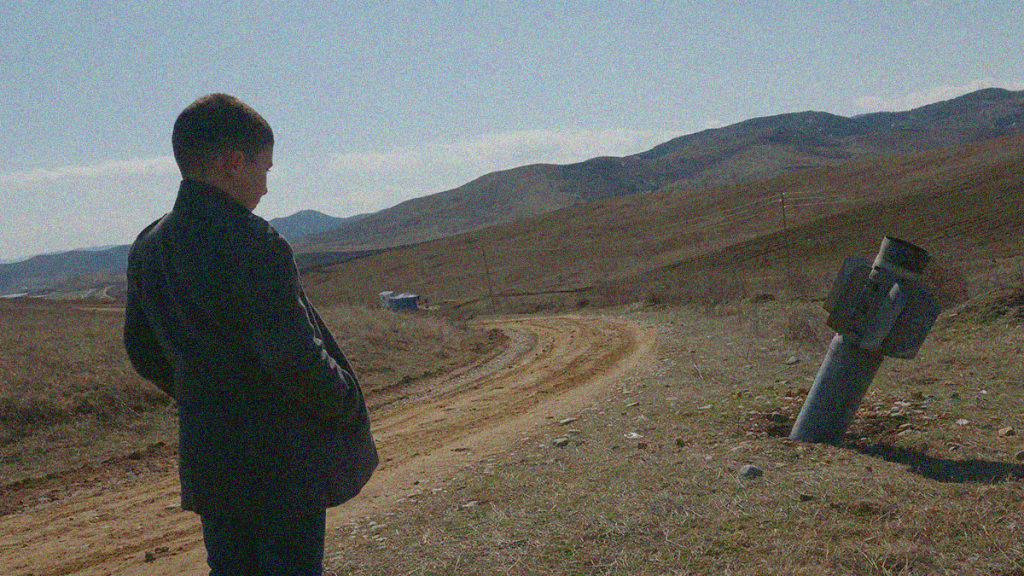
Watching children like eleven-year-old Vrej and his even younger brother talk about war as a normal facet of life is difficult to compute for someone who isn’t constantly surrounded by that threat. As explained in Sareen Hairabedian’s My Sweet Land, however, that’s all ancestral residents of Artsakh have ever known. Vrej’s parents already lived through two wars by the time of filming and his grandmother had survived three. Azerbaijan’s next attack is coming and any potential ceasefire that results won’t last long. Yet many families who flee to Armenia and beyond don’t stay gone. This is their homeland and they’ll never stop returning regardless of knowing they’ll eventually be forced to leave again.
Vrej laughs about it because he’s too close to the conflict to do anything else. His grandmother laments their stupidity for believing anything will change, but hope isn’t the only reason for continuing to trap oneself in this never-ending cycle. Poverty is too. So, villagers do whatever they can to try and turn the tables. They prepare each new generation to carry on the fight by sending them to military boot camps to learn gun and mine training. They teach the glory of heroism and martyrdom as a means of coping with the death and destruction wrought upon their land. It keeps some of them going no matter what while wearing on others to the point of a future in Artsakh not seeming possible.
Hairabedian follows Vrej around as her lead protagonist to capture the emotional toll of living in a war zone. We learn about his dream of becoming a dentist to help his community and witness the everyday necessity of walking around anything that looks like a hole in the ground just in case an unexploded munition lies beneath the dirt. School is shown to be as much a means for therapy (art classes providing an excuse to create rather than destroy) and recruitment as it is education. And we see that the joy of birthdays and holidays are fleeting when compared against the uncertain reunions with those who stayed behind to defend their homes.
It’s a stark look at the unfortunate normalization of horrors no eleven-year-old should ever have to endure. Because there’s no true happily ever after here. Not when health and safety come at the cost of culture and identity. The choices set forth for Vrej and his peers are to leave and harbor guilt (like the diaspora spending their money to send gifts to those who remain) or stay and probably die. And some don’t even get to make the choice on their own considering Azerbaijan’s looming aggression (it’s said that they wielded diplomatic pressure to force Jordan into stripping My Sweet Land of its International Oscar selection) and Russia’s self-motivated “peacekeeping” efforts.
Vrej is a charismatic yet tragic soul leading us through the chaos of war. Yes, the story itself seems familiar to those paying attention to the many instances of violent displacement and ethnic cleansing occurring all over Asia (including the forced eviction and genocide of Palestinians by Israel), but familiarity doesn’t negate the importance of providing Artsakh a platform to be heard. As long as they have a voice, hope for justice and peace persists. Apathy is what the villains of these wars crave. They want us to turn a blind eye so they can act with impunity. It therefore means something to force Azerbaijan into exposing themselves on a public international stage. Because sabotaging the film’s chances to be seen only proves that what it portrays is true.

My Sweet Land had an Oscars-qualifying run on November 29th, 2024.
Photography courtesy of DOC NYC.




 jaredmobarak.com
Leave a comment