
Rating: NR | Runtime: 95 minutes
Release Date: September 26th, 2025 (Bangladesh)
Studio: Fusion Pictures
Director(s): Maksud Hossain
Writer(s): Maksud Hossain & Trilora Khan
You’re suffering because of me.
The options are dwindling for Saba (Mehazabien Chowdhury) to keep her mother (Rokeya Prachy’s Shirin) alive. We don’t yet know how long she’s been without the use of her legs nor how long her heart has been failing—just that her daughter is desperate to get her the care she needs all on her own. Saba’s father is out of the picture. She’s just lost her job. And now she’s calling an ambulance to save Shirin from a heart attack only to discover it will all be for naught if they don’t schedule an unaffordable surgery within the month. That’s not an easy proposition to tackle since Shirin won’t sign off on what’s necessary for the appointment.
Saba is thus operating from a belief of having nothing to lose. She’s already given up the last few years of her own life to be Shirin’s caregiver, so why not risk everything else too? They’ll need to sell the house to raise the money, but Shirin already rejected an offer and her absent husband’s siblings don’t want to be jerked around facilitating a new sale only for it to also not go through. So, Saba scours Dhaka for employment, leveraging her authentic sob story into a job at a hookah lounge to secure whatever other funds she can. And all the while she’s arguing with her mother just to give her a bath and eat according to the doctor’s orders.
Directed by Maksud Hossain and co-written with his wife Trilora Khan, Saba is inspired by what they experienced first-hand when her father-in-law passed to leave her paraplegic mother in need of care. It’s that mix of duty, love, resentment, and guilt wherein frustrations are quick to take control whenever the patient’s willfulness appears to get in the way of their wellbeing. The best example is Shirin’s wish to go outside. She’s only been out of the house to rush to the hospital these past years. Yes, Saba is correct in not wanting to damage her heart further by exposing her to too much stimuli, but so is Shirin when she says “breathing isn’t the same as living.”
No one knows this more than Saba’s new boss and fast friend Ankur (Mostafa Monwar). He’s experienced this impossible dynamic and made similar choices only to regret them. It’s that tragic question about whether to live happily for a brief time or unhappily for a long time. Either way, Shirin is fading. She knows it and Saba knows it—even if the latter won’t admit as much. Why spend their last days together eating porridge and fighting bed sores when they can wheel around the park and enjoy kachchi (Bangladeshi biryani)? There needs to be a compromise between quality of life and length, but finding one is as much Shirin’s responsibility as Saba’s.
This is a Muslim country with certain expectations for its women, after all. And a mother has certain wishes when it comes to her daughter too. Shirin would love to find Saba a husband and know she’ll be safe once she’s gone. She’d love for them to still own this house so Saba’s new family will have a place to lay their heads. Both of their actions are thus about protecting the other. Saba tries to secure her mother’s present while Shirin attempts to facilitate her daughter’s future. Unfortunately, Dhaka is hardly the place for them to achieve those goals in tandem. The sad truth of poverty is that sacrifice proves unavoidable.
So, we watch them stand at the precipice of oblivion before jumping headfirst. In many ways Shirin is saying she’ll die to save her daughter. And Saba is saying she’ll live in the street without a taka to her name to save her mother. The difference between them is that one has the means to actively pursue their quest while the other does not. Shirin can passively eat badly and neglect hygiene to gradually worsen her condition, but it’s Saba who finds herself confronting situations where she can make a choice that leverages her security (or the security of others caught in the wake) for the prospect of earning one more day.
Chowdhury, Prachy, and Monwar deliver heartfelt and nuanced performances that portray the complexity of this situation. Because there are no correct answers. Yes, there’s a definite difference between marriage and death, but why does Saba get to tell her mother “No” in response to the one and not let Shirin say the same about the other? That’s where the mixed emotions come in because both women are trying to do something for the other out of love only to act in defiance as though the real intent was selfishness. It’s a tenuous line to toe—one that causes a lot of strife as circumstances arise to betray others in their pursuit. And the result is often wholly out of their control anyway.

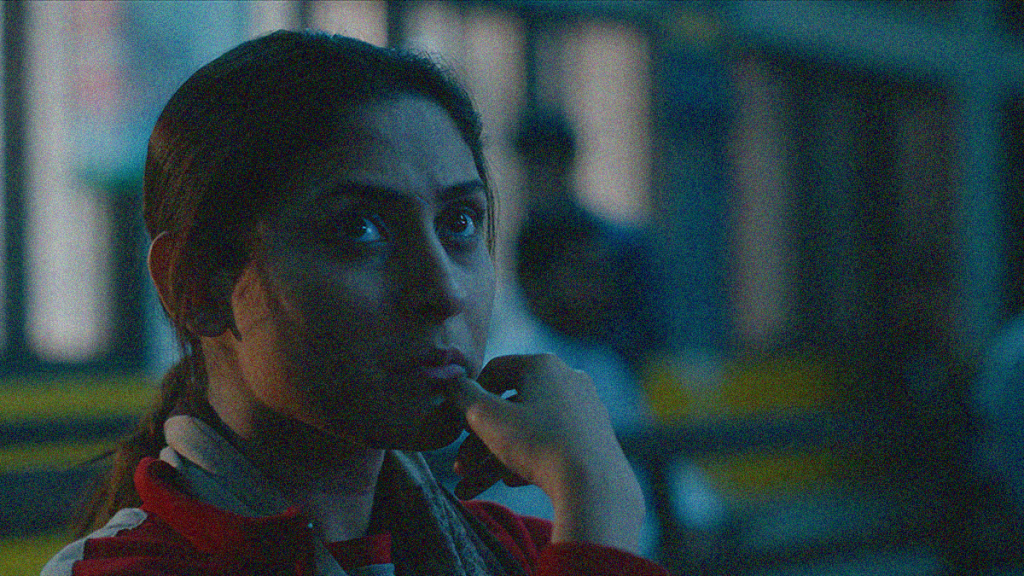
Mehazabien Chowdhury in SABA; courtesy of TIFF.



 jaredmobarak.com
Leave a comment