
Rating: NR | Runtime: 90 minutes
Release Date: September 19th, 2025 (India)
Studio: Bakrania Media
Director(s): Lakshmipriya Devi
Writer(s): Lakshmipriya Devi
The greatest gift is the one that lasts forever.
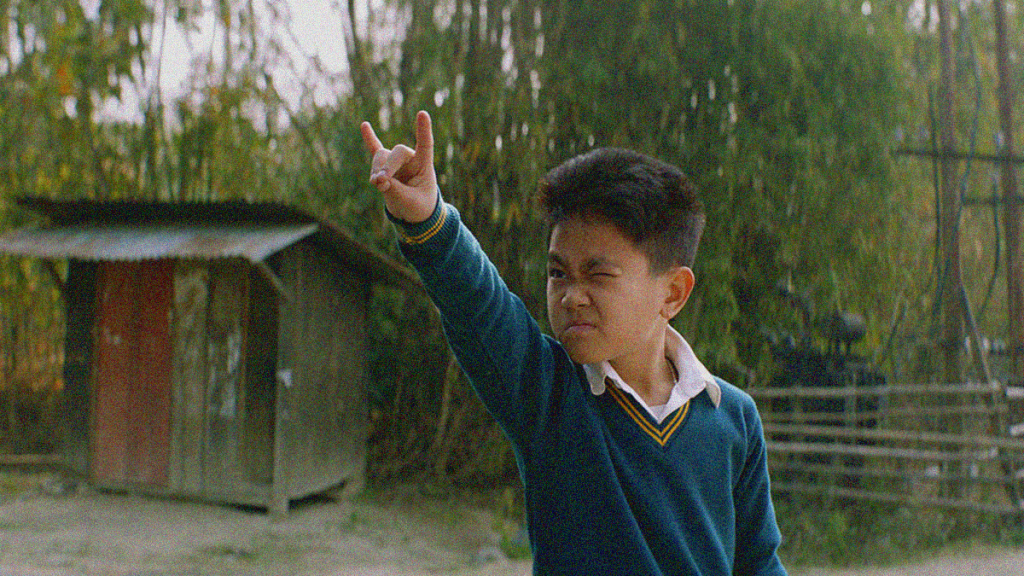
With sixteen months of on-going, violent ethnic clashes currently unfolding in Manipur, India, Lakshmipriya Devi’s Boong takes on added meaning with its message of inclusion. The narrative concerns a young boy (Gugun Kipgen’s Boong) desperate to bring his father home as a present for his mother (Bala Hijam Ningthoujam’s Mandakini). It’s through this attempt that we witness the growing tensions in the region via his extended family’s conservative views, the local government’s hypocrisy, and the community’s inability to accept “outsiders” regardless of their family having roots in the state for over a century. That these conflicts have trickled down to school bullying only underscores the inevitable potential for what’s subsequently erupted in real life.
Prejudice isn’t an inherent quality in people. It must be taught. To Boong (a bit of an outsider himself due to his mother distancing herself from her husband’s oppressively traditional family), his best friend Sudhir (Vikram Kochhar) is just another Indian boy. To their new classmate Juliana (Nemetia Ngangbam), however, he is an “other” who demands ridicule and alienation because of the dark color of his skin. The difference is that Boong learned empathy and Juliana learned hate. She bullies them like she’s probably seen her parents bully adults with Rajasthan heritage. And despite Boong’s obvious love for his friend, it only takes one fit of anger to put the same bigotry in his mouth too.
Tensions are thus high and any misstep could spell disaster for those already looked upon as invaders hellbent on taking away jobs and land (sounds just like far-right republicans in the USA). It should be no surprise then that Manipur is also a border state with Myanmar and the potential for even more immigrants coming in. Heck, Boong’s own father runs a Burmese teak furniture shop many miles away from their Imphal home in Moreh to help make ends meet. That’s why Boong and Mandakini haven’t seen him in years and want to make certain he comes back soon. So, when their phone calls go unanswered and a death certificate suddenly arrives, they can’t help wondering if something else is going on.
Is he really dead? Has he become a revolutionary? Gone over the border to live in Myanmar? Without having an easy avenue to find out (considering the family refuses to consider a mystery is afoot), Boong must take it upon himself to get to Moreh and procure a definitive answer. He enlists Sudhir (and Juliana, once fears and jealousies dissolve to remind them all that their shared humanity matters more than their superficial differences) to help hatch a plan that will hopefully end with Joyjumar in tow. What they discover along the way is an expansive new world to explore that’s nothing like their quiet, insular home. The border’s vibrancy is definitely something a Madonna fan like Boong’s father wouldn’t want to give up.
The film is a charming little romp as Boong cajoles and tricks adults to get his way whether it’s choosing a new school, orchestrating a clandestine road trip, or organizing a free concert to flush out his dad. Devi ensures the line separating compassion and malice with these young characters is very thin so that their emotions can get the best of them and create avoidable drama with the ability to remind them of their own insecurities. It would be easy to push everyone away when times get tough, but Boong and Sudhir always seem to find that they worry about the other too much to ever stay mad long. Despite their jokes and frustrations, they’re fiercely loyal.
That’s why Joykumar’s absence is so apparent. Boong sees the way his mother cares about him and how Sudhir’s father treats his son. Why doesn’t that carry over with his own dad? It’s what he’s going to figure out thanks to an old photograph, Sudhir’s business acumen, and a prayer to God. Add the assistance of a corpse, a trans singer (Jenny Khurai), and the ire of Burmese children treating Boong as an outsider and it seems no challenge is too big to conquer via friendship and fate. The result might not be what anyone hoped, but it makes perfect sense while simultaneously putting a damper on the mission and refocusing attention onto those who are present and invested.
Kipgen and Kochhar are a delight as guides into this world. They’re definitely troublemakers and perhaps too smart for their own good, but they also possess enough heart to make it so they ultimately get away with everything. That ability to endear themselves to strangers helps transform many conveniences into the fun little developments necessary to move things along and keep us laughing. And while the climax may seem a bit too serious considering the slighter nature of the rest, it doesn’t feel false. If anything it shows that charisma and desire can’t get you everything you want. Sometimes things just aren’t meant to be and that’s okay as long as you have someone in your corner to tell you everything will be alright.

Gugun Kipgen in BOONG; courtesy of TIFF.



 jaredmobarak.com
Leave a comment