
Rating: PG-13 | Runtime: 127 minutes
Release Date: 2025 (India)
Studio: Amazon MGM Studios
Director(s): Reema Kagti
Writer(s): Varun Grover & Reema Kagti
We must do something for our happiness.
Prince’s Movie House is losing money by the hour and Nihal (Gyanendra Tripathi) pushes hard on his younger brother Nasir (Adarsh Gourav) to find a solution. Since their competition is playing all the same stuff they are, it’s tough to stand out. Until Nasir learns he can edit supercuts by connecting two VCRs together to fast forward and record. The result is a hit. Bruce Lee and Chaplin spliced together with Keaton and Jackie Chan. It’s wall-to-wall action and laughter to keep audiences coming back for more. Except, of course, it’s also piracy. And since 1997 India probably isn’t concerning itself with “fair use” laws, the police come to smash everything. Nasir’s only shot at redemption is to therefore make a movie himself.
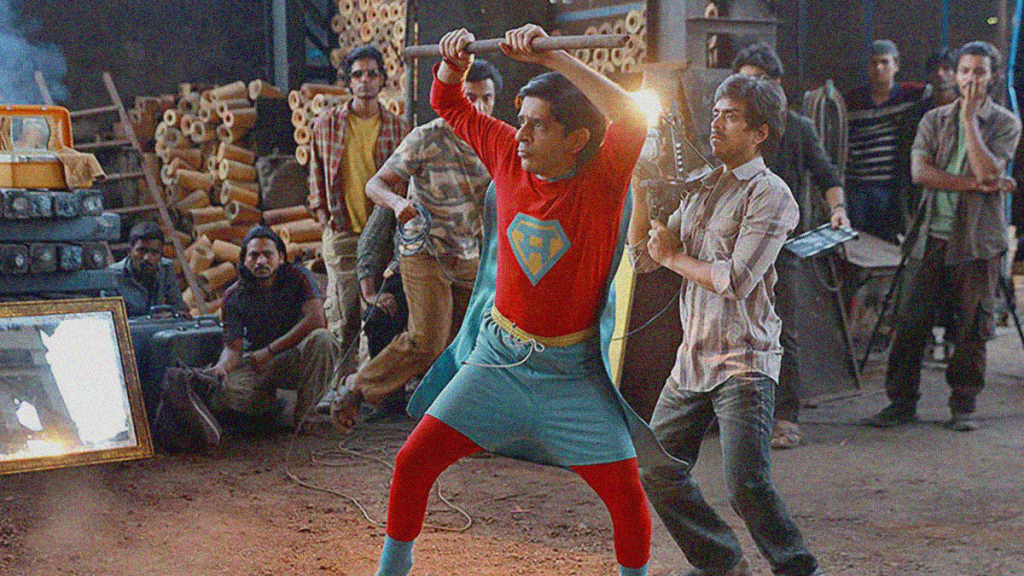
There’s no need to secure rights if the movie you’re showing is owned by you and, unless you grant permission to the other theaters, no one else can play it. This isn’t Mumbai, though. It’s Malegaon. In order to make it work, Nasir must rely on his friends to help carry the load. Farogh (Vineet Kumar Singh) is desperate to be treated like a “real” writer, so he agrees to work on the script. Akram (Anuj Duhan), Irfan (Saqib Ayub), and Aleem (Pallav Singh) are ready to edit, act, and do whatever else is necessary. And Shafique (Shashank Arora), despite constantly being pushed aside when all he wants to do is perform, realizes the ride is enough. It gets him out of the loom factory and onto a movie set. It’s a dream come true.
Reema Kagti’s Superboys of Malegaon (co-written with Varun Grover) isn’t all dreams, though. Yes, this group of friends is doing what everyone told them they couldn’t, but it won’t be an easy road and things will only grow harder once success is found. Because art and commerce have never been a simple marriage. Nasir wants to be famous and earn enough money to never worry about the police raiding his family’s cinema again. Farogh wants respect and will only compromise his integrity so much before quitting the dog and pony show for true artistic merit. At some point, the high of having fun must be replaced by the logistics of sustainability. Those willing to front the money towards that pursuit sadly won’t do so for free.
This true story spans thirteen years and three productions. In 1997 the guys spoof Sholay with a Malegaon flavor—their planned calling card before pivoting to original work until Nasir decides to double-down on populism instead. In 2004 we find Farogh attempting to make his own way in Mumbai while Nasir and the rest hope to maintain their momentum at home on the coattails of the famous Asif Albela (Yash Yogendra). And in 2010 the bottom has officially dropped out to the point where petty grievances have all but torn this troupe apart. It’s only when they realize what it is they lost that they find the forgiveness and humility to rally around a tragedy and remember friendship was the reason they took this leap in the first place.
There’s a lot going on with a lot of characters. Subplots about love and marriage are juxtaposed with others about metamorphosis, grief, and divorce. Nasir versus Farogh is a big part of the whole, but their parallel journeys are more about the fact that those in power will always dismiss them regardless of whether they try to play the game or reinvent it. That fracture is the start of the drama while Shafique’s loyalty is the beginning of reconciliation. Add Manjiri Pupala’s Trupti as the boys’ bona fide star who always comes back and sees the genuine love they share regardless of their jealousies and you really get a sense of what it means to pursue art in a world that too often rejects its value.
It’s why this story is so inspirational. Even though they lose their way in the middle, their genesis was about brotherhood and pride in their hometown. It’s those same things that drive their eventual reunion too once they resign themselves to the fact that they don’t need international acclaim to prove their worth. One can be a hero to one’s friends and family and have that be enough. They can carve their place in cinematic history, invent a local industry, and still laugh with each other at dinner knowing their legacy is cemented for those who matter most: each other. Because the moment you start doing things for the wrong reasons is the moment you lose the magic. Luckily, Nasir and company are able to get it back.
Kagti does a great job capturing that do-it-yourself aesthetic and energy with an abundance of humor and heart. She creates that chip on both Nasir and Farogh’s shoulders too with both seeking to overcome lost love (of a girlfriend and father respectively) by devoting themselves to a singular mission that clouds their ability to listen. Gourav and Singh’s performances are paramount as a result, but it’s Arora who shines as their selfless heart who never forgets what’s really at stake. His Shafique must bide his time while suffering injustice, but he never lets it negate everything great they’ve accomplished. Maybe they don’t get rich and nobody outside of Melagaon knows their names, but they still lived out their dream … together.

Shashank Arora and Adarsh Gourav in SUPERBOYS OF MALEGAON; courtesy of TIFF.



 jaredmobarak.com
Leave a comment