
Rating: NR | Runtime: 110 minutes
Release Date: May 9th, 2025 (USA)
Studio: Elevation Pictures / Vertical Entertainment
Director(s): Jason Buxton
Writer(s): Jason Buxton / Russell Wangersky (short story)
Josh (Ben Foster) and Rachel (Cobie Smulders) haven’t even been inside their new dream house for a day before tragedy strikes. A drunk teen is unable to control his car around the curve in front of their property, leading him to drive headlong into a tree. One of the tires flies off its axle, smashing into their picture window to wake up young Max (William Kosovic) in his bed. It’s a harrowing experience—one that justifiably shakes the trio up. And while there was nothing they could do to prevent it or help out in the aftermath besides calling 911, Josh can’t stop himself from wondering if there should have been. If he was better prepared, might the driver have survived?
Based on Russell Wangersky’s short story, Jason Buxton’s Sharp Corner presents a choice. Josh can either accept the fact that it’s not his responsibility to put himself and his family in harm’s way or he can tell himself that the risk is worth it if his presence is able to save someone’s life. Because tragedy will and does happen again. And the circumstances become worse each time. Rachel wants to leave. As a therapist, she knows the toll these crashes are taking on both Max and Josh. The only chance they have of putting it behind them is to literally do just that. Yet Josh can’t shake his obsession to make a difference. He can’t stop these horrors from putting each victim’s death onto his own conscience.
It’s a fascinating bit of psychology because one can rationalize his decision. Josh looks at his situation and searches for a solution not merely for his own wellbeing, but also for the strangers being drawn into his orbit. And yet, despite the idea sounding selfless on paper, we can’t help but agree with Rachel’s objective viewpoint that it’s actually the opposite. She sees the way his eyes light up when talking about the crashes. She hears the cadence of his voice when he tells the stories as though he was a part of them rather than just a bystander. Is it therefore a yearning for attention? Is Josh’s ambition less about saving people and more about public validation? This is his opportunity to be a hero.
Add the fact that he’s been passed over for a promotion and Rachel’s desire to alter their collective perception of this being a dream home to it being a nightmare breaks something inside of him. Josh refuses to give this illusion he’s created in his head up because it feels like a failure if he does. Another failure to go with his career setback. Another point of disappointment to go along with his increased drinking and complaints about doing work on the house. He starts to believe that his compounding personal resentments and regrets can be washed away if he just does this one thing to make them irrelevant by comparison. Unfortunately, Josh isn’t able to acknowledge the cost being paid.
The result is a slow-moving character piece made even slower by Josh’s character. Foster plays him perfectly as a meek, non-confrontational guy going through something that demands passion in ways that make it seem he’s never had passion for his wife and son. There’s a lot of staring and contemplating. A lot of losing himself to the moment by ignoring or forgetting his family and job so that his plans with these crashes can be fulfilled. The performance is so soft-spoken and clinically obsessive that it can sometimes elicit laughter in the sheer absurdity of the juxtapositions created. He becomes so oblivious to his own self-destruction that I almost expected a hard turn into full-fledged comedy.
That doesn’t happen, though. Nor should it. I think the pacing issues and tonal metronome behind Josh’s movements merely allow for a lapse of investment in the stakes on-screen. Eventually Rachel and Max become pushed so far to the side that they stop being three-dimensional characters and start solely being motivation for Josh’s refocused attention. I quickly stopped caring about whether his family was going to stay together because the film did too. That’s ancillary to whether Josh will see this desire through and if he will allow himself to help coordinate the tragedies necessary for him to be heroic. Has he fallen that far?
I’d love to see things tightened up—maybe chop a good thirty minutes out since so much of the mood-setting sequences had me losing patience rather than increasing suspense—but I can’t deny the effectiveness of Foster and the emotional turmoil born from the pervasive sense of ineffectuality that’s taken hold of Josh’s self-identity. There are some really good moments throughout, especially those points where his character is able to finally see clarity in his actions for better and worse. So, as long as you can get onboard with this family drama pivoting into a very narrow study of one man’s quest for purpose, you should find the experience worthwhile. Just don’t expect it to be anything more.

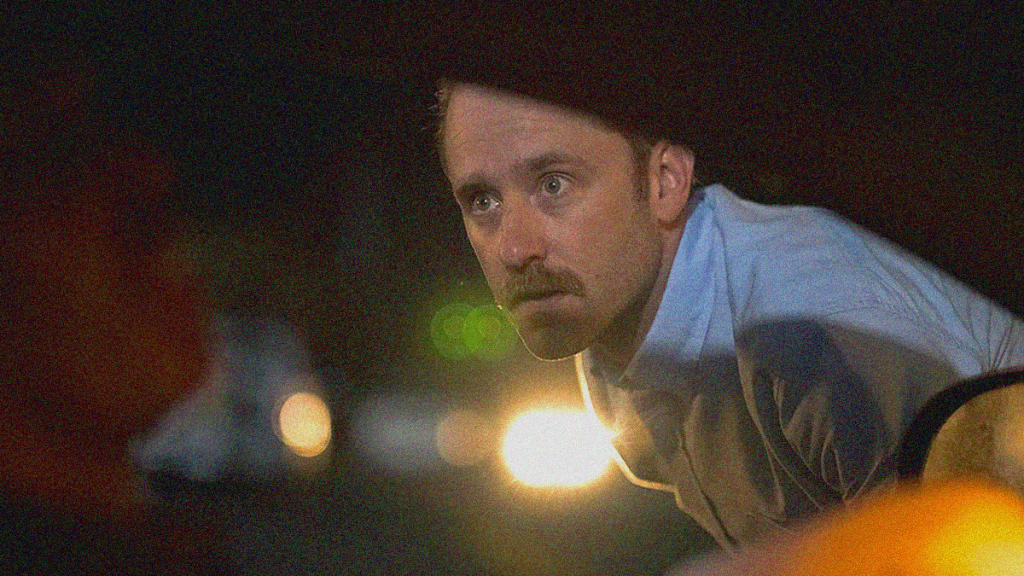
Ben Foster in SHARP CORNER; courtesy of TIFF.



 jaredmobarak.com
Leave a comment