
Rating: NR | Runtime: 80 minutes
Release Date: January 22nd, 2025 (Switzerland)
Studio: Outside the Box
Director(s): Jasmin Gordon
Writer(s): Julien Bouissoux & Jasmin Gordon
Those who are courageous, are free.
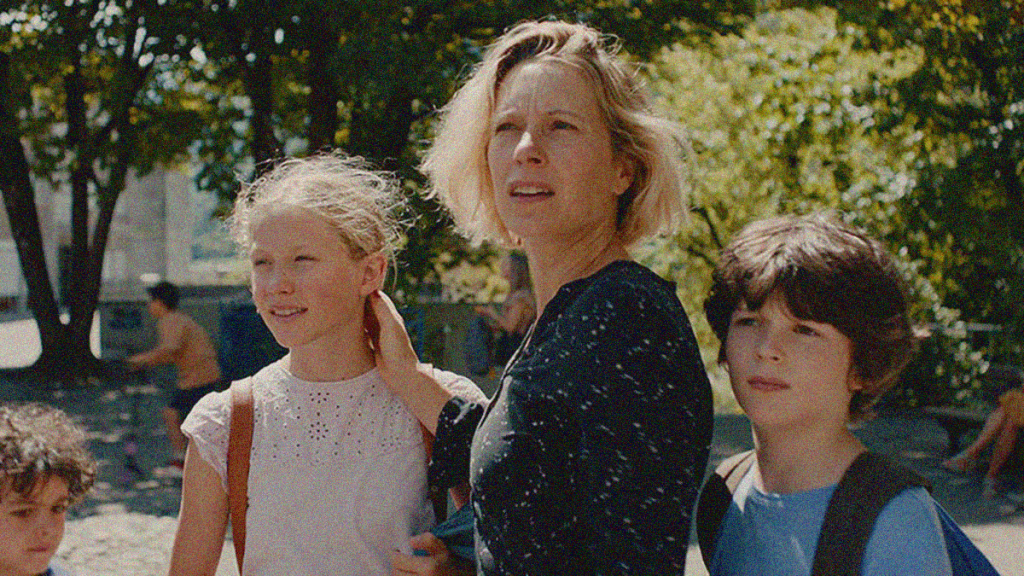
A cafe owner who has spent an hour watching three young children steadily lose their composure to boredom asks if their mother often abandons them like this. The eldest, Jasmine Kalisz Saurer’s Claire, says she never has. Not before. Not now. But despite intentions and as yet unknown context, that is exactly what Jule (Ophelia Kolb) did. She brought the kids to this diner and ordered a single lemonade before they could even sit down, knowing the act of becoming a paying customer allows for a certain amount of leniency when she ultimately disappears. It’s an intriguing opening scene because it forces us to judge this character without allowing her space to defend herself. We concur with the woman left babysitting.
Let’s just say this presumption of who Jule is doesn’t objectively change as a result of her actions in the aftermath either. Director Jasmin Gordon and screenwriter Julien Bouissoux (the two share a story credit) are dealing in nuance with their film The Courageous. Rather than feed into the superficiality of stereotypes, they lean into the complexities beneath the façade. Yes, Jule left them to fend for themselves in that diner without knowing if she’d be able to return when needed. But who’s to say she didn’t do it for them? Yes, Jule has obviously moved them around and changed their schools too many times to count. But is the alternative better? Should she split them up? Put them into foster homes? When does the system hold blame?
Therein lies the substance within the story on-screen. It’s less about what Jule does and more about why she does it. Because she’s definitely not winning any “mothers of the year” awards for what she’s doing. She lies to everyone around her to save face, but she’s also desperately trying to construct an illusion of normalcy to ensure her children don’t realize the damage being wrought. Jule is a criminal adorned with an ankle monitor who is banned from the local supermarket and can’t find full-time employment. She’s three months behind on rent, berates those trying to assist her for not doing enough, and finds the mounting anxiety crushing her soul has made it so she doesn’t know the only thing her kids really want is her.
That’s the real tragedy. A parent stretched so thin that she cannot see what truly matters. So, Jule spends all her time and energy chasing a house she can’t afford. She’s constantly leaving the children alone to the point where Claire catches on that something isn’t right. The younger Loïc (Paul Besnier) and Sami (Arthur Devaux) aren’t oblivious—they merely don’t understand the depths of what’s happening and can flip that switch from sadness to joy quicker due to impulses overpowering senses. Claire can’t anymore and she makes it known by stopping herself long enough to ask her mother what’s wrong. But instead of making Jule see she must slow down, that question conversely speeds her up to make things right.
Everything is therefore a con. Even going to the beach. Jule is taking cues from everyone else because she’s lost the plot on simple happiness in pursuit of a larger happiness beyond her means. And it’s not entirely her fault. Society is built in such a way that it will always be easier to fall from grace into poverty with no way of escaping than it is to rise above working poor status into financial stability. One hiccup is all it takes to set off a chain reaction that leaves her running from one potential solution to the next. And if none of those pan out, she has no choice but to take greater risks and make worse mistakes. Not because she doesn’t love her children. Precisely because she does.
It’s difficult subject matter matched by a difficult central performance. Because despite not liking what Jule does, we must still empathize with who she is. All the credit goes to Kolb for allowing this character the strength to fight and the vulnerability to fail. There aren’t many wins here—and those that do exist don’t last for long. But Jule is trying. She won’t give up. And if anyone dares to assume she’s selfishly neglecting her kids, she won’t think twice about putting that person in his/her place (Michel Voïta’s school principal deserved a lot worse than he gets after what he implies more than once). When you’re backed against the wall with avenues for help more often than not making things worse, what else is there to do?
Despite the success of Kolb’s portrayal and the themes inherent to it, however, The Courageous still frustrates in the way it’s constructed. I’m on the fence about the breadth of unanswered questions because I love being thrown into drama to see how characters react, but there’s a point where knowing things becomes necessary to invest in those reactions. In many ways we’re watching the film through Claire’s eyes (understanding the macro issues at-hand without grasping the finer details leading to them) yet following Jule outside of the girl’s vision. The latter demands we want to know more. The former refuses to allow the possibility. So, this push and pull can minimize the stakes. Thankfully Kolb rarely lets us forget them completely.

Ophelia Kolb (center) in THE COURAGEOUS; courtesy of TIFF.



 jaredmobarak.com
Leave a comment