
Rating: NR | Runtime: 98 minutes
Release Date: October 20th, 2023 (Pakistan) / April 12th, 2024 (USA)
Studio: Game Theory Films
Director(s): Zarrar Kahn
Writer(s): Zarrar Kahn
Even an hour without you is too much to bear.
The film starts with a scene of a young woman (Ramesha Nawal’s Mariam) looking through the narrow crack of an opened door before it slams shut in her face. We know some sort of violence is occurring on the other side by the sounds and her expression—just not the who, what, or when of the event. We can infer it has something to do with her mother (Bakhtawar Mazhar’s Fariha) and grandfather since we cut to the latter’s funeral. Maybe she killed him. Maybe it was a scene from the past. Maybe there’s no connection beyond the reality of Pakistan’s widespread patriarchal oppression.
Writer/director Zarrar Kahn supplies that ambiguity with intent as his film In Flames continues through a series of examples depicting just how insidious this malignant force of societal regulation is to the culture, upbringing, and existence of women in the country. This is done overtly (a man throwing a brick through Mariam’s car window to try and grab her in the street or a man getting her attention before starting to masturbate in front of her) and subtly (Fariha not marrying her daughter off so she can finish her medical degree or Mariam’s hunch that her great uncle has only taken an interest in them because he wants to take everything his brother left them upon his death).
It also arrives via hallucination and nightmare. Where the aforementioned examples give us the unfortunate truth of the gendered dynamic at play in Karachi, Kahn never forgets his opening and the trauma seeing such inferred abuse can inflict upon a viewer. The result is an uncertainty towards what we’re watching on-screen and whether it’s real or imagined. We see Mariam imagining white-eyed specters of men like her father in the distance before they disappear, so does that mean other figures are all in her head too? Maybe the masturbator was an illusion. Maybe the fear that comes from always being seen as someone who can be exploited and duped has turned paranoia into delusion.
Except reality doesn’t lie. Kahn jams so many instances into the narrative that we know this paranoia—if it is paranoia—is justified. Even if something isn’t real, it doesn’t mean it hasn’t happened before or won’t happen later. It’s a survival mechanism to keep Mariam’s head on a swivel when Uncle Nasir (Adnan Shah) talks about documents that need to be signed or when Asad (Omar Javaid) invites her on a beach date. She must constantly weigh happiness against horror. Is her blossoming love for Asad worth the risk that he might be hiding his true nature? And if tragedy strikes, leaving her alone to answer accusatory questions by men who will never listen to what she is saying anyway, is it better to flee?
That’s where In Flames is most potent. The blurred line between morality and self-preservation. If you’re trapped in a system that treats you like the enemy, you must resign yourself to the fact that no one else will save you. You must save yourself even if it means exploiting the system exploiting you, committing a crime, or living with the ghosts of guilt and regret that result from refusing to become that ghost yourself. It leads to some powerful moments of psychological distress that Nawal performs to perfection as her Mariam attempts to traverse this landscape of lustful and entitled men. And it eventually gives Mazhar the spotlight to shine during the second half as her Fariha’s experience reminds her of her own power to seek justice outside the law.
What starts as a familiar tale of young love in the shadows of a domineering mother who does not approve soon reveals itself to be the nightmarish effect of how the “rule” often prevents us from pursuing the “exceptions” because we cannot afford to be wrong. Fariha isn’t domineering. She merely knows what awaits her daughter in this city. And Mariam isn’t naive to want to feel the joy of Asad’s company even if it means doing so in secret and at risk of their lives. Generational trauma is on full display as these women seek to succeed within the parameters their oppressors have set while proving the lengths they’ll go to protect themselves and, ultimately, add to that heirloom of pain.
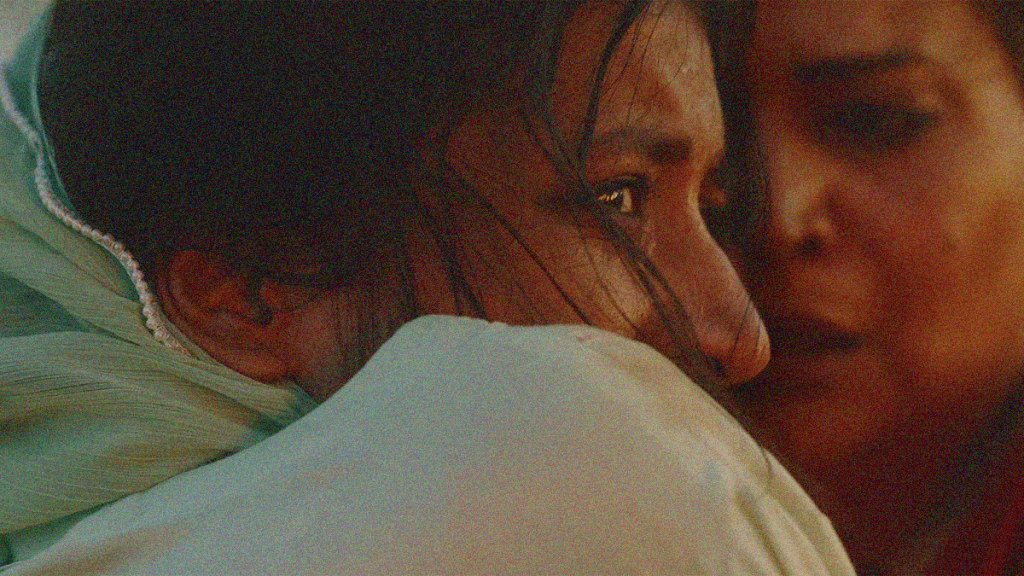
Ramesha Nawal and Bakhtawar Mazhar in IN FLAMES; courtesy of Game Theory Films.



 jaredmobarak.com
Leave a comment