
Rating: TV-MA | Episodes: 6 | Runtime: 60 minutes
Release Date: January 14th, 2024 (USA)
Studio: Home Box Office
Creator(s): Issa López
Don’t confuse the spirit world with mental issues.
The long night has arrived in Ennis, AK and police chief Liz Danvers (Jodie Foster) has already had to collect her step-daughter (Isabella LaBlanc’s Leah) from an irate mother when the call comes in that bodies have been found at the research station just outside of town. All the men who worked there are submerged naked in ice, ears bloodied and eyes scratched out. Yet that’s not even the weirdest thing about the scenario once a severed tongue is found beneath a table inside. Why? Because it doesn’t belong to any of the men. It’s the tongue of a young native activist murdered six years prior.
There aren’t any interview scenes with Liz many years later (or prior)—at least not yet—but that surely sounds like a “True Detective” season to me even if creator Nic Pizzolatto has chosen to denigrate it. Mexican writer/director Issa López is at the helm this time, she of Tigers Are Not Afraid fame. She writes or co-writes every episode and directs them all too, so you can definitely expect her penchant for horror to sneak in even as “Night Country” does well to remain steeped in reality regardless. As many characters say: “This is Ennis.” Residents see ghosts of those who died all the time.
Don’t get caught up too much in that aspect, though. It is important. It does drive the actions of many on-screen. But it’s less about truth than understanding. And it’s less about nightmare than guidance … even if that guidance may take a sinister avenue to punish those who deserve punishment en route to also finally providing justice for those they wronged. A ghost helped Rose (Fiona Shaw) find the bodies at Tsalal Station. A ghost may have also sent those men out into the snow. And it’s the ghost of Annie K. (Nivi Pedersen) that looms large above Ennis as a whole with more protests against the local mine’s pollution and a connection to the case that puts Trooper Evangeline Navarro (Kali Reis) back in Danvers’ orbit.
This season puts these two women together despite them both wanting nothing to do with a reunion. Why? You’ll find out when it proves relevant to the present plot (a fact that does unfold a bit too quickly and conveniently for me thanks to a neatly mirrored climactic cliffhanger within the penultimate episode). For now, just know that they worked well together before their falling out and that Danvers has learned to maintain control in the years since by treating her newest favorite officer (Finn Bennett’s Peter Prior) as an indentured servant—both to get what she wants and stick it to his father Hank (John Hawkes), the man who was in line to be chief before Liz was “promoted” to the post from the outside.
Who killed the men? What were they doing at Tsalal? How is Annie K. involved? The answers are simple and believable enough to gradually be uncovered the deeper Danvers and Navarro go down the rabbit hole. But, the case isn’t the real story. No. That concerns the characters themselves, the town, and the ways in which they use the harsh conditions surrounding them as an excuse and means to punish themselves for whatever shortcomings or tragedies haunt them. Affairs. Break-ups. Rebellious children. Con artist fiancées. Ghost husbands. Love and suffering follows them all, pushing them further into the case so they can ignore their imploding personal lives.
It’s a very solid six episode arc with a fantastic spiritual end even if the practical conclusion that precedes it feels a bit tacked on. Don’t get me wrong: it works. We simply get taken in so many directions and down so many dark paths filled with red herrings that the answers we do receive feel easy. There’s literally a “House MD” moment where one phrase solves the puzzle, turning the case into an afterthought that merely had to be finished so that audiences weren’t left wondering what happened. As I said, though, the case is mostly propulsion rather than substance, so whatever. Wrap it in a bow and let us get back to Danvers, Navarro, and Baby Prior since their psychology is the real meat.
Foster and Reis are fantastic. Fully fleshed out characters who respect the heck out of each other even if they don’t want to admit it when getting on the other’s nerves. The complexities of the environment with a white chief in charge of a mostly indigenous town overrun by a mine employing outsiders while their water turns black are treated with the political and human nuance necessary to keep the whole from becoming too much of a message piece. The message is there because it’s a part of this community and these circumstances, you don’t have to bludgeon us over the head with it. Anyone with empathy can see it plain as day and anyone who says it’s too much is telling on themselves.
I loved the soundtrack of covers that play over the end credits. Loved the horror flavor of ghosts and transportive dreams. Make the truth a little less eleventh hour and this might give “True Detective” seasons one and two a run for their money. As is, I put it on par—but a bit higher—with the messier third season, which also was pretty good in its own right. This has been a consistently great shingle for HBO and I’m excited that López is taking the reins to develop a fifth season too since her handle on the material in a literal and metaphorical sense is beyond compare (truly, watch Tigers Are Not Afraid if you haven’t).
P.S.: For a show that continues to deal with the murders of women at the hands of abusive men, you can’t blame HBO for keeping Cary Joji Fukunaga’s name out of the opening credits (his name appears in the closing titles) despite the inclusion of his fellow first season counterparts Pizzolatto, Matthew McConaughey, and Woody Harrelson as executive producers. Fukunaga also skipped the “Masters of the Air” promotional tour, so he’s definitely still keeping a low profile post-allegations.

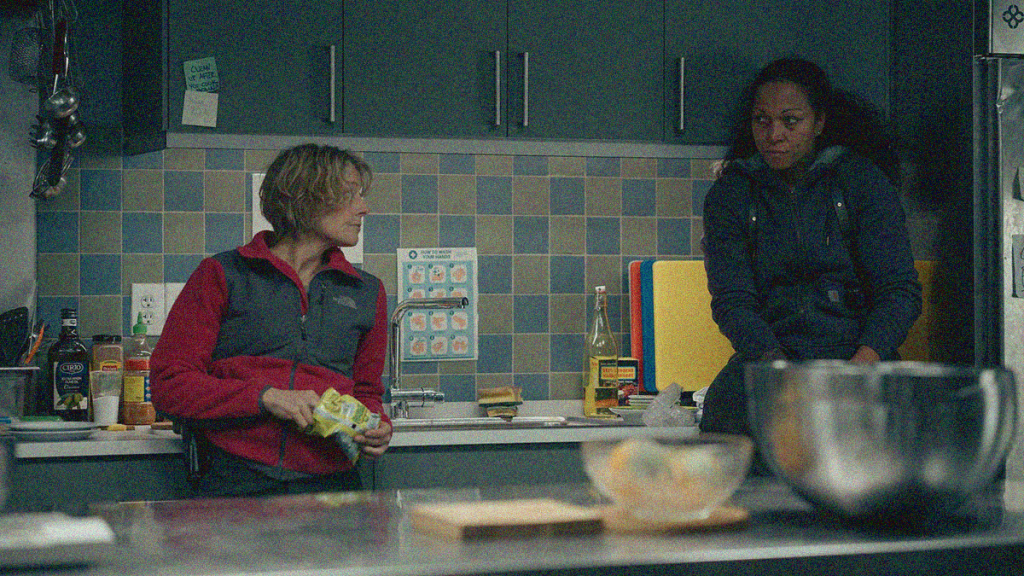
Jodie Foster and Kali Reis in TRUE DETECTIVE: NIGHT COUNTRY; courtesy of Michele K. Short/HBO.




 jaredmobarak.com
Leave a comment