
Rating: NR | Runtime: 99 minutes
Release Date: January 23rd, 2025 (Greece)
Studio: Tanweer Alliances
Director(s): Yorgos Zois
Writer(s): Konstantina Kotzamani & Yorgos Zois
They drag us behind them like their shadows.
Yorgos Zois’ Arcadia is a fantastic subversion of the ghost story wherein the living haunt the dead. Because when you’re dealing with themes of grief and regret, that’s exactly what’s happening. Those who survive hold onto the memory of those who don’t, clinging to the past so they might prevent themselves from moving on or inflict punishment upon themselves for letting them go … regardless of fault. That sorrow makes it so they cannot escape “what could have been” for “what is.” The so-called “unfinished business” we generally ascribe to ghosts is thus placed upon the living’s shoulders instead. It’s their inability to say goodbye, to know why, or to hear that everything will be okay.
What we therefore see on-screen here are two worlds projected upon each other: one layer holding the living as they sleepwalk through their pain and fear while the other holds the visages of those they won’t let go. You have a teenage son forced to listen to his mother’s tears for three long decades. A mother chained to a daughter that never knew her face but still longs for her touch, nonetheless. The German Shepherd forever sat by his master’s side, answering the dog whistle that will never really get answered. And the murderer who’s tortured by the growing hatred of his victim’s brother, which keeps him tethered to a life he never personally knew. Their only respite is seemingly their unwitting jailer’s own death.
It’s amongst these lost souls that we meet Yannis (Vangelis Mourikis) and Katerina (Angeliki Papoulia) en route to identify a body that has just been found. We quickly learn the deceased wasn’t alone. She and her patient/lover were together at the end, his body already identified by his wife. Questions inevitably swirl in both the minds of the police (Vagelis Evangelinos) and the families. What were they doing? How long was their affair? Why did they plummet to their deaths? Who’s to blame? And for anyone who has experienced the untimely death of a loved one knows, answers to those questions don’t always provide the closure one hopes. Because facts are easily twisted by guilt into being the result of the guilty party’s actions.
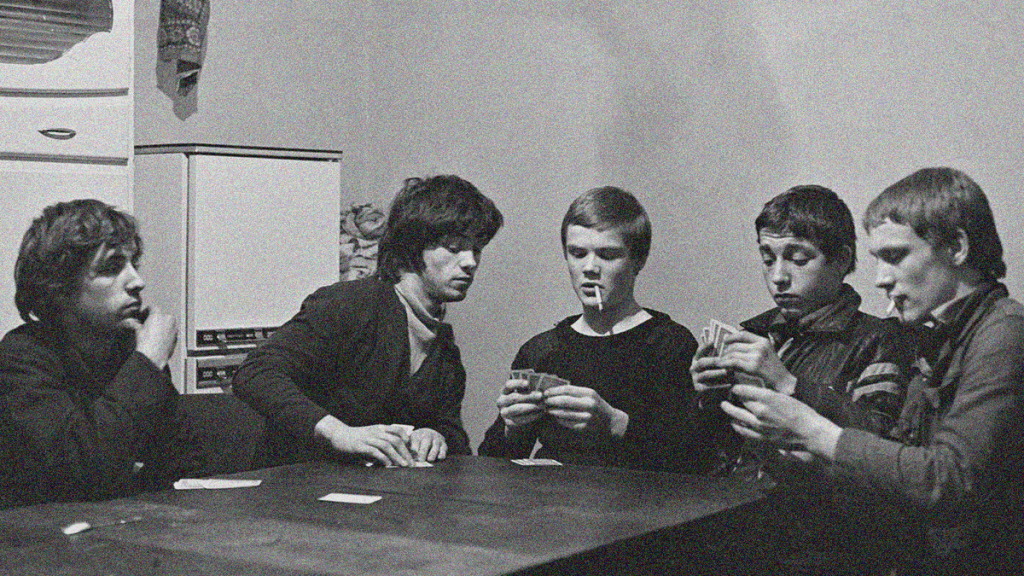
That doesn’t mean we as viewers don’t still want to know. Or that finding out won’t end up being enough after all—freeing both the living from their grief and the dead from their prison. So, we watch as the former struggles to piece together details while the latter discovers their own evidence through unorthodox ways. (Zois and co-writer Konstantina Kotzamani make it so the dead only remember that which the person they are tethered to remembers. Their own accounts of their life can only flood back through orgasm, causing the dead to gather for evening orgies of pleasure and reclamation.) It’s a melancholic journey for all involved since their overlap only becomes tangible via its end.
The result is a beautiful, heartbreaking dream of lost amnesiacs helplessly hoping and waiting to be freed by people who don’t consciously know they’ve become captors. It’s a simple ghost story built upon mankind’s complex psychological need for reason in an unreasonable world—one that gives form to the pervasive thoughts and feelings we too often let drive our lives. Because the dead here aren’t solely victims to the whims of their counterparts’ love and hate. They too held onto their own unfortunate albatrosses when alive. It’s thus a never-ending cycle of cause and effect, real or manifested. Because to live is to hurt. It’s up to you to decide whether that pain pushes you forward or holds you back.

Angeliki Papoulia in ARCADIA; courtesy of Berlinale.

 jaredmobarak.com
Leave a comment