
Rating: NR | Runtime: 96 minutes
Release Date: February 16th, 2024 (USA)
Studio: Vertical Entertainment
Director(s): Emma Westenberg
Writer(s): Ruby Caster / Ruby Caster, Clara McGregor & Vera Bulder (story)
I remember you used to be way more fun.
While it is just another story about addiction, Emma Westenberg’s Bleeding Love shouldn’t be dismissed as a result. Written by Ruby Caster from a story by Caster, Vera Bulder, and Clara McGregor, this road movie has the additional wrinkle that the father (Ewan McGregor) trying to wake his daughter (Clara) up to her substance abuse problems also faces them himself. Sober eight years, remarried, and raising a new son, he’s in many ways as unrecognizable to her as she is to him. Their roles have reversed and yet the clarity of experience that should arrive as a result is overpowered by fear and regret.
It’s a necessary detail because too many versions of this dynamic fall prey to the black and white notion that drug use is bad. I don’t say that to argue the opposite. Drug use is bad. I’m instead pointing out that approaching the subject from that binary position breeds inauthenticity more than not because it fosters the inherent hypocrisy that comes with separating “legal” drug abuse from “illegal” as though “law” is some all-powerful force of righteousness. By making Ewan a recovering addict, his horror becomes based in knowledge rather than sanctimony or superiority. His actions are born from empathy rather than authority.
Clara’s character possesses a similar lived complexity because she endured his addiction as a child. Yes, there were fun days. But he also left—eventually for good, but also whenever his high waned. Who then is this man helping her now? He’s a stranger. And that reality births resentment and anger. Maybe that’s why she became an addict too. It definitely affected her start with genetics and painful memories keeping her hooked. Those happy days therefore become a curse warped by nostalgia and hard truths to paint a picture as concrete as it is illusory. The present does the same in reverse too. They’ve never both been sober together.
Bleeding Love is thus about mistakes made. It’s why she can look at him with genuine affection when he proves fatherly without blindly forgiving him for the times he wasn’t. It’s why he can’t in good conscience force her to listen to his demand for treatment (despite being an expert) when he remembers those same demands pushing him away. It leads to pained silences and tearful recognition knowing they’ve both messed up. And the other has no right to believe them when they say they’ve changed. That trust must be earned … even if both have done enough to render the process impossible.
This is why the film is at its best in the last twenty or so minutes once truths are revealed and façades (intentionally worn and not) fall. The journey there isn’t without its moments, but there are a few too many detours through eccentric comic relief distracting us from the heavier drama that results. It’s not that the supporting characters and their circumstances are bad either. Vera Bulder, Jake Weary, and others are great. They simply come and go in ways that prove they were always pawns to the main story—dead ends sending father and daughter back onto their path instead of mirrors asking them to look within. That’s their job alone.
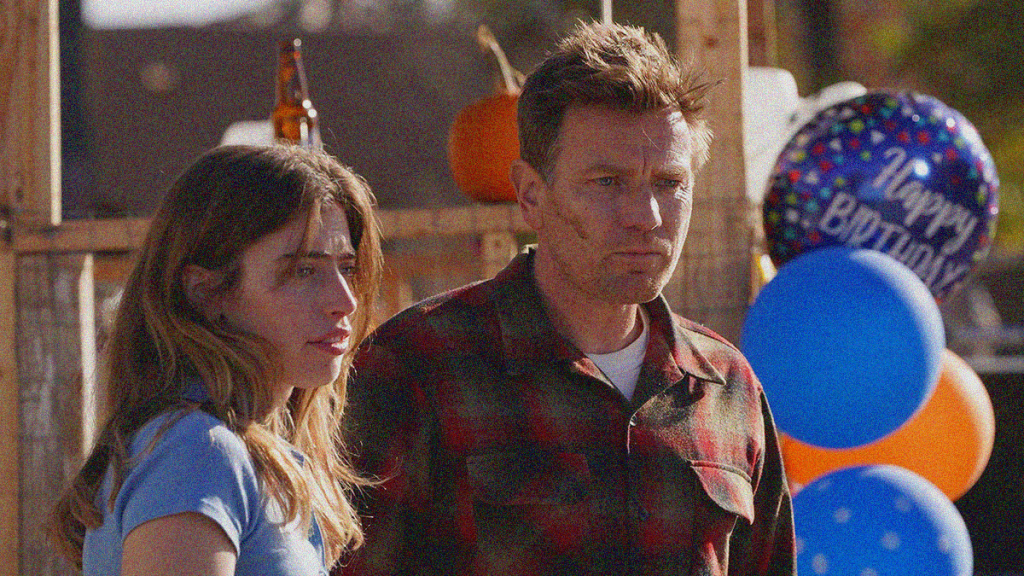
Clara and Ewan McGregor in BLEEDING LOVE; courtesy of Vertical.



 jaredmobarak.com
Leave a comment