
Rating: NR | Runtime: 97 minutes
Release Date: February 9th, 2024 (Norway) / May 31st, 2024 (USA)
Studio: Nordisk Film / Neon
Director(s): Thea Hvistendahl
Writer(s): Thea Hvistendahl & John Ajvide Lindqvist / John Ajvide Lindqvist (novel)
I love you whether you like it or not.
Novelist John Ajvide Lindqvist definitely has a vibe. I’ve never read one of his stories, but the atmosphere and tone wielded by director Thea Hvistendahl on her debut feature Handling the Undead is nothing if not very in-line with the author’s previous cinematic adaptations Let the Right One In and Border (all great). The weight of every scene and the deliberate pacing to allow the actors room to emote without words is so particular. Add slow-pan cinematography and the sense of unease matches the grief filling each room to capacity.
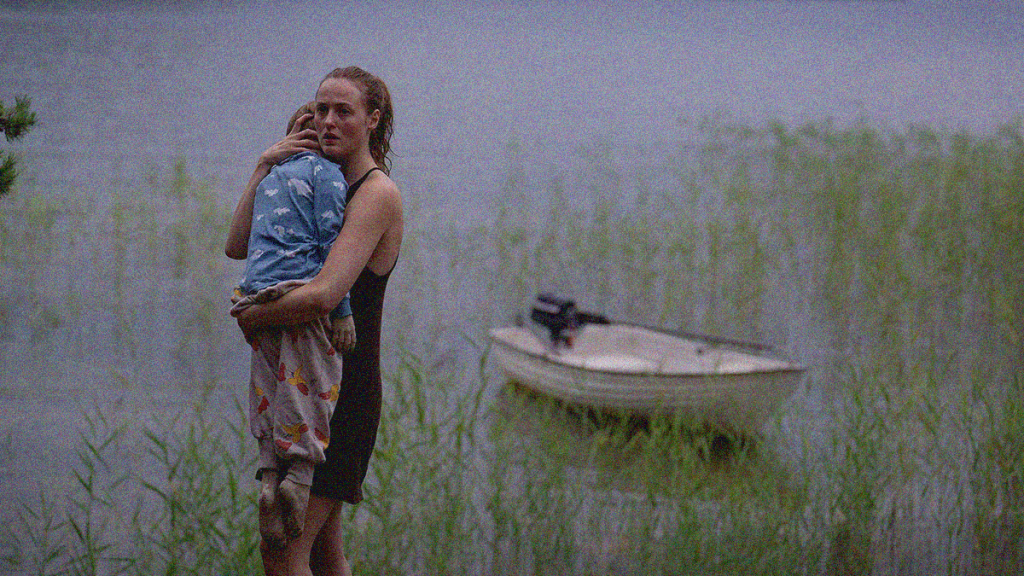
These characters aren’t in a good mental state to start, so what transpires can only risk breaking them further via the false hope of a horror premise treated with the humanity and care these things often lack in lieu of graphic gore. Anna (Renate Reinsve) recently lost her young son and cannot cope with her father’s (Bjørn Sundquist’s Mahler) attempts to console her. Tora (Bente Børsum) has just said goodbye to her love (Olga Damani’s Elisabet) before returning home and taking the phone off the hook. And David (Anders Danielsen Lie) is soon to find his own life shattered before potentially being saved in an instant.
None of them are the “lead.” None demand more investment or empathy than the other. They’re simply variations on our collective human desire to have one more moment with loved ones who have died. The focus of the film is thus the world they inhabit instead: a seemingly normal Norway full of longing and anguish that is given a gift in the form of a nightmare. Because once the static on the radio amplifies towards a city-wide power outage, the unthinkable begins to occur. And rather than just unleash zombies upon the population, Hvistendahl and Lindqvist facilitate reunions. Anna and her boy. Tora and her love. David and his wife.
And that’s where the real unsettling nature comes in. Not just from the ways in which these corpses are reanimated as silent approximations of their former selves in varying levels of physical and/or aesthetic stress, but also in the sense that the audience knows what this scenario ultimately births. We know that the other shoe will eventually drop whether by those whom these characters are holding onto too tightly, strangers popping out of hospital beds and graves with no one to embrace, or the mistakes made from their own clouded judgment. It’s not therefore a case of “if.” It’s a case of “when.”
Hvistendahl never falls prey to the desire for easy thrills or gruesome extremes. There are some very disturbing moments towards the end of Handling the Undead, but nothing that doesn’t feel authentic in its additional expression of love. Because that’s what motivates everyone on-screen. Not reason or fear. These characters are so distraught that they will allow an illusion to guide them to their own demise before considering the person they’re protecting isn’t the person they so desperately need. It leads to tragedy. Painful recognition. And, in some cases, catharsis. It reminds us to live for the dead and not simply die with them.

Renate Reinsve in HANDLING THE DEAD; courtesy of Sundance.


 jaredmobarak.com
Leave a comment