
Rating: PG | Runtime: 124 minutes
Release Date: November 10th, 2023 (USA) / December 22nd, 2023 (Japan)
Studio: Bitters End / Neon
Director(s): Wim Wenders
Writer(s): Wim Wenders & Takuma Takasaki
If nothing ever changed, wouldn’t it be absurd?
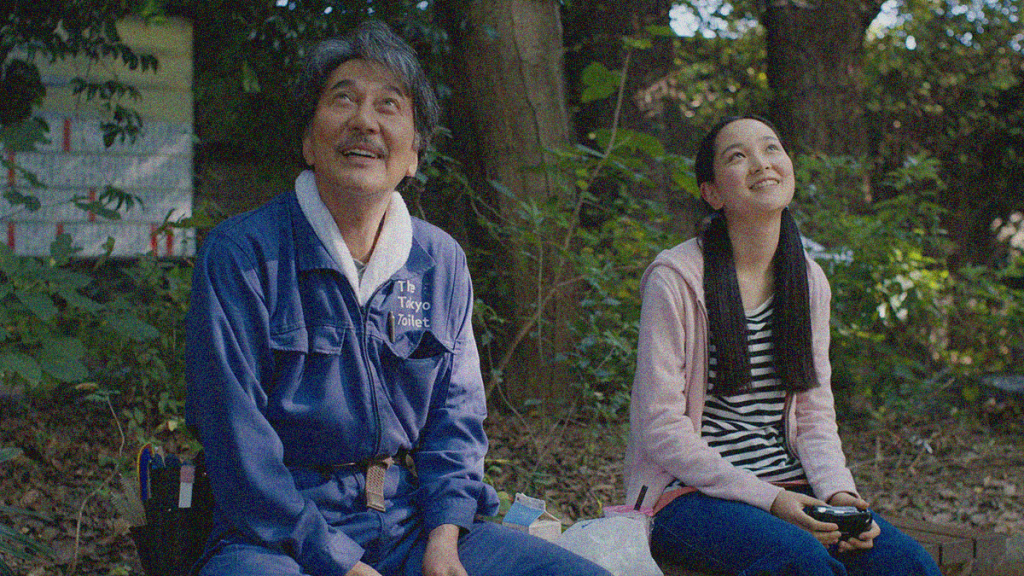
Kôji Yakusho embodies the character of Hirayama with so much personality and childlike awe for the little pleasures in life that we know he’s going to eventually put an “x” somewhere on that tic-tac-toe board he finds tucked away in one of the bathrooms he cleans. This is a man who stops what he’s doing to admire reflections dancing on the ceiling. Who takes pictures of trees with film and revels in the classic rock cassettes he’ll never sell because they aren’t just a fad to him. How can he not choose to make some stranger’s day with a friendly game?
This is who director Wim Wenders and co-writer Takuma Takasaki have created to live at the center of their Perfect Days. Hirayama is a creature of routine who takes pride in his life and work regardless of how easy it is for others to dismiss the choices he’s made to build it into what it has become. He doesn’t have to clean public toilets with a meticulousness that can never be preserved due to the fluid nature of the facility itself. After eventually meeting his niece (Arisa Nakano) and sister (Yumi Asô), we can presume he walked away from a charmed existence. But the leaving shouldn’t define him, so we never find out for sure.
Nor should we when the film specifically asks us to take Hirayama at face value. It doesn’t matter what his past was or what his future holds. “Now is now.” And while it may look as though he’s alone, he’s not without people who care for him even if it’s just as “the regular customer who gets a glass of water each day.” Hirayama enjoys reading, listening to music, and watering the saplings he finds and relocates to his tiny apartment. But his interests being solitary doesn’t mean he is too. Yes, he hardly talks. But he listens. Watches. Reacts. Young Takashi (Tokio Emoto) could learn a thing or two if he ever fell silent long enough to pay attention.
The result is a simple tale of controlled monotony broken up by sharp interludes of intrigue sparked by changes both small (a homeless man not being where he usually is) and large (favors and hiccups steering Hirayama off course). It’s a quietly sweet look at a person unbeholden to the constraints of an ever-evolving society’s demands—a man who knows himself and is comfortable living within the means of that identity. No more. No less. It doesn’t mean he won’t still get sad or frustrated that few join him on that path, though. That’s merely the price he pays for the opportunity to always be surprised. Because no tears Yakusho sheds will ever diminish the warmth of his smile.


Nominee:
International Feature
Kôji Yakusho and Arisa Nakano in PERFECT DAYS; courtesy of Neon.



 jaredmobarak.com
Leave a comment