
Rating: R | Runtime: 141 minutes
Release Date: December 8th, 2023 (USA)
Studio: Searchlight Pictures
Director(s): Yorgos Lanthimos
Writer(s): Tony McNamara / Alasdair Gray (novel)
I have adventured it and found nothing but sugar and violence.
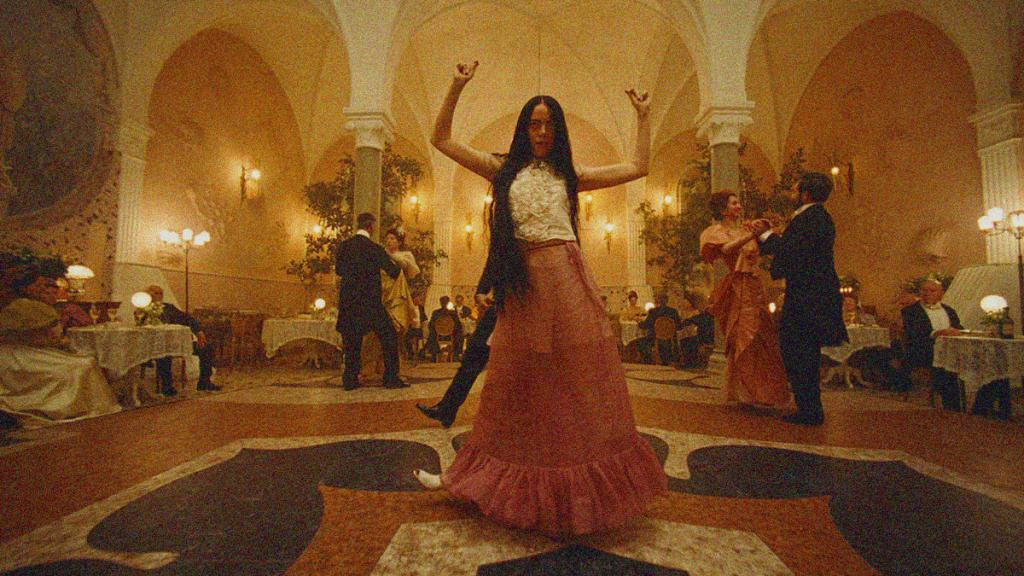
I do love the comedy that comes from a literalist character caught within a world of emotionally insecure babies. That Bella Baxter (Emma Stone) is quite literally a baby inside a grown woman’s body who becomes a literalist as a direct result of her curiosity makes it all the more entertaining a juxtaposition. Because she doesn’t deal in dualities. Or decorum. She’s a child with wants and needs and an utter lack of patience with which to wait for those things to be fulfilled. It’s why she’s able to evolve into a robotic genius of mankind’s practical potential while reducing everyone else to the insufficient creatures their unearned superiority cannot hide.
I also love many Yorgos Lanthimos films. Dogtooth. The Lobster. The Favourite. Just superb. Unfortunately, sprinkled in with that trio are the equally wild swinging failures—at least to my mind, since many others love them too. Poor Things straddles the line separating those two halves a bit too closely for my liking, vacillating between insufferable and hilarious throughout its almost two-and-a-half-hour runtime. And it honestly comes down to a coin toss as to whether the next scene will be one or the other since the tone is exactingly consistent. I just think some locales and characters became too much of a bore.
That too isn’t necessarily a symptom as much as a feature since they become bores to Bella herself. Tony McNamara’s adaptation of Alasdair Gray’s novel sends us on an adventure through her rapid education and thus provides us a front row seat to what pleasures, intrigues, and disgusts her along the way. Ever the optimist despite her discerning outlook, Bella ultimately stays with that which disgusts her a little too long. Sometimes it allows their inadequacy to shift from tedium to comedy, but other times it just reinforces how far past their purpose they’ve become.
Randomly going back to London to remind us that Dr. Godwin Baxter (Willem Dafoe) and Max McCandles (Ramy Youssef) must remain relevant for the future despite them being forgotten afterthoughts in the present doesn’t help matters. If anything, it frustrated me to no end because they were never truly interesting characters beyond their proximity to Bella in the first place. So, without her, they become distractions and, inevitably, postpone the payoff of her evolution as an independent, free-thinking woman at a time when men saw both as reason to murder since they saw women as little more than possessions.
It’s why Mark Ruffalo’s Duncan Wedderburn is fun as an instructor of carnality and funnier as a victim to his own tricks (albeit intentional tricks when he victimizes women and unintentional causality when Bella’s actions have him victimizing himself). Once he hits that point, however, it’s time to move on. Although the film seems to understand this by switching venues, it keeps him well past his prime. He’ll still rise to the occasion for a laugh here and there, but not enough to keep his presence warranted as other, more fascinating creatures arrive (Hanna Schygulla, Jerrod Carmichael, and the always brilliant Kathryn Hunter).
Between those moments that do work (including a welcome, full circle finale alongside Christopher Abbott), Stone’s transfixing performance of a human being maturing from toddler to Rhodes’ Scholar in a matter of months, and the absolutely gorgeous production design, though, any unavoidable fatigue I did feel was worth it. I don’t think the final result is as smart as it thinks it is or that what it’s saying is profound, let alone unique, but POOR THINGS is an entertaining ride that proves—like Bella vs. Felicity (Margaret Qualley)—how not all experiments work perfectly. But we shouldn’t discount the attempt in case the next one does.

Winner:
Lead Actress, Production Design, Costume Design, Makeup and Hairstyling
Nominee:
Motion Picture, Director, Adapted Screenplay, Supporting Actor, Cinematography, Editing, Score
Emma Stone in POOR THINGS; courtesy of Searchlight Pictures. © 2023 Searchlight Pictures All Rights Reserved.


 jaredmobarak.com
Leave a comment