

Rating: PG-13 | Runtime: 105 minutes
Release Date: December 15th, 2023 (USA)
Studio: A24
Director(s): Jonathan Glazer
Writer(s): Jonathan Glazer / Martin Amis (novel)
The life we enjoy is very much worth the sacrifice.
The plot is simple: A happy family of five that lives comfortably next door to Dad’s place of business is about to be uprooted upon learning of a promotion and transfer that will take them miles away from the home they’ve made these past four years. It’s an easy dramatic scenario to picture. You may have lived it yourself. Except for the wrinkle that he’s a Nazi commandant and the noise we hear from the other side of the garden wall is the screaming of Jewish prisoners at Auschwitz.
Not the subject matter you would think to want to write around and yet that’s exactly what filmmaker Jonathan Glazer does with his adaptation of Martin Amis’ novel The Zone of Interest. Less a literal translation and more tonal sibling to the source, he knew bringing such charged material to life in a way that didn’t make it obscene would be a challenge. Because you can’t humanize these characters with sympathy or just make the whole another Holocaust trigger warning for survivors. So, he made sure it would be about us instead.
By stripping away all emotion from the craft itself, Glazer presents an objective lensing of a moment in time for a family that looks and acts like so many when removed from the heinousness of this specific reality. He uses surveillance style camera set-ups to statically capture his actors in long takes depicting mostly mundane activities and improvised conversations, cross-cutting together each room to supply an overall sense of their existence via an almost faux documentary aesthetic. These are the motions of life—the arguments and jokes that seem innocuous until context can no longer be ignored.
That’s where its power to disturb lies. Not just with you acknowledging the horrific similarities to your own day-to-day, but also the characters on-screen numbing themselves to the truth with varying degrees of success. It doesn’t get better than with Hedwig Höss’ (Sandra Hüller) mother smiling and praising her daughter for marrying well and living a dream one day to growing physically and emotionally ill from the sounds and smells of what’s happening the next. Going from joking about her former employer burning to death to fleeing without a word in the night concisely portrays the slippery slope of complicity.
Then there’s the constant animal-loving dynamic Rudolf Höss (Christian Friedel) has with dogs throughout. There’s no more blatant analogy than watching him treat a pet with such unadulterated respect and dignity before hearing him order a human prisoner he surely calls an “animal” to be drowned a few scenes later. Everything from Mom trying on a new fur coat to one of her sons looking at his “geology” collection takes on a malicious tone upon considering the full picture. It should make even the strongest stomach risk losing their popcorn.
So, while it’s not a horror film per se, you can’t avoid the sense of uneasiness permeating each frame. Whether the smoke of chimneys and trains, bath time after swimming in a river suffering from camp “runoff”, or the turn-on-a-dime mood swings Hüller effortlessly pulls off to make her Hedwig more monster than Rudolf, the discomfort lingers long after the credits end. Especially now considering the US just vetoed another UN resolution for a cease-fire as Israel commits genocide on the people of Palestinian. Does our country also puke in the stairwell before returning to its complicity? Or does it sleep like a baby?
You must give Glazer and cinematographer Lukasz Zal a ton of credit for really capturing this story in a methodically unfeeling way wherein its atrocities (seen and unseen) occur in the background. Young love. Slave labor. Night vision scenes of a girl depositing food where prisoners will be working. A home being worth more than thousands upon thousands of lives. Through it all, the only real emotional outburst lies in Hedwig’s refusal to relinquish her “perfect” white picket fence utopia. A soulless creature in an Eden covered by the ashes of innocents.

Winner:
International Feature, Sound
Nominee:
Motion Picture, Directing, Adapted Screenplay
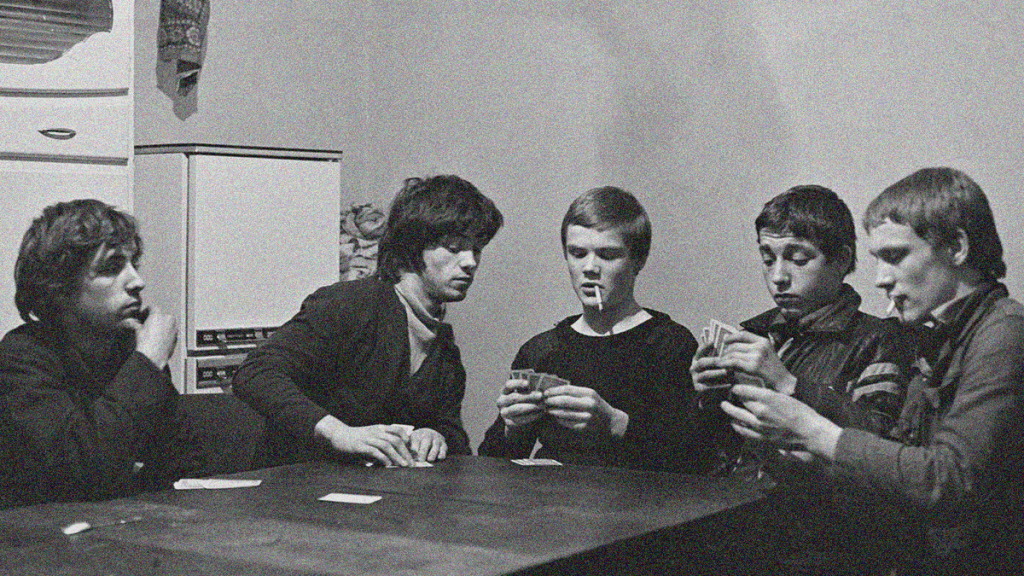
Christian Friedel in THE ZONE OF INTEREST; courtesy of A24.


 jaredmobarak.com
Leave a comment