
Rating: NR | Runtime: 107 minutes
Release Date: July 5th, 2023 (France) / October 27th, 2023 (USA)
Studio: Jour2Fête / Kino Lorber
Director(s): Kaouther Ben Hania
Writer(s): Kaouther Ben Hania
I didn’t want to have any daughters.
I didn’t know who Rahma and Ghofrane Chikhaoui were before watching Kaouther Ben Hania’s powerful documentary Four Daughters, but I don’t think the experience of what occurs on-screen will change for those who do. The reason is simple: this isn’t their story. It’s not about who they become or what happens to them once they leave their home in Tunisia. It’s about what gets left behind. The memories, regrets, and love of their sisters (Eya and Tayssir) and mother (Olfa Hamrouni). And the pain that trio has had to (and will continue to) endure in that absence.
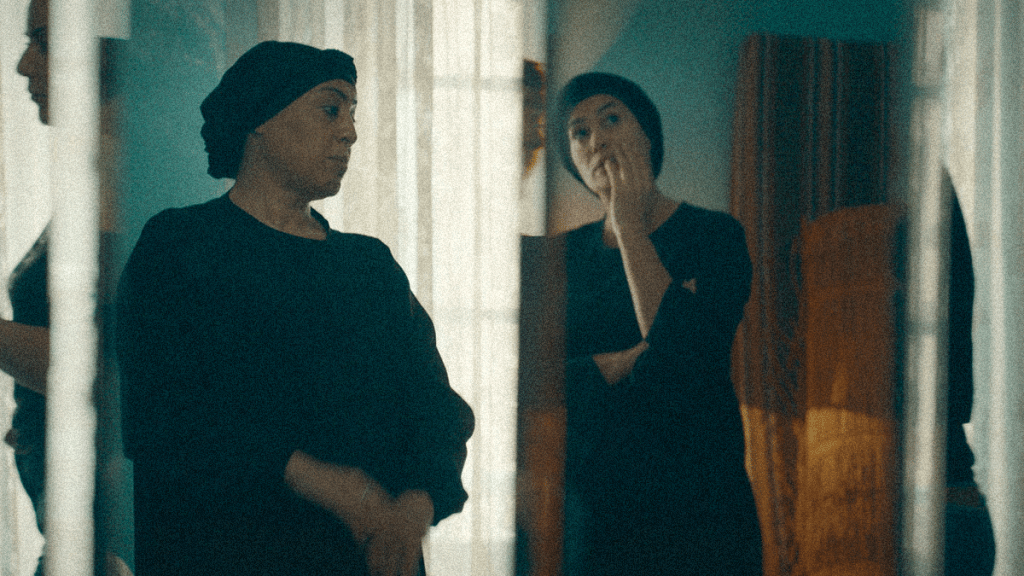
The result is a hybrid project wherein we learn the story of what happened from the women who remain while watching it unfold via reenactments performed by them alongside real actors (Ichrak Matar plays Ghofrane, Nour Karoui plays Rahma, Majd Mastoura plays all the men, and Hind Sabri plays Olfa when the material proves too much for the matriarch to play herself). We move from happy times pre-revolution to the somber reality of what unfolds. The laughter with Eya and Tayssir talking about their older sisters’ “goth phase” soon replaced by the fear of fire and brimstone that inevitably places them all beneath niqābs.
Don’t assume it’s solely a judgment on Rahma and Ghofrane, though. This isn’t about a family throwing each other under the bus or trying to set the record straight in a bid for absolution. It’s about facts. History. It’s about generational trauma, misogyny, and the weaponization of culture and religion. It’s also about complicity as much as it is forgiveness. Olfa has no qualms about looking bad for audiences or about admitting her mistakes and hypocrisy. This isn’t a situation with easy answers or one that could have been avoided with mere hindsight. So many things would have needed to change—most of which never could.
That’s not an indictment on Tunisia, the Arab world, or Muslims. It can’t be considering Eya and Tayssir are both still around when the opposite almost came true instead (the latter readily admits as much). It’s merely a forum with which to unpack what it means to be a woman within a hostile environment that specifically targets women. What does it mean to be “strong”? Or to be “free”? When does love turn into fear and ultimately render an advocate against oppression into that very same oppressor? We’re witnessing a much-needed catharsis wherein this family admits and confronts the horrors and abuse they’d been taught to laugh off.
It’s a harrowing story with nightmarish acts of violence calmly relayed as anecdotes you might tell during the holidays. They might smile now because they survived it, but it’s a self-aware front that’s quickly replaced with tears the moment Karoui and Matar come into frame to remind them of the collateral damage. And even if these women are deprogrammed insofar as understanding what happened and why doesn’t mean they’re healed or no longer prone to being indoctrinated again. Some truths are baked into our DNA. Olfa might be able to objectively agree that something is wrong, but it doesn’t mean her impulse won’t still commit that wrong when the moment arrives.
That’s why stories like this must be told. Yes, it’s about giving those involved an opportunity to repair themselves (think Procession and performance as therapy), but it’s mainly an opportunity to educate future generations about what to expect and how to hope to avoid it. Only with that knowledge, as well as the tools to make it work for them, can women Eya and Tayssir’s age attempt to finally break the cycle of exploitation and persecution into which they were born.

Nominee:
Documentary Feature
Olfa Hamrouni and Hind Sabri (as Olfa) in FOUR DAUGHTERS; courtesy of Kino Lorber.




 jaredmobarak.com
Leave a comment