
Rating: NR | Runtime: 96 minutes
Release Date: March 22nd, 2024 (Canada) / June 20th, 2025 (USA)
Studio: Cineplex Odeon Films / WILLA / Product of Culture
Director(s): Fawzia Mirza
Writer(s): Fawzia Mirza
I’m not the one you need to impress.
The apple rarely falls far from the tree and religion too often finds a way of making it so those two apples never realize just how true that idiom proves. This is the case with Azra (Amrit Kaur) and Mariam (Nimra Bucha) in Fawzia Mirza’s Pakistani-Canadian dramedy The Queen of My Dreams. Both are/were rebellious in their youth, desperate to cut a path that they desired beyond the boundaries of Islam or their parents. And yet both discover they remain bound by those same boundaries through culture, generational trauma, and guilt
That said, this isn’t a somber affair. Not really. Yes, it revolves around the untimely death of Azra’s father/Mariam’s husband (Hamza Haq’s Hassan), but the tragedy itself is as much a means to expose the cracks in this faltering mother/daughter dynamic as it is to express the love that exists beneath years of stubborn resentments. Because despite the traditionally conservative nature Mariam adheres to now, she was just as independent and duplicitous as Azra at her age. And we learn this fact not through anecdotal stories, but by viewing the events themselves.
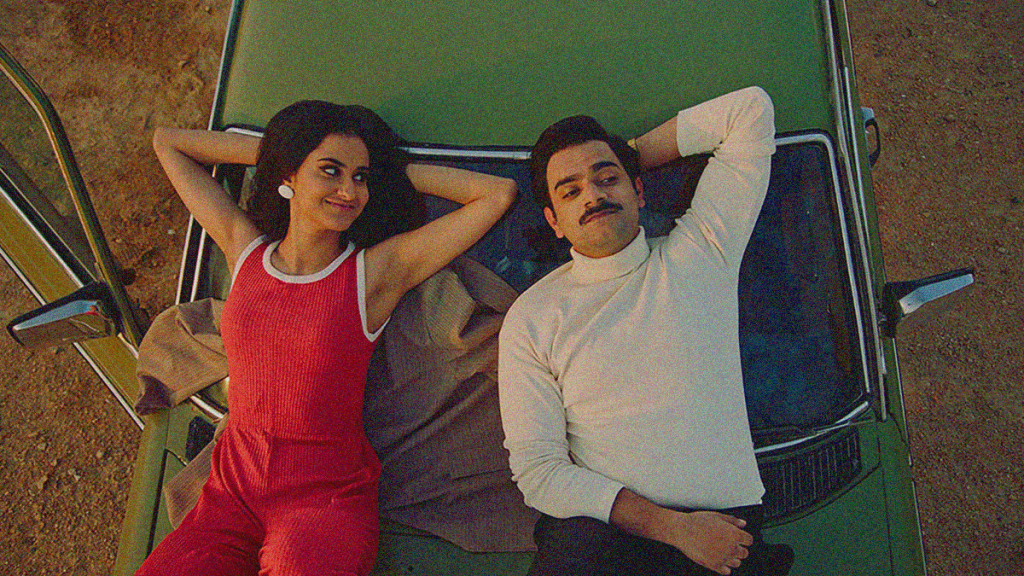
This is made possible by a very fun convention wherein most of the actors involve play two characters whether that means two different people or two versions of the same in a nod to the Bollywood film starring Sharmila Tagore that creates an indelible connection between these women throughout the decades. What begins in present day Nova Scotia soon rewinds back to 1969 Pakistan as Mariam (now played by Kaur) is forced to meet potential husbands while dating Hassan (Haq without the wrinkles and gray hair from the start) in secret.
That’s when we see just how alike they are since Azra is hiding her own partner (Kya Mosey’s Rachel) from her parents too. She does it because her mother doesn’t approve of homosexuality as a devout Muslim. Mariam did it then because she wanted to leave Pakistan and knew her own mother wouldn’t allow her to marry someone planning to live abroad. It’s the customs of the old country that light a fire to be her own woman and, in many ways, it’s those same customs that light one under Azra once Mariam embraces them in a bid for misplaced salvation.
We watch this transformation via a second rewind to the 80s with Ayana Manji now playing Azra during her coming-of-age awakening. The film bounces back and forth in time so everything we see becomes a means of adding contextual detail to everything that came before. And alongside the familial drama is also a clash of customs wherein the current Azra is unable to mourn her father the way she knows she should. Because the reasons are gendered, they only bring more weight to the reality that religion hurts as much as it helps. She isn’t allowed to love a woman or wash her father’s body because she isn’t a man. Why should it matter?
There’s a lot of depth to this story as a result. More than you might anticipate at the start when Kaur sings an entire number from that Bollywood film to her girlfriend before a comical montage of her Azra doing anything (and everything) besides answer the phone—a sequence that builds to a gut punch of regret. The joys and pain of nature vs. nurture arrive in full force as love is defeated by petty grievances born from indoctrination that blinds too many from seeing what truly matters: happiness. Why do we as a society fight so hard to push people away because of archaic rules that serve no purpose beyond discrimination?
Mariam wanted her parents to let her marry the man she loves so bad that she lied about their intentions, but she judges and forbids her own daughter from doing the same? Does she want to live estranged like she did with her own mother, repeating the same mistakes? Mirza’s film avoids answering these questions definitively or passing judgement on those who refuse to ask, laying them out instead so we know that they know hypocrisy abounds. Hopefully this knowledge will allow the chain to finally be broken. If not for the characters on-screen, then for those watching and realizing they’re gazing into a mirror.

Amrit Kaur and Hamza Haq in THE QUEEN OF MY DREAMS; courtesy of TIFF.



 jaredmobarak.com
Leave a comment