
Rating: NR | Runtime: 91 minutes
Release Date: March 29th, 2024 (USA) / April 12th, 2024 (Canada)
Studio: Filmoption / Circle Collective
Director(s): Kim Albright
Writer(s): Julia Lederer
That way I know everything worked out okay.
It’s difficult to watch when some people seemingly go through life without caring about the consequences of their actions. We wonder what it must feel like. We wonder if it’s a product of selfishness or heartlessness and whether there’s even a difference. And we imagine that those on the other side don’t wonder at all since they can’t know what it is they’re missing. They label us suckers. Rubes. They embrace that lack of feeling as strength. Enviably, some of us do too.
Because we can get so caught up in the wake of grief, sorrow, and regret that we yearn to close ourselves off in much the same way. Push it away. Pretend it means nothing. But doing so inevitably forgets the fact that losing those painful emotions also means losing the ones that spark joy. It’s that old saying about love and loss and the need for both to ensure either can be truly meaningful. The alternative isn’t therefore better at all—especially not when you still remember what it was to feel the good things. Oftentimes it actually proves worse.
Director Kim Albright and screenwriter Julia Lederer’s smart and witty surrealist dramedy With Love and a Major Organ seeks to give shape to this reality for both the characters on-screen and us. It also looks to illustrate a new middle ground that’s swept through society via social media algorithms, emboldening people to mitigate their suffering by avoiding all emotions through the dissolution of choice. Because letting a phone app dictate your likes and desires isn’t about streamlining those things. It’s about facilitating the systematic destruction of individuality. That’s what ultimately causes so much pain. Anything that makes you special enough to love is also ripe for conjuring hate.
Anabel (Anna Maguire) craves that duality. She looks at her best friend Casey’s (Donna Benedicto) sanitized life of phone dings and finds herself rejecting the prospect of such homogenization even more. She wants to find love, but on her terms. And she’s willing to suffer heartbreak if it doesn’t work out. Because it won’t. Not always. There’s as much a chance of being turned down by the analog soul reading his newspaper on the next park bench (Hamza Haq’s George) as there is reciprocation.
That uncertainty is what Casey thinks she has excised from her own life when what she’s really removed is the space for personal taste in order to never feel out-of-place. She still feels emotions. She still knows what it feels like to be othered and to be the one doing the othering. It’s why she won’t just tell Anabel “No” when the latter makes suggestions about her impending nuptials. Casey doesn’t want to hurt her maid of honor, but she also doesn’t want to alienate the carefully curated guests her app has decided are crucial for her prolonged happiness.
So, Anabel is heading for a fall on multiple levels. Romance. Friendship. Even her mother avoids hard conversations to make her think things are okay when they most certainly are not. It leads to a turning point where Anabel has had enough. If no one wants her to love them the only way she knows how (messily, loyally, completely) and she doesn’t want to carry the hurt piled upon her by that refusal, she’ll simply rip her heart out of her chest. Maybe then she can just exist like everyone else.
It’s a gruesome yet beautiful concept that Albright and Lederer manifest through unforgettable visual metaphor. Add Anabel’s decision to give the heart to George—a man whose only response to her vulnerability is to say “I can’t”—and his mother’s (Veena Sood’s Mona) complicated relationship with contented conformity and violent aggression and the second half of With Love and a Major Organ perfectly weaves through the complex, unforeseen effect our love has on those around us. Casey getting frustrated at Anabel for being so extra doesn’t mean she won’t miss it when it’s gone.
What ensues is a humorously poignant journey towards understanding that our love can inflict pain onto others just as easily as it can onto ourselves. Mona’s love has prevented George from truly living. Anabel’s love has made her immune to seeing what’s really going on. George’s lack thereof makes him a junkie to it the moment he first feels its indescribable awe. Our tears will therefore always be worth the torment because we’d be nothing without them. They are love’s truest form. They remind us that we’re still alive.

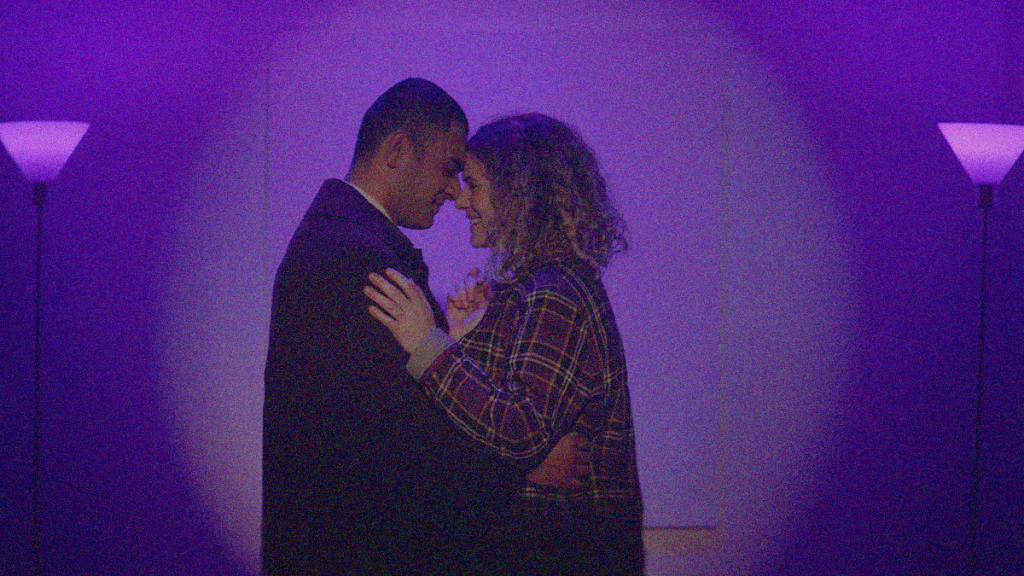
Hamza Haq and Anna Maguire in WITH LOVE AND A MAJOR ORGAN; courtesy of Fantasia.



 jaredmobarak.com
Leave a comment